How We Build Inventory Management Systems for Ukrainian Village
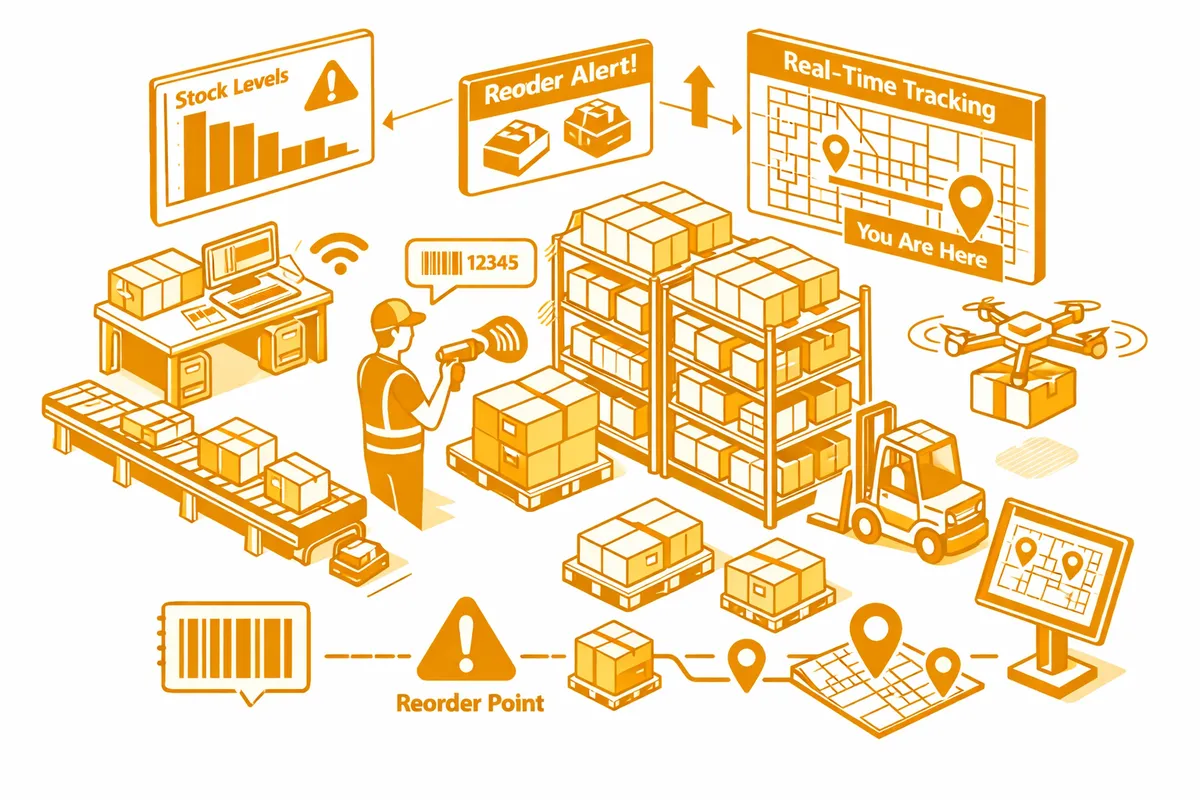
For Eastern European specialty food retailers on Chicago Avenue, we build the supplier relationship map first: every supplier, their lead time, minimum order requirement, delivery schedule, and product categories. Reorder logic for the international specialty food importer with a three-week lead time works differently than for the local bakery supplier with same-week delivery. The international importer gets reorder triggers generated four weeks before projected stockout, accounting for lead time and safety stock. The local bakery gets reorder triggers generated two to three days before projected stockout. Both run from the same inventory data and both generate purchase orders automatically, so the buyer manages approvals rather than manual calculations.
For Ukrainian Village boutiques on Chicago Avenue and Division Street, we incorporate the neighborhood's cultural calendar into demand modeling. The annual Ukrainian cultural events and Christmas season, which drives strong foot traffic in the Eckhart Park area, are the demand peaks that boutique reorder logic needs to anticipate. We build seasonal adjustment into reorder calculations so buying decisions in October account for the November and December demand surge in artisan goods, holiday gifts, and home goods that characterizes Ukrainian Village retail during the holiday season.
Cafe and coffee shop inventory management for Ukrainian Village businesses connects daily sales data from the POS to ingredient and supply reorder logic. Milk, alternative milks, coffee, syrups, and pastry items are tracked against daily consumption rates with reorder thresholds calibrated to delivery schedules. When consumption accelerates above the recent average, the system flags the deviation and adjusts the reorder timing before a stockout occurs.
Industries We Serve in Ukrainian Village
Eastern European specialty food shops and delis along Chicago Avenue near the Ukrainian National Museum carry imported products with international lead times alongside fresh and perishable items with daily and weekly delivery cycles. We build multi-supplier inventory systems with lead-time-specific reorder logic and FIFO tracking for perishable inventory.
Independent boutiques and clothing stores along Chicago Avenue and Division Street manage curated apparel and home goods assortments for Ukrainian Village's young professional customer base. We build boutique inventory systems with variant-level tracking, seasonal demand adjustment, and online channel sync.
Independent coffee shops and cafes on Division Street near Holy Trinity Orthodox Cathedral and Eckhart Park need precise daily-use inventory management for coffee, dairy, pastries, and specialty supplies. We build cafe inventory with POS-connected consumption tracking and automated reorder ahead of each supplier's delivery schedule.
Design studios and home goods retailers catering to Ukrainian Village's interior design and creative community manage specialty materials, samples, and retail product inventory. We build inventory systems appropriate to the specific product categories of each studio or showroom.
Yoga and fitness studios concentrated near Smith Park and the Western Avenue corridor manage retail product inventory alongside their service operations. We build lightweight retail inventory for studio boutiques with reorder automation and shrinkage tracking.
Salons and specialty beauty businesses in Ukrainian Village manage a retail product assortment alongside services. We build salon retail inventory with expiration date tracking, reorder automation, and theft or shrinkage logging.
What to Expect Working With Us
1. Supplier and product catalog mapping. We map every supplier relationship, product category, and demand pattern before designing the system. For Ukrainian Village specialty food retailers, this mapping captures the international and domestic supplier mix that makes reorder logic non-trivial.
2. Reorder logic design. We design supplier-specific reorder rules calibrated to each supplier's actual lead time and ordering constraints. No single model applied to a supply chain with four different lead time profiles.
3. Build and POS integration. We implement the system, integrate with your POS and any online sales channels, and migrate your product catalog and historical sales data with careful validation.
4. Launch support and seasonal calibration. We stay with your team through the first major demand peak after launch, tuning seasonal reorder logic and adjusting any settings that live operation reveals need refinement.