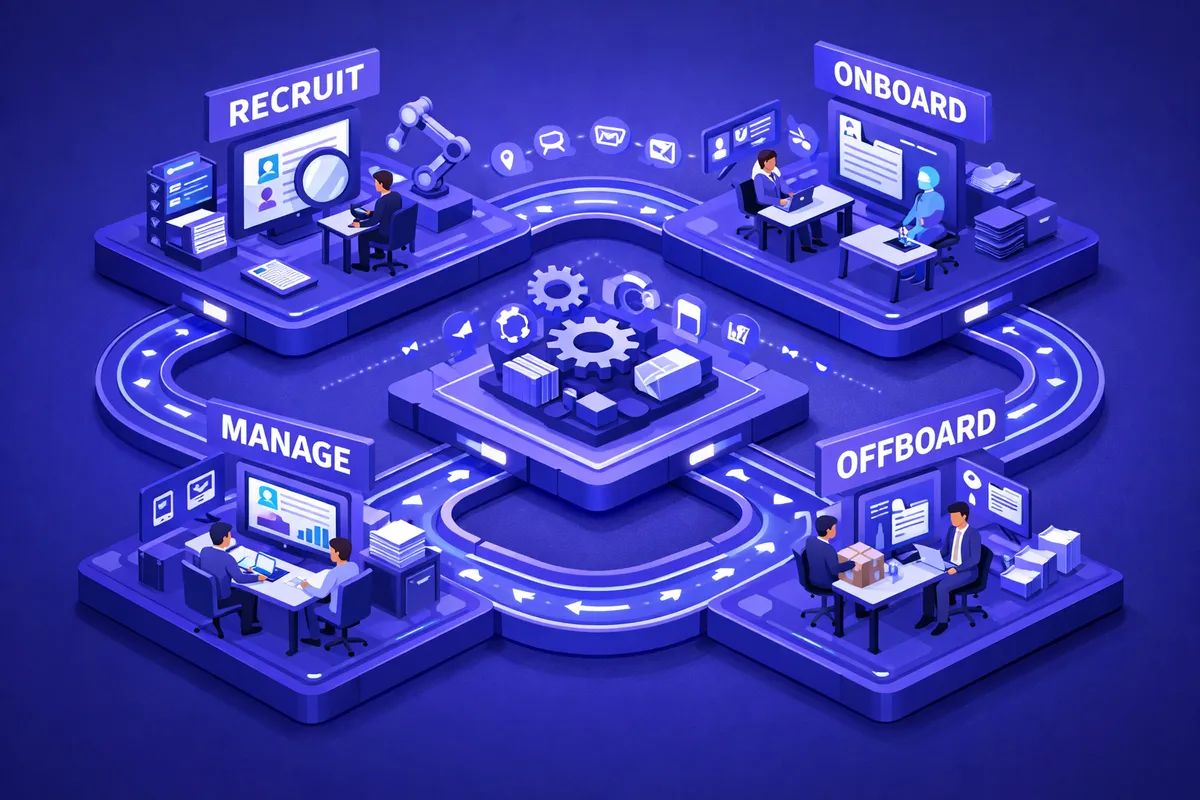
How We Build HR Automation for Ukrainian Village
Ukrainian Village employers do not need enterprise HR systems. They need reliable automation for the 20 percent of HR processes that consume 80 percent of the administrative time: onboarding, compliance tracking, time and attendance, and PTO management. We build exactly that, integrating with the payroll and scheduling tools that Ukrainian Village small businesses already use: Gusto, Square Payroll, Homebase, and When I Work are common in this market.
The approach for a typical Ukrainian Village employer starts with onboarding. We build a digital onboarding sequence that begins automatically when an offer is accepted, collects I-9 documentation and tax forms electronically, routes the new hire handbook and policy acknowledgments for digital signature, and confirms completion without manual intervention. That sequence integrates directly with your payroll system so the new hire is set up to receive their first paycheck without manual data entry.
Chicago paid sick leave compliance is the second priority. We build accrual tracking that calculates correctly based on hours worked, enforces carryover rules at the anniversary date, records usage in a compliant format, and produces the reports that document compliance if a complaint is ever filed. For employers with hourly workforces, this automation eliminates the most common compliance gap in the Ukrainian Village small business community.
Industries We Serve in Ukrainian Village
Independent Coffee Shops and Cafes: The coffee businesses along Chicago Avenue that define Ukrainian Village's cafe culture employ baristas, managers, and kitchen staff with scheduling complexity, Chicago paid sick leave obligations, and seasonal fluctuation tied to neighborhood event patterns. Automated onboarding, time tracking, and compliance management reduce the administrative burden for cafe owners who are simultaneously managing operations and customer experience.
Restaurants and Bars: Ukrainian Village's independent restaurants and bars on Division Street and Damen Avenue employ front-of-house, back-of-house, and management staff with the tip documentation, scheduling complexity, and compliance requirements that hospitality employment creates. HR automation handles the administrative throughput that this workforce model requires.
Boutique Retail and Design Studios: The boutique retail and design businesses along Damen Avenue and Chicago Avenue employ creative and customer-facing staff with the variable scheduling and seasonal demand that retail involves. Automated onboarding and scheduling reduce the administrative work of managing small retail teams through seasonal hiring cycles.
Yoga and Fitness Studios: The fitness and wellness businesses near Eckhart Park and Smith Park employ instructors and staff with class-based scheduling, independent contractor and employee classification questions, and credential tracking requirements. Automated scheduling integration, classification documentation, and credential expiration tracking address the HR complexity of the fitness studio model.
Salons and Personal Service Businesses: Ukrainian Village's salons and personal care businesses employ licensed professionals with state license renewal requirements, booth rental versus employee classification questions, and the administrative complexity of service-based scheduling. Automated license expiration tracking and classification documentation protect these businesses from the most common compliance vulnerabilities.
Design and Creative Professionals: The design studios and creative professionals along Hoyne Avenue and Western Avenue who staff up for projects manage a mix of employees and contractors with classification documentation needs and the project-based onboarding and offboarding that project work creates. Automated contractor documentation workflows and project-based onboarding sequences manage these cycles without consuming project management bandwidth.
What to Expect Working With Us
1. Process audit and scoping conversation. We start by understanding how you currently manage HR: what you do manually, where the pain points are, what compliance obligations apply to your workforce size and industry. For most Ukrainian Village employers, this conversation surfaces three to five automation opportunities with clear cost-benefit rationale.
2. Platform recommendation and configuration. We identify the right tool for your size and complexity, whether that is a well-configured Gusto account with custom onboarding workflows or a more custom automation build for employers with complex scheduling and compliance requirements.
3. Build, integration, and testing. We build the automation, integrate with your payroll and scheduling systems, and test against your actual workforce scenarios. For a Ukrainian Village cafe or boutique, the implementation is typically 4 to 6 weeks from kickoff to launch.
4. Training and ongoing support. We train you and any designated administrators, deliver 30 days of post-launch support, and maintain compliance calendar updates as Chicago and Illinois employment law evolves.