How We Build ERP Integration for Ukrainian Village
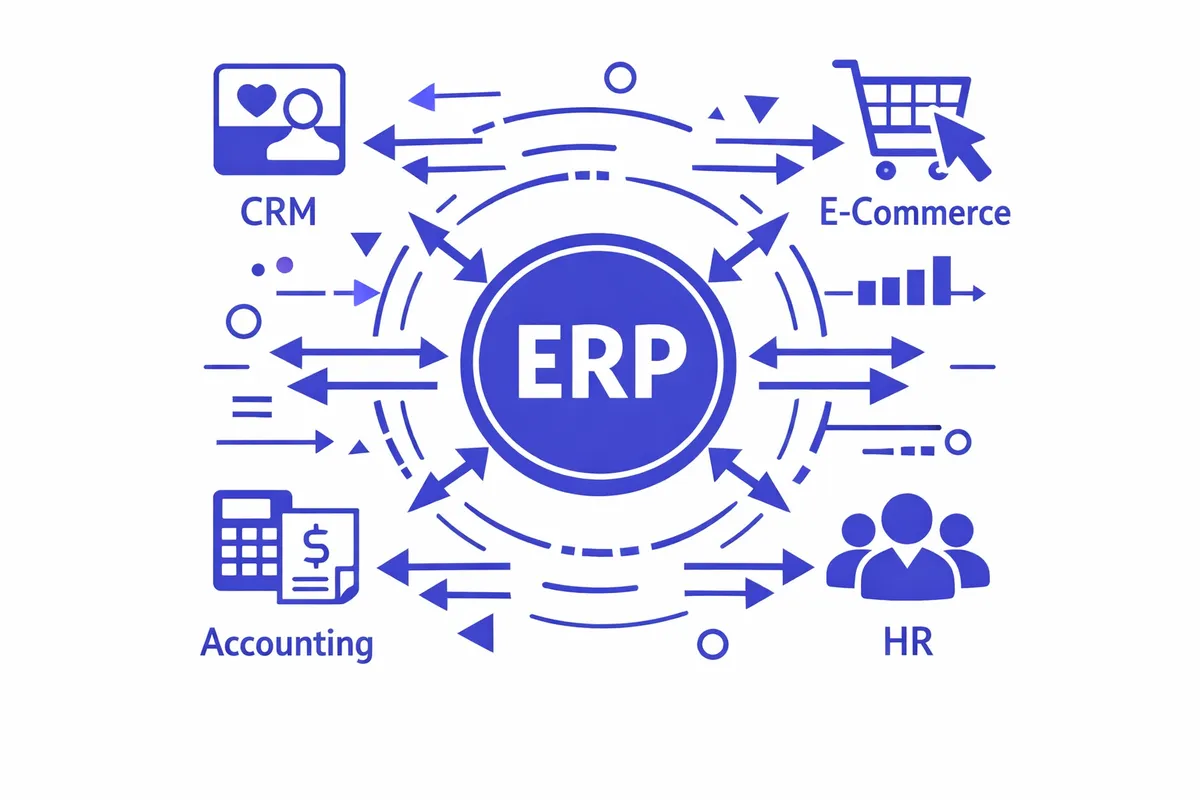
ERP integration engagements in Ukrainian Village begin with a complete inventory of every system the business runs and every point where data is currently transferred manually between them. For a specialty food importer on Chicago Avenue, that walkthrough typically reveals four to seven manual handoffs per operational cycle: wholesale orders entering the ERP by hand, retail sales posted to accounting manually, inventory adjustments made separately in the ERP and the POS, and financial reconciliation done at week end rather than in real time.
From that inventory, we design a connection architecture that establishes a clear data ownership model: the ERP is the system of record for inventory and orders, the POS pushes sales data to the ERP rather than maintaining its own separate inventory, and the accounting platform receives structured data from the ERP on a defined schedule rather than relying on manual journal entries. Getting that ownership model right in the design phase is what prevents the integration from creating new confusion about which system has the authoritative number.
We work with the ERP platforms Ukrainian Village businesses commonly use: NetSuite, SAP Business One, Microsoft Dynamics 365 Business Central, and Odoo. We have deep experience with the legacy accounting platforms common in the neighborhood, including older QuickBooks Desktop and Sage versions. For legacy platforms without published APIs, we build file-based integration pipelines that extract data on a schedule, transform it into the format the target system expects, and validate before loading. These pipelines are reliable and eliminate manual data entry.
For Odoo specifically, we build custom modules when the standard marketplace connectors do not cover the specific workflow or platform a Ukrainian Village business needs. Odoo's open-source architecture makes custom development practical for businesses at small-enterprise scale.
Industries We Serve in Ukrainian Village
Specialty food importers and distributors on Chicago Avenue and Division Street connect ERP inventory and order management to wholesale customer portals and retail POS systems. When a wholesale order received from a restaurant buyer on Damen Avenue flows automatically into the ERP fulfillment queue and posts a receivable to the accounting platform, the business manages more wholesale accounts at the same staffing level.
Ukrainian and Eastern European specialty retailers and delis in the neighborhood around St. Nicholas Ukrainian Catholic Cathedral connect POS systems to ERP inventory and accounting platforms. When every retail sale deducts from ERP inventory in real time and posts to the accounting ledger automatically, the owner has accurate stock and financial data at any moment without a reconciliation cycle.
Independent coffee shops and restaurants on Chicago Avenue and Division Street connect reservation and POS systems to inventory management, purchasing, and accounting platforms. When ingredient usage tracked through the POS flows to the ERP inventory system and triggers purchasing alerts when stock falls below par, the operator maintains accurate food cost data without weekly manual counts.
Boutique retail and home goods stores in the Near West Side corridor near Eckhart Park connect point-of-sale systems to ERP inventory management and vendor ordering platforms. When a sale depletes stock below a reorder threshold, a purchase order is generated in the ERP automatically and sent to the vendor, eliminating the manual inventory review cycle that currently happens weekly.
Design studios and small manufacturers operating in the Ukrainian Village area connect project management and work order systems to ERP production tracking and accounting platforms. When completed work orders automatically close jobs in the ERP and post labor and material costs to the accounting system, the studio owner sees job profitability without a manual reconciliation after each project.
Wholesale and trade-oriented businesses supplying the broader Near West Side market from Ukrainian Village connect customer order portals to ERP fulfillment systems and accounting platforms. Along Hoyne Avenue and Western Avenue, businesses managing both wholesale and retail channels benefit from an ERP integration layer that keeps both revenue streams in the same inventory and financial picture.
What to Expect Working With Us
1. Systems and data flow audit. We document every platform in your stack, every data element that moves between systems, and every manual step currently required to make that movement happen. For a Ukrainian Village specialty retailer or importer, this typically reveals four to eight manual handoffs per cycle. Those handoffs become the integration target list.
2. Connection architecture design. We design the integration architecture before writing any code: which system owns each type of data, how each connection works, what schedule each sync runs on, and what validation rules govern each data transfer. You review and approve the architecture before development begins.
3. Build against your actual systems. We connect to your actual ERP instance and your actual POS, accounting, and ordering systems. We test against real transaction volumes and data formats, not synthetic test cases.
4. Parallel run and handoff. Every integration runs alongside your existing manual process for two full operational cycles. You verify automated outputs match manual outputs before retiring the manual step. Post-launch, you receive monitoring dashboards and error alerts, with a support agreement option for ongoing maintenance.