The Ukrainian-American Cultural Calendar as Email Content
The Ukrainian-American community that has been the neighborhood's anchor for decades maintains cultural institutions and events that provide email content opportunities for businesses that acknowledge and honor this history. Ukrainian Christmas (January 7), Ukrainian New Year, the Ukrainian Cultural Festival events, and the community programming of Ukrainian Village's cultural and religious institutions are all calendar anchors that a thoughtful West Chicago Avenue business can reference in its email content.
In the current global context, with Ukraine under ongoing military pressure, the Ukrainian-American community in Chicago has been in a heightened state of cultural solidarity and community activity. Businesses that have responded to this moment with genuine acknowledgment, whether through fundraising partnerships, cultural event support, or simply authentic recognition of the community's situation, have built a different kind of loyalty with Ukrainian-American subscribers than purely commercial communication can achieve.
This does not mean every email needs to be a cultural or political statement. It means that the businesses in Ukrainian Village that treat the neighborhood's history and current community realities with genuine respect will communicate with a more engaged subscriber base than those that treat the neighborhood's name as a commercial backdrop without substance.
Segmenting Ukrainian Village's Multi-Generation Audience
Ukrainian Village's three primary demographic groups, the Ukrainian-American heritage community, the creative class that has been in the neighborhood since the 1990s and 2000s, and the newer young professional residents, have different email engagement patterns worth separating.
The heritage community tends toward in-person commercial relationships and may be less digitally engaged with email marketing than the newer demographics. For businesses primarily serving this community, list building is almost entirely in-person, and email content should be simple, warm, and written in English that respects the subscriber's choice to engage in their adopted language.
The creative class cohort, which includes artists, designers, and the various creative professionals who made Ukrainian Village their home before the most recent wave of gentrification, is digitally engaged, appreciates email with genuine editorial voice, and responds strongly to content that acknowledges the neighborhood's history and character rather than treating it as a blank slate for new commercial identity.
The newest professional resident demographic, typically arriving from the Loop and River North via the Damen Blue Line, is accustomed to high-volume email marketing and applies a discerning filter. This subscriber responds to email that is clearly well-crafted and immediately useful. They will unsubscribe from anything that feels formulaic and stay subscribed to anything that consistently provides content worth reading.
Automation and Welcome Sequences for Ukrainian Village
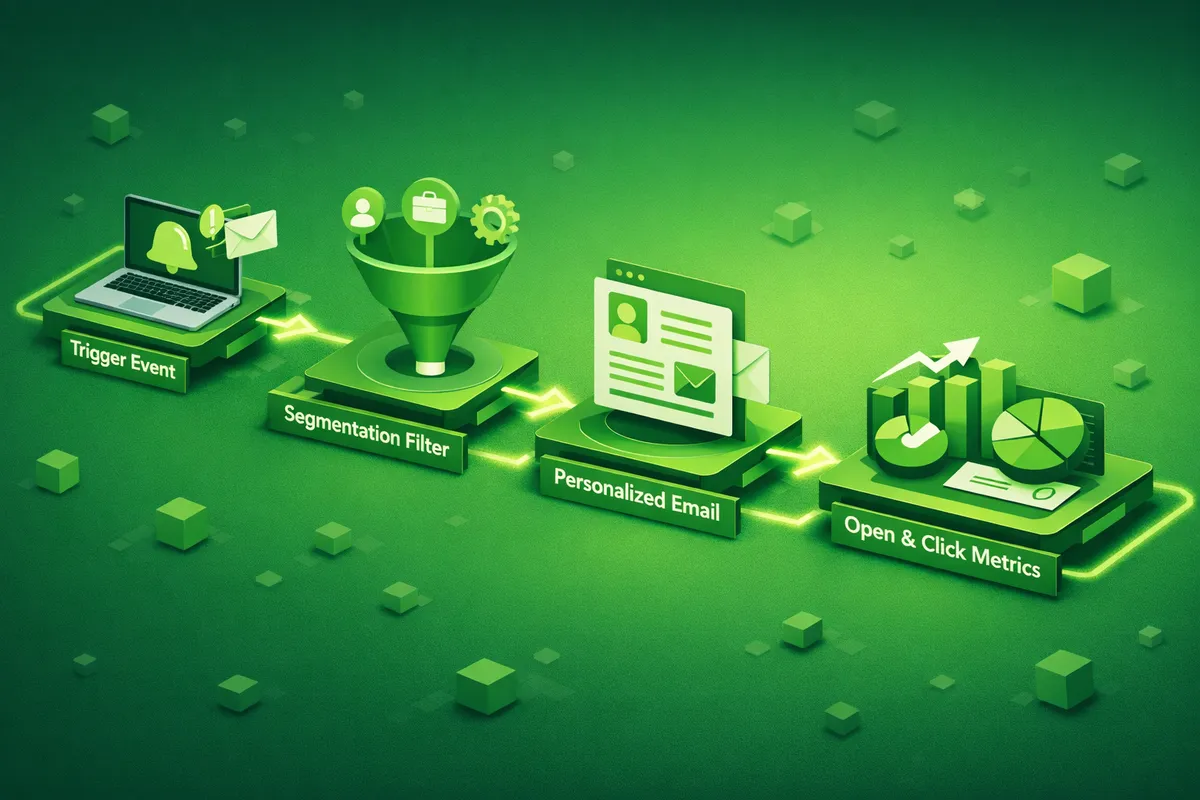
A Ukrainian Village boutique's welcome sequence should be three emails over seven days. The first email arrives within the hour of sign-up with a specific offer and a brief introduction to the shop's curatorial approach. The second email arrives on day three with content that shows rather than tells: a particular item that represents what the shop does, with a story behind it. The third email arrives on day seven with a "what to expect from us" note that sets the frequency expectation and previews what the subscriber can look forward to.
Re-engagement campaigns for Ukrainian Village lapsed subscribers should acknowledge the neighborhood's rhythms. A subscriber who went quiet in January through February may have been in the post-holiday quiet period that characterizes Chicago winter. A March re-engagement email that says "spring is here on Chicago Avenue and we have things worth seeing" is more appropriate than a generic "we miss you" message that ignores the seasonal context.