How We Build Business Intelligence for Ukrainian Village
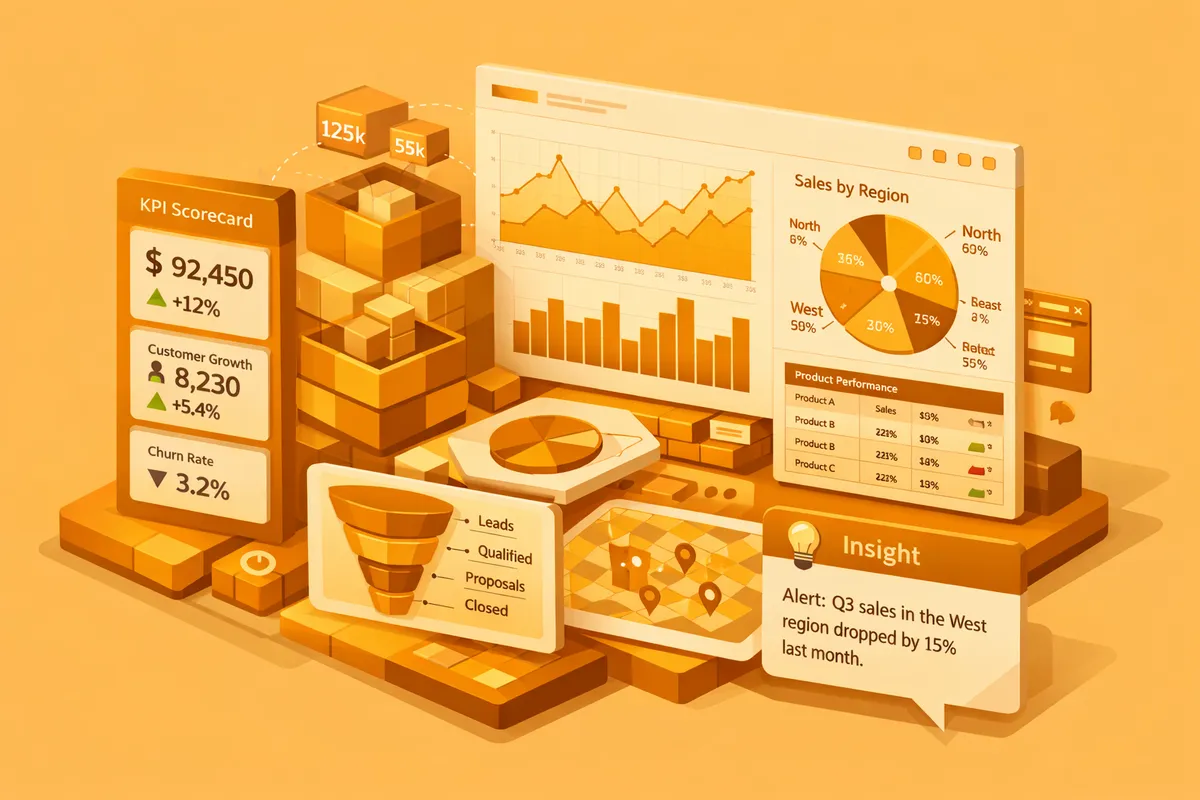
Ukrainian Village business owners do not want enterprise software. They want clarity. The goal of our BI builds here is to take the knowledge that currently lives in the owner's head and put it into a form that can be reviewed without effort, shared with a partner or manager, and used to make specific decisions.
Our discovery process for Ukrainian Village clients starts with a conversation about the business owner's current mental model: what do you know about your customers that no system tells you? What do you wish you could see that you currently cannot? The answers define the BI scope. For a coffee shop on Chicago Avenue, the first question might surface knowledge about morning versus afternoon customer patterns and the different product preferences of each. For a boutique near Eckhart Park, it might reveal that the owner knows instinctively that one product category is the business's real driver but cannot quantify it relative to the rest of the inventory. BI makes that knowledge explicit and actionable.
Source system connections for Ukrainian Village independent businesses typically involve point-of-sale systems like Square, Clover, or Toast; scheduling platforms for salons and wellness studios; and basic accounting tools like QuickBooks or Wave. These are modern, well-supported systems with solid data export or API access. The technical work of connecting them to an analytics layer is straightforward. The analytical work of deciding what to measure and how to display it is where we spend most of our time.
For multi-ethnic businesses serving both English-speaking and Ukrainian or Eastern European customers, we build dashboards that work cleanly in the language the owner is most comfortable reading. The underlying data structure is the same; the presentation layer reflects the user's preference.
We keep dashboard complexity low. A Ukrainian Village independent business owner running operations largely solo does not need a fifteen-screen analytics suite. They need one dashboard they check daily and one report they review weekly. That discipline produces systems that actually get used.
Industries We Serve in Ukrainian Village
Independent coffee shops and cafes along Chicago Avenue and Damen Avenue manage revenue that is highly sensitive to day-of-week and seasonal patterns, with a customer base that includes daily regulars whose lifetime value is substantial. BI for these businesses connects POS data to transaction timing and customer frequency to surface the relationship between visit frequency and average spend that shapes retention decisions.
Boutique retail and specialty shops near Eckhart Park and Smith Park sell to a neighborhood customer base with strong aesthetic preferences and brand loyalty. Analytics connecting transaction data to product category performance and customer return rates gives boutique owners the inventory intelligence to buy more of what sells and less of what sits, without relying on end-of-season regret.
Salons and beauty service businesses on Damen Avenue and Western Avenue operate with a provider-based revenue model where individual stylist or therapist performance determines overall revenue. BI that connects scheduling data to revenue by provider and client retention by provider turns the owner's qualitative sense of who is performing well into a number-backed view they can use for staffing and compensation decisions.
Restaurants and bars near Holy Trinity Orthodox Cathedral and throughout the Division Street and Chicago Avenue corridors serve a mixed neighborhood customer base with distinct weekday and weekend patterns. A BI dashboard that shows revenue by day and time against labor cost for the same periods gives a restaurant operator the information to make smart scheduling decisions and identify which service periods need pricing or operational adjustment.
Design studios and creative businesses in Ukrainian Village, which attracts freelancers and small studios to its quiet side streets near Hoyne Avenue and Smith Park, often have project revenue that varies significantly from month to month. BI that tracks project pipeline, invoiced revenue, and accounts receivable against monthly overhead gives a studio owner the cash flow visibility to make hiring and investment decisions without anxiety.
Yoga and wellness studios along the neighborhood's commercial corridors serve a clientele that responds strongly to consistency of instruction and community belonging. Analytics connecting attendance data to instructor schedules and membership retention tells a studio owner which instructors are building the kind of class community that retains members and which are drawing attendance without building loyalty.
What to Expect Working With Us
1. Owner conversation and knowledge capture. We start by interviewing the business owner about what they currently know about their business from direct experience and what questions they wish they could answer. This session is not about technology; it is about documenting your operational knowledge so the BI system we build reflects it. Ukrainian Village business owners typically surface four to six insights during this conversation that become the core of the dashboard specification.
2. Source system review and simple connection design. We review the tools you currently use, assess what data they hold, and design the simplest possible connection to the analytics layer. We prefer connections that are fully automated and require no ongoing manual steps. Where automation is not possible, we design the lightest possible manual process. We confirm the data quality in each source system before building the pipeline so there are no surprises after launch.
3. Working dashboard in two to three weeks. We build fast and review early. The first dashboard covers your most important metrics and is built from real data. You see actual numbers for your business, not sample data or placeholders. We review it together, adjust based on what you see, and confirm that the metrics are calculated the way you expect them to be.
4. Independence from day one of launch. We build dashboards on platforms with straightforward interfaces and train you to use them before we finish the engagement. If you want to add a new metric after we are done, you can do it without calling us. If something looks off, you know how to investigate. The engagement ends when you are confident running the system yourself, not when we have delivered the files.