How We Build AI Integration Services for Ukrainian Village
Our process begins with mapping your current system landscape. We interview your team about which tools you use, what data each system manages, and what business intelligence requires combining data across systems. We identify the manual data work that is most tedious, most error-prone, or most time-consuming. These are the highest-value integration opportunities.
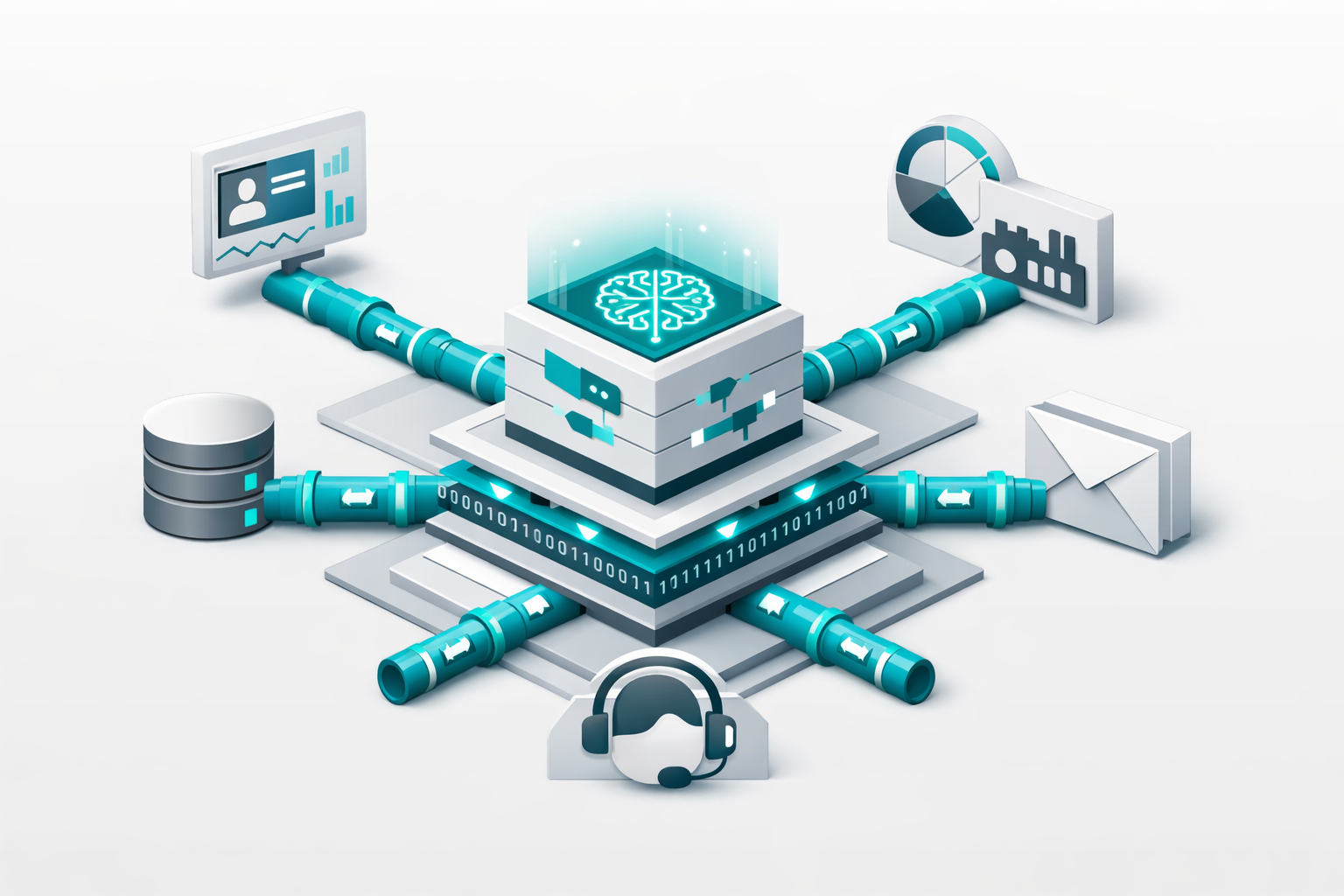
We then design custom integrations specific to your workflow. Implementation includes three components:
Data pipeline design. We design automated data flows that move information between your systems. For a boutique, this might include a nightly export of point-of-sale transactions from Square, transformation into accounting format, and upload to QuickBooks. For a coffee roastery, this might include continuous synchronization of sales data from the POS system to the inventory system so the inventory reflects current stock. For a design studio, this might include automatic population of time entries and project hours from a time tracking tool into project accounting.
Custom API development. We build APIs that expose your business data to tools you use or want to use. For a retailer, this might include an API that exposes inventory data to a dashboard or reporting tool. For a creative business, this might include an API that exposes time tracking data to an alternative analysis tool. These custom APIs are built on your existing systems and provide secure, controlled access to your data.
Workflow automation and exception handling. We build workflows that automate repetitive data processes and handle exceptions. If a data transfer fails, the system logs the error and alerts your team. If data from one system conflicts with data in another system, the system flags the conflict for manual resolution rather than silently overwriting data. This error handling prevents silent data corruption that only becomes apparent weeks later.
Industries We Serve in Ukrainian Village
Independent coffee shops and roasters along Division Street and Damen Avenue use AI integration to connect point-of-sale systems with inventory and accounting systems. Real-time inventory updates track coffee stock across roasting, storage, and retail locations. Sales data flows automatically to accounting so financial reports are current. Customer data flows to marketing systems so targeted campaigns are based on actual purchase history.
Independent retail and boutique stores use AI integration to keep inventory synchronized across physical store, online store, and stockroom. Point-of-sale integration connects retail sales to accounting, supply chain, and inventory systems. Marketing integrations connect sales data to email and social media platforms so promotions are targeted based on customer segments.
Coffee shops and cafes use AI integration to connect POS systems with scheduling tools so staffing predictions are based on actual sales volume. Integration with accounting and inventory systems provides visibility into cost of goods sold and operational profitability.
Design studios and creative services along Damen Avenue use AI integration to connect project management, time tracking, and accounting systems so project profitability is visible. Integration with client relationship systems ensures that project information flows to client communication tools.
Salons and wellness studios use AI integration to connect booking systems with accounting and inventory systems. Staff scheduling is informed by customer demand from booking data. Retail inventory is tracked alongside service delivery.
Small food and beverage businesses including bakeries and specialty food makers use AI integration to connect production and inventory systems with sales and accounting. Ingredient usage flows from production to accounting cost analysis. Sales data flows from retail to ingredient sourcing decisions.
What to Expect Working With Us
1. System landscape audit and integration opportunity identification. We interview your team about tools you use and what data work is most tedious or error-prone. We map your current system landscape and identify which data flows are manual and which could be automated. We prioritize integration opportunities by effort and impact. This phase takes 1 to 2 weeks and results in a clear roadmap of integration opportunities ranked by value.
2. Integration design and planning. We design custom integrations for your priority workflows. For each integration, we map how data flows between systems, what transformation is needed, and what error handling is required. We design APIs if your workflow requires exposing data to new tools. We estimate implementation effort and timeline for each integration. This phase takes 1 to 2 weeks.
3. Implementation and testing. We implement integrations and test them against your actual data. For each integration, we run test transfers to ensure data quality and accuracy. We set up error handling and monitoring so you know when something goes wrong. We train your team on how to monitor and troubleshoot the integrations. Implementation timeline depends on integration complexity but typically takes 2 to 6 weeks for a small business with 3 to 5 priority integrations.
4. Deployment and ongoing support. We deploy integrations to production and monitor their operation. We provide 24/7 support for integration failures. We optimize integrations based on what we learn from production operation. Most integrations become more reliable and more refined over time as edge cases are discovered and handled.