How We Build Accounting Automation for Ukrainian Village
The first conversation we have with Ukrainian Village business owners is about where their money actually moves. A design studio on Hoyne Avenue has a completely different transaction structure than a salon near Eckhart Park or a restaurant on Division Street. Before we recommend a single integration, we map the full picture: which platforms touch your revenue, where your expenses originate, what your current close process looks like, and where the errors and delays tend to cluster.
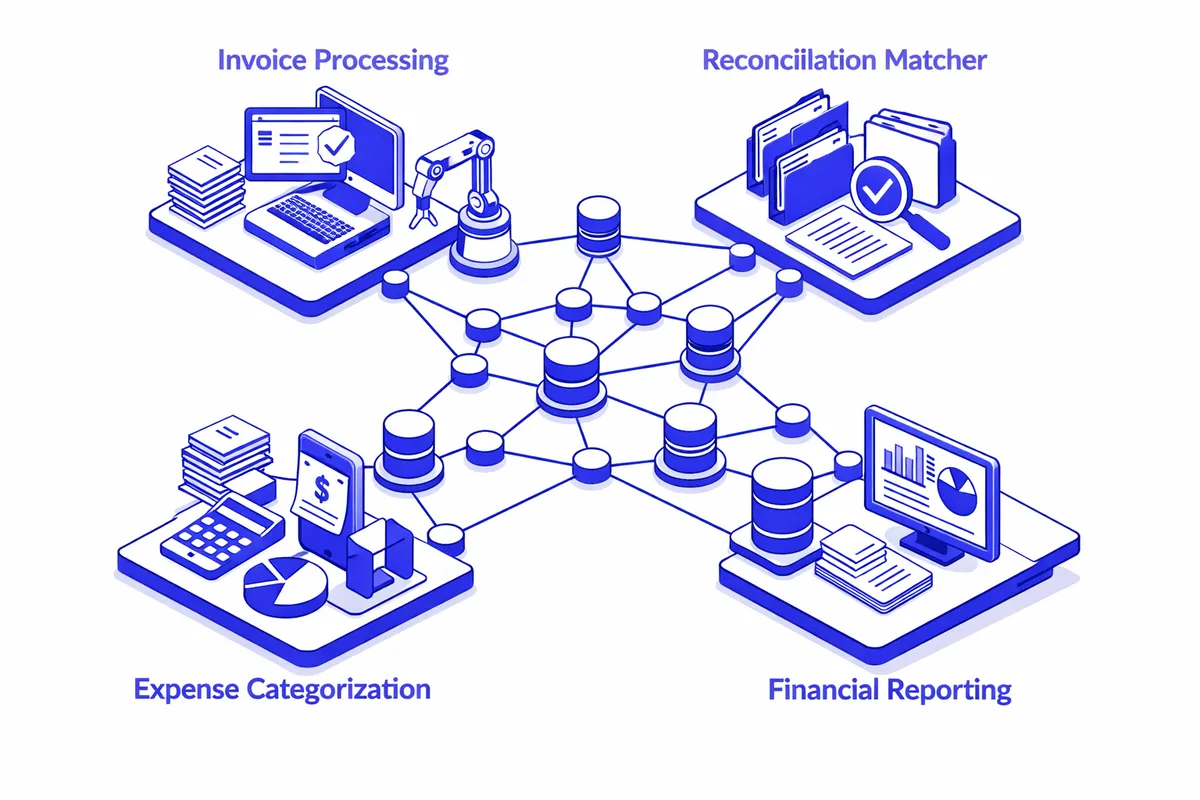
For most independent businesses in the neighborhood, the core automation chain connects four systems: POS or invoicing software, a bank feed, a payroll provider, and accounting software like QuickBooks or Xero. We configure the integrations so transactions flow in both directions accurately, including tax categories, class codes for multi-location businesses, and tip handling for hospitality operations.
We build in reconciliation logic specific to your business type. A boutique retailer along Western Avenue needs SKU-level sales data syncing to inventory costs. A yoga studio needs class-based revenue categories that align with how it tracks instructors. A restaurant needs split-tender reconciliation across cash, card, and third-party delivery platforms. Generic automation setups fail here because they assume a generic business. We build around what you actually sell and how you actually get paid.
Training takes one session for most clients. The goal is that your team understands what the automation is doing and can flag when something looks wrong, not that they become accounting software experts.
Industries We Serve in Ukrainian Village
Independent coffee shops and specialty roasters operating along Chicago Avenue face the dual complexity of retail and wholesale revenue streams. We automate the separation of in-store sales from wholesale account invoicing, so a roaster supplying three local restaurants never has to manually reconcile which revenue category each deposit belongs to. Stock purchases, equipment maintenance, and direct-trade vendor payments each get their own mapping from the start.
Bars and full-service restaurants on Division Street run some of the most complex transaction environments in independent hospitality: food, liquor, beer, wine, merchandise, and private events, often split across multiple POS terminals. Automation brings all of it into a single ledger, with separate revenue classes for each category so margin analysis is meaningful rather than approximate. Nightly close discrepancies that used to take hours to track down resolve automatically.
Boutique retailers and gift shops near Damen Avenue and along Hoyne Avenue manage inventory-driven books where cost of goods sold accuracy matters more than almost anything else. We integrate inventory management with accounting so every sale reduces your COGS automatically, purchase orders post when received, and your margin picture stays current between monthly reports.
Design and creative studios throughout the neighborhood typically operate on project-based billing cycles with retainers, milestone invoices, and variable expense reimbursements. Automation structures these into repeating invoice schedules, tracks receivables with automatic payment reminders, and posts project costs against revenue as they occur rather than at year-end cleanup.
Yoga and fitness studios near Smith Park and along Western Avenue handle subscription revenue, drop-in class passes, retail supplement sales, and instructor payroll in a single business. Automation connects scheduling software like Mindbody directly to accounting so member billing and class revenue post without manual import, and instructor pay flows directly from payroll into the expense ledger.
Hair salons and personal care businesses across Ukrainian Village face the specific challenge of booth rental income alongside service revenue. We set up separate income categories for booth rent and service splits, automate renter invoicing on monthly cycles, and connect card processing so tip income posts correctly to payroll rather than revenue accounts.
What to Expect Working With Us
1. Revenue and expense mapping. We spend the first week documenting exactly how money moves through your business: every platform, every payment method, every expense category. Ukrainian Village businesses often have more revenue streams than their owners realize once we map third-party delivery, wholesale, and event income alongside standard retail or service sales. This map becomes the architecture for your automation.
2. Integration build and testing. We configure your accounting integrations and run two full weeks of parallel testing, comparing automated postings against your existing records. For businesses with a Division Street or Chicago Avenue presence that see heavy weekend volume, we time the test period to include at least one high-traffic weekend so we can validate the automation under real conditions.
3. Clean historical import. If your books have gaps or miscategorizations from manual entry, we clean the current fiscal year before we activate automation. Starting with clean historical data means your automated books are actually useful for comparison, tax prep, and planning.
4. Monthly check-ins for the first quarter. Automation is not set-and-forget. We meet monthly for your first three months to review what the system caught, what it missed, and where it needs refinement. Most businesses need two or three small adjustments before the system runs cleanly on its own.