How We Build Workflow Automation for Streeterville
The first step in every engagement is a workflow audit, not a software demonstration. We spend two to three weeks mapping the highest-volume manual workflows in your organization. For each workflow, we document the trigger event, every step in the current manual process, the roles involved, the average time per instance, and the error or inconsistency rate. The audit produces a prioritized list of automation candidates ranked by the labor time saved, the error rate reduced, and the compliance risk eliminated.
For Streeterville healthcare organizations, that audit almost always surfaces prior authorization management, insurance eligibility verification, referral coordination, and appointment confirmation as the top four automation targets. These are high-volume workflows that consume significant administrative staff time, are performed identically regardless of the specific case details, and have clearly defined success criteria that automation can execute against reliably.
For hospitality clients on Lake Shore Drive and Michigan Avenue, the audit typically reveals that housekeeping assignment and room readiness communication, maintenance request routing and resolution tracking, and guest arrival communication are the workflows where automation delivers the fastest and most visible operational improvement. For professional services firms in the Illinois Center complex, the highest-value automation targets are usually new client intake, conflict checking, matter opening, and billing cycle management.
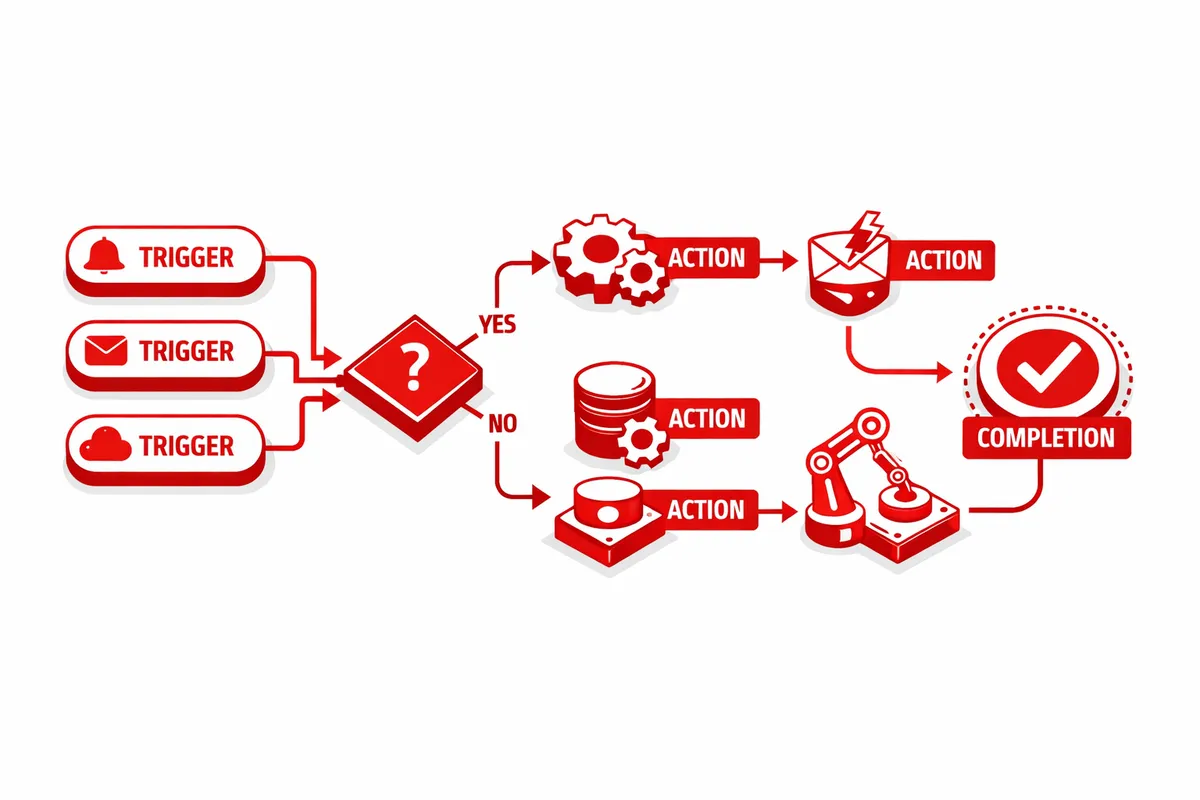
We build automation on platforms that integrate with your existing systems rather than requiring you to replace them. Workflow automation is not a new system. It is a process layer that connects the systems you already use and orchestrates the steps that currently require human intervention.
Industries We Serve in Streeterville
Medical specialty practices and hospital-affiliated outpatient groups near Northwestern Memorial Hospital on Fairbanks Court and East Erie Street automate prior authorization requests, insurance eligibility verification, referral intake processing, appointment reminder sequences, and credentialing renewal tracking. Each automation eliminates a specific category of manual work without requiring any change to clinical processes. A practice that automates prior authorizations alone typically recovers 6-10 staff hours per week currently spent on payer phone calls.
The law firms and professional service practices between Grand Avenue and the Illinois Center complex automate client intake and conflict checking, matter opening and billing setup, time entry review and invoice generation, and accounts receivable follow-up. For a Streeterville firm with 15-30 attorneys, automating the intake-to-matter-opening workflow eliminates dozens of manual steps per month that currently route through the same three or four administrative staff members.
Luxury hotels and extended-stay properties on Lake Shore Drive and Michigan Avenue automate housekeeping assignment based on checkout notifications from the PMS, maintenance request routing from guest and staff submissions to the appropriate technician team, group event logistics coordination, pre-arrival guest communication sequences, and post-stay review request delivery. During Navy Pier summer programming, automated operations coordination prevents the communication failures that produce service inconsistencies at high occupancy.
Real estate and property management companies along McClurg Court automate tenant move-in and move-out checklists, maintenance work order routing, lease renewal outreach sequences, rent escalation notices, and vendor contract renewal reminders. Multi-building portfolios benefit most from automation because the same workflow runs across dozens of buildings simultaneously without proportionally more staff attention.
Healthcare staffing and credentialing organizations serving the Northwestern Memorial campus automate candidate pipeline communications, credentialing document collection, placement confirmation workflows, timesheet approval routing, and onboarding checklists. The volume of credentialing activity near a major medical center makes automation a practical necessity, not an optimization.
Specialty retail and professional service businesses near Michigan Avenue and the John Hancock Center (875 North Michigan) automate customer follow-up sequences, appointment confirmation workflows, loyalty program notifications, inventory reorder triggers, and staff scheduling notifications around Michigan Avenue holiday season and Navy Pier summer demand spikes.
What to Expect Working With Us
1. Workflow audit and automation roadmap. We map your highest-volume manual workflows and produce a prioritized roadmap with time savings estimates, error rate projections, and implementation complexity for each candidate. For Streeterville healthcare clients, we evaluate which workflows intersect with HIPAA requirements and design those automations with compliant data handling from the start.
2. Integration architecture and platform configuration. We design the automation layer connecting your existing systems and configure workflow rules, routing logic, and exception handling for each automation. For a medical practice, that means connecting the practice management system, EHR, and patient communication platform. For a Lake Shore Drive hotel, it means connecting the PMS, maintenance system, and staff communication tools.
3. Phased deployment and staff training. We deploy by workflow category so each automation is validated in real operations before the next phase begins. Training covers both the new automated processes and exception-handling procedures. For hospitality clients, training is designed around operations environments where classroom learning is impractical.
4. Monitoring and refinement. After deployment, we track workflow completion rates, exception rates, and processing times. Most automations need parameter refinement in the first 60 days as real-world usage reveals edge cases. We address those refinements as part of the deployment, not as additional scope.