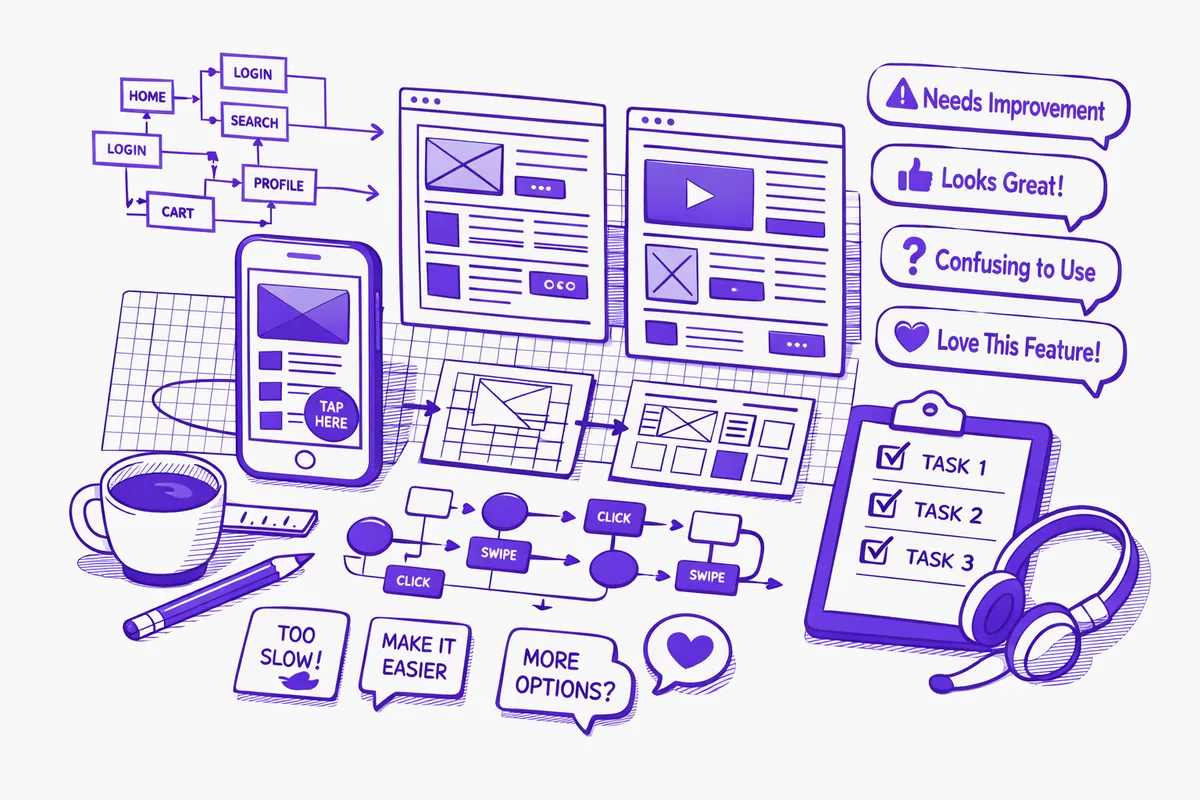
How We Build UI/UX Design for Streeterville
User research for Streeterville products requires recruiting from the specific populations who will use them. For healthcare platforms serving the Northwestern Memorial area, that means recruiting patients, clinical staff, and administrators separately, because their needs and contexts are completely different. A patient scheduling tool has two primary users with almost no overlap in their experience of it: the patient booking from home and the front desk coordinator managing the schedule under time pressure. Designing for one and assuming the other will adapt is how healthcare interfaces get bad.
For luxury residential products, we observe the actual building workflows our designs need to support. How does a resident currently interact with the front desk? What does the package delivery notification process look like today, and what friction exists in it? What do residents actually want from a community communications tool, and does their stated preference match their observed behavior? Observational research in the Streeterville residential context surfaces insights that interviews alone do not produce.
For hospitality and tourism products connected to Navy Pier and the Ohio Street Beach area, we conduct field research in the actual environment: observing how visitors navigate, where they pull out their phones, what questions they ask, and where they give up and do something else. Usability testing for these products happens on location when possible, because the performance of a wayfinding or ticketing interface in a quiet testing environment tells you almost nothing about how it performs in the actual physical and social context of a Streeterville hospitality venue.
Industries We Serve in Streeterville
Healthcare platforms and clinical tools serving the Northwestern Memorial Hospital ecosystem benefit from UX research with patient, clinical staff, and administrative user populations, interface design for clinical contexts where information density and cognitive load are primary concerns, and usability testing under conditions that approximate the actual clinical environment rather than a quiet office.
Luxury residential and building management technology serving the high-rise residential buildings along Lake Shore Drive and McClurg Court benefit from resident experience design that matches the premium context, building operations tools designed for the staff workflows they need to support, and community platform design that encourages the kind of resident interaction management actually wants to foster.
Hospitality and event management platforms serving Navy Pier operators, hotel management at properties on Grand Avenue and Michigan Avenue, and event venues in the Streeterville area benefit from interface design for high-volume, time-pressured hospitality contexts, wayfinding and ticketing UX for visitors who are geographically unfamiliar, and operational tools designed for the conditions under which event staff actually use them.
Medical specialty practices and concierge medicine clustered along Fairbanks Court and Ohio Street benefit from patient portal design, appointment booking flows, and telehealth interface design that reflects the premium positioning of the practices and meets the expectations of patients choosing specialty and concierge care over standard primary care.
Law firms and professional services in Streeterville's professional services community benefit from client-facing portal design, document management interfaces, and communication tools that match the quality and confidentiality expectations of high-value professional services relationships.
Real estate and property development operating in one of Chicago's most active luxury residential corridors benefit from property marketing experiences, prospect portal design, and resident onboarding tools that support the premium narrative from first digital touchpoint through move-in.
What to Expect Working With Us
1. Discovery and Research. We recruit from the specific user populations your product serves in Streeterville. For healthcare products, that means clinical staff and patients near Northwestern Memorial. For residential products, it means building residents. For hospitality, it means visitors and operations staff at venues near Navy Pier. Research shapes every design decision that follows.
2. Information Architecture and Wireframing. We design structure before surface. Wireframes establish flow and layout without committing to visual design, enabling early feedback from Streeterville stakeholders and test participants before the high-fidelity investment begins. For healthcare and luxury residential products where precision matters, early wireframe testing is where the most important issues are found.
3. High-Fidelity Design and Prototyping. Pixel-precise interface design built in Figma, including the interactive prototype that allows stakeholders and test participants to experience the product before development begins. For luxury residential and premium professional services products, visual design quality is part of the deliverable, not just functional specification.
4. Testing and Iteration. We test with real users from the target population before handoff. For Streeterville products serving demanding professional audiences, including healthcare staff near Northwestern Memorial or residents of premium buildings on Lake Shore Drive, testing surfaces the expectations and failure modes that product teams consistently miss until after launch.