How We Build Supply Chain Automation for Streeterville
Discovery for supply chain engagements starts with procurement data, not process interviews. We pull twelve to twenty-four months of purchase orders, invoices, and vendor records from your accounting system and categorize every line item by category, vendor, frequency, and cost trend. For a Streeterville medical practice, that audit typically surfaces three to five clinical supply categories where manual ordering is creating both stockout risk and excess inventory simultaneously. For a hotel on Lake Shore Drive, it surfaces the linen and F&B category relationships with seasonal demand patterns that the current procurement approach is managing reactively rather than proactively.
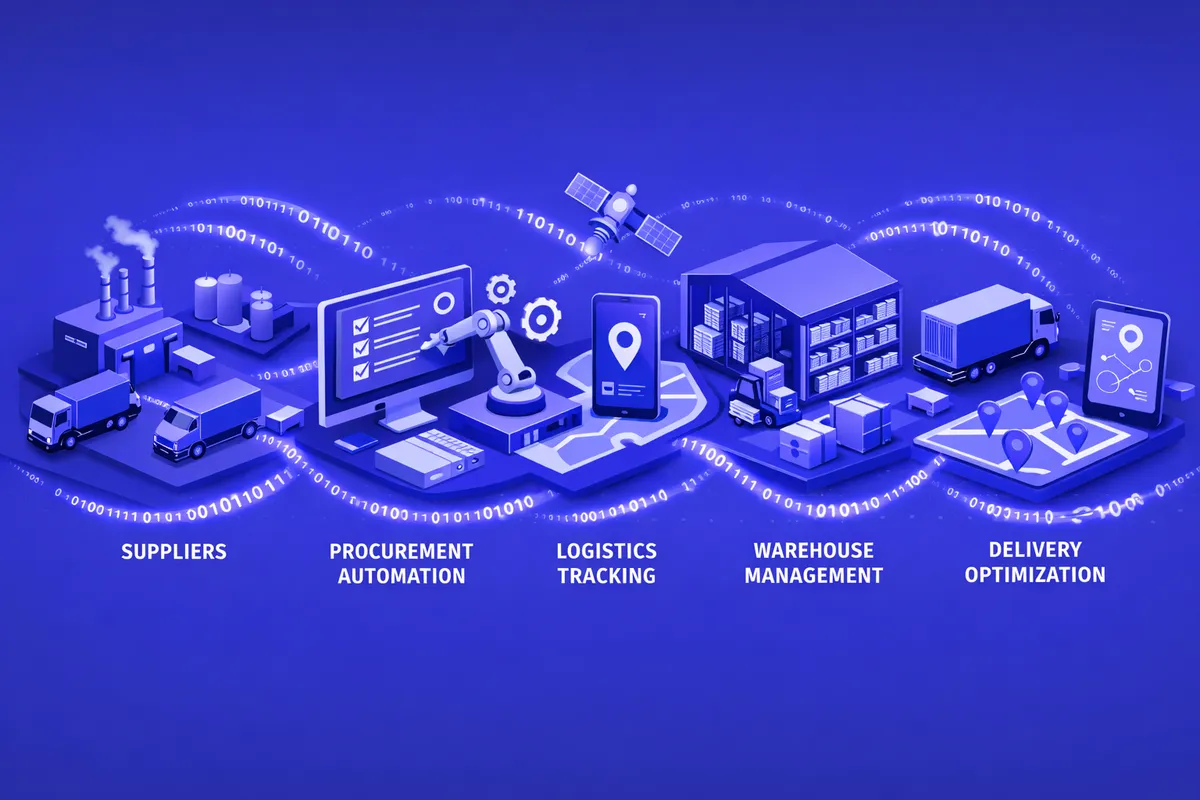
The automation architecture for healthcare procurement connects your ordering system to real-time inventory counts, establishes reorder points based on procedure volume forecasts, builds alternative vendor pathways that activate when a primary vendor has stock issues, and creates compliance documentation that satisfies regulatory requirements. For a practice affiliated with Northwestern Memorial's supply network, the automation works within the group purchasing organization framework while handling the practice's specialty-specific volume patterns.
For hospitality clients on Michigan Avenue and Lake Shore Drive, the architecture is organized around the occupancy forecast as the primary demand driver. The system pulls forecasted occupancy from the property management system, applies category-specific usage rates from historical data, and routes exceptions requiring human approval to the relevant department manager without burying them in routine confirmations.
Industries We Serve in Streeterville
Medical specialty practices and outpatient surgical centers near Northwestern Memorial Hospital on Fairbanks Court automate clinical supply procurement by connecting inventory management to procedure schedules, establishing vendor-managed inventory for high-frequency consumables, and building compliance documentation workflows for Joint Commission and payer requirements. The goal is eliminating stockout events and the reconciliation labor that consumes clinical operations staff time.
Luxury hotels and full-service properties along Lake Shore Drive and Michigan Avenue automate the procurement workflows for housekeeping supplies, F&B inventory, maintenance materials, and guest amenities. The automation system connects the property management system's occupancy forecast to procurement triggers across all categories, allowing the director of operations to manage by exception rather than by reviewing every purchase order. During Navy Pier summer programming and Michigan Avenue holiday season peaks, automated procurement prevents the last-minute ordering scrambles that generate premium freight costs and stockout risk simultaneously.
Real estate and property management companies overseeing buildings along McClurg Court and the Illinois Center complex automate maintenance supply procurement, vendor service contract management, and capital expenditure purchasing within board-approved parameters. For large residential buildings, automated maintenance supply ordering reduces the administrative burden on building management staff and ensures that technicians always have the materials needed for the most common repair categories without carrying excessive storeroom inventory.
Restaurant and food and beverage operations near Grand Avenue and the Navy Pier approach automate their ingredient ordering through integrations with POS data and recipe management systems. The automation connects actual sales volume from the previous service period to ingredient reorder quantities, adjusting for the demand patterns that differ between a Navy Pier event Friday and a quiet Tuesday. Waste reduction and stockout prevention are both measurable outcomes of systems that order based on data rather than estimates.
Healthcare administrative and staffing organizations operating in Streeterville's professional services corridor automate the procurement of office supplies, technology, and professional services vendor contracts. For organizations managing large healthcare worker populations near Northwestern Memorial, automated procurement also covers the credentialing document management and compliance materials that have supply chain characteristics similar to physical goods.
Specialty retail and luxury goods businesses along Michigan Avenue near the John Hancock Center (875 North Michigan) automate inventory management and vendor replenishment for predictable demand categories. The Michigan Avenue holiday corridor creates forecasting requirements that benefit from data-driven replenishment. Automated systems connecting POS data to vendor ordering ensure key SKUs are in stock through the highest-revenue weeks.
What to Expect Working With Us
1. Procurement data audit and opportunity identification. We analyze your procurement records for the past 12-24 months and identify the specific categories where automation delivers the highest yield: stockout history, excess inventory carrying cost, manual labor hours in ordering and reconciliation, and vendor contract terms that are being renewed without competitive analysis. For healthcare clients near Northwestern Memorial, we specifically analyze clinical supply categories where procedure volume and ordering patterns are currently misaligned.
2. System architecture and vendor integration design. We design the automation architecture connecting your procurement triggers to your inventory data, your vendor EDI or API connections, and your approval workflow for exceptions requiring human review. For hospitality clients, the occupancy forecast integration is central to the design. For healthcare clients, the procedure schedule integration is the primary demand signal. We design around your actual demand drivers, not a generic procurement automation template.
3. Phased build and vendor onboarding. We build the automation in category phases, starting with the highest-volume and highest-risk procurement categories and expanding as each phase is validated. Vendor onboarding, including EDI setup or API integration with the vendors who support those connection types and email or portal-based automation for those who do not, happens in parallel with the system build for each category.
4. Steady-state monitoring and optimization. After full deployment, we monitor order accuracy, stockout events, vendor fill rates, and cost-per-unit trends. For Streeterville hospitality clients, we review and update automation parameters before and after Navy Pier summer season to reflect the demand shift accurately.