How We Build Custom ERP for Streeterville
The first engagement is not a demo. We spend four weeks inside your operations before a single line of code is written. We interview the department heads who manage the most complex workflows. We shadow the administrators who spend the most time reconciling disconnected systems. We map every data handoff between your existing platforms, every manual step that exists because two systems cannot communicate automatically, and every reporting gap that prevents your leadership from seeing operational reality clearly.
That fieldwork produces a workflow map specific to your organization, not a template imposed from outside. For a Streeterville medical specialty group, the workflow map surfaces the connection points between clinical scheduling, authorization workflows, billing submissions, and payer reconciliation that need to be unified. For a hospitality property on Lake Shore Drive, it surfaces the revenue data flows between the PMS, F&B, and event systems that currently require manual aggregation before the general manager can see total property contribution margin.
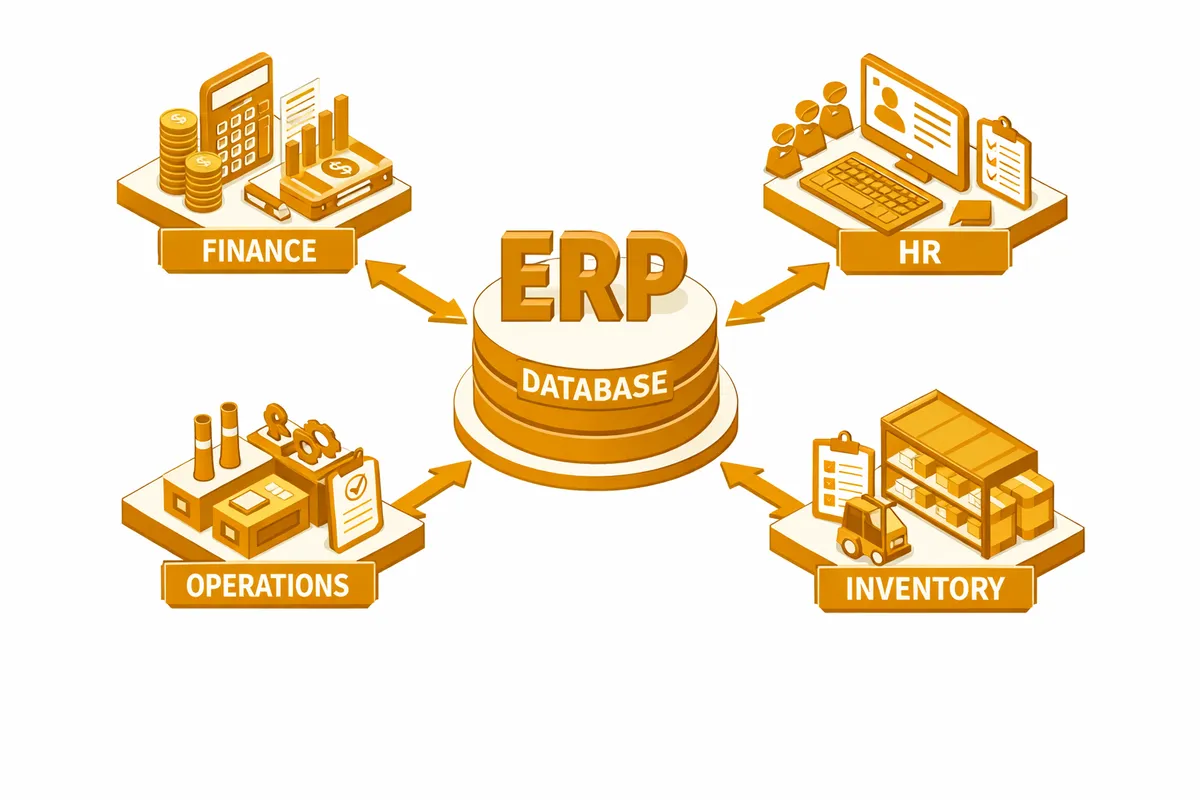
From the workflow map, we define the ERP architecture: the data models, the integration layers connecting your existing source systems, the custom modules replacing the manual steps, and the reporting layer that gives each role in your organization the specific visibility they need to do their job. We prioritize the modules that eliminate the most pain first so the system delivers value before the full build is complete. Most Streeterville clients see measurable time savings within sixty days of starting the implementation because we launch the highest-priority modules in phases rather than delivering everything at once at the end of a long project.
Industries We Serve in Streeterville
Multi-specialty physician groups and hospital-affiliated practices concentrated near Northwestern Memorial Hospital on East Erie Street and Fairbanks Court need ERP systems that connect clinical scheduling, authorization management, revenue cycle tracking, and provider credentialing into a unified operational view. The goal is eliminating the reconciliation work that falls on practice administrators and surfacing the financial metrics that physician partners need to make compensation and expansion decisions.
Luxury hotel and hospitality properties operating along Lake Shore Drive and the Michigan Avenue corridor use custom ERP to unify property management, food and beverage, event sales, parking, and financial reporting into a single system where general managers can see total property economics in real time. The Navy Pier summer event calendar creates demand spikes that require operational coordination across departments. A unified ERP makes that coordination visible and manageable.
Along McClurg Court and the Illinois Center complex, real estate and property management companies oversee portfolios with multiple asset classes that require consolidated operational reporting. A custom ERP connects lease administration, maintenance management, tenant communications, financial performance, and capital expenditure tracking into a single system that portfolio managers can navigate without logging into four separate platforms.
Law firms and management consulting practices between Ohio Street and Grand Avenue use custom ERP to connect time tracking, matter management, billing, collections, and profitability reporting. When the data is unified, a managing partner can see in real time which matters are approaching budget thresholds, which associates are running above or below target utilization, and which client relationships are generating the economics the firm assumed when it accepted the engagement.
Healthcare staffing and credentialing organizations that serve Northwestern Memorial and the broader Near North medical campus need ERP systems that manage candidate pipelines, credentialing timelines, placement tracking, billing, and payroll in one place. The regulatory complexity of healthcare staffing makes manual reconciliation between systems a compliance risk, not just an efficiency problem.
Luxury retail and professional service groups with multiple locations along Michigan Avenue near the John Hancock Center (875 North Michigan) use custom ERP to consolidate inventory management, staff scheduling, multi-location financial reporting, and customer account management. The Michigan Avenue holiday corridor drives peak operations that stress systems built for average volume. An ERP designed for peak capacity keeps the operation running cleanly through the periods that generate the most revenue.
What to Expect Working With Us
1. Operational fieldwork and workflow mapping. We spend four weeks conducting stakeholder interviews, process documentation sessions, and system audits with your actual operations teams. The output is a complete workflow map showing every data handoff, every manual reconciliation step, and every reporting gap the ERP will address. This is how we build systems that fit real organizations rather than theoretical ones.
2. Architecture design and phased roadmap. We present a phased ERP architecture with clear module priorities, integration specifications for your existing systems, and a timeline that delivers the highest-value modules first. For Streeterville healthcare clients, the first phase typically addresses revenue cycle visibility. For hospitality clients, it addresses property-wide financial consolidation. We align the roadmap with your operational calendar, avoiding major launches during Navy Pier peak season or the Michigan Avenue holiday corridor if your business is sensitive to those periods.
3. Phased development and validation. We build in phases, validating each module with the team members who will use it before moving to the next. Feedback from real users caught early in the process is far cheaper to incorporate than feedback collected after the full system is complete. Each module ships with training documentation and live walkthroughs for the teams it affects.
4. Support and expansion. After full launch, we monitor system performance, address bugs, and build new modules as your operational needs evolve. Most Streeterville organizations that start with a core ERP covering their most critical workflow gaps add two or three additional modules in the first year as the habit of having integrated data surfaces new use cases.