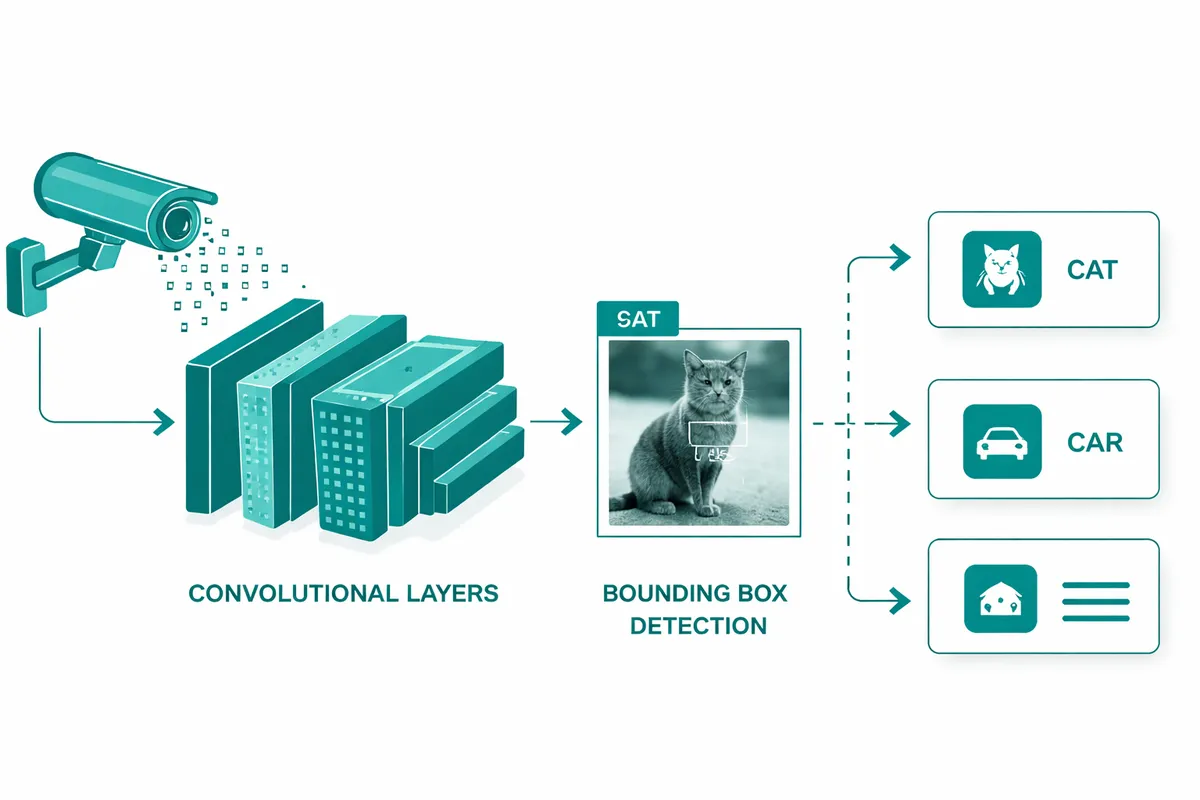
How We Build Computer Vision Systems for Streeterville
Our process begins by understanding what visual analysis you need. What images or video do you have? What patterns are you looking for? What decisions would improve with automated visual analysis? For Streeterville hospitals and specialty practices, we understand the difference between imaging analysis requirements and facility monitoring needs. For retail operations on Michigan Avenue, we understand the distinction between inventory monitoring and loss prevention. These are different applications that require different model architectures and different integration points with your existing systems.
We then select appropriate computer vision models. Some tasks, such as detecting objects or counting items on a shelf, can use general-purpose foundation models that are already well-developed. Other tasks, such as detecting early-stage anomalies in medical imaging or identifying specific security-relevant behaviors in a particular facility layout, require domain-specific models trained on representative data from your environment. We evaluate the right approach for each application and do not apply general-purpose solutions where custom training is needed for adequate accuracy.
We build systems that surface computer vision results to your Streeterville team in actionable formats. Instead of raw analysis, professionals get flagged findings with supporting context. A radiologist at a Northwestern Memorial-adjacent practice sees a summary highlighting suspicious imaging findings with annotated images. A retail manager on Grand Avenue sees low-stock alerts with shelf location and current inventory count. A security team near Navy Pier sees behavior alerts with video clips for immediate review. Your team acts on analysis rather than performing it.
We build integration with your existing workflows so computer vision results flow into the systems your team already uses, not into a separate dashboard that creates additional overhead.
Industries We Serve in Streeterville
Hospitals and medical centers deploy computer vision to analyze imaging studies (X-rays, CT, MRI), flag suspicious findings for radiologist review, and track facility utilization and patient flow. Radiologists focus on complex interpretation while the system handles initial screening.
Retail and shopping centers use computer vision to track inventory levels, detect theft or suspicious behavior, monitor customer traffic patterns, and understand dwell time by store section. Retailers optimize inventory and security based on automated visual analysis.
Security operations and loss prevention deploy computer vision to monitor surveillance video, detect suspicious behavior, flag security incidents, and track access patterns. Security teams respond to alerts rather than watching screens continuously.
Healthcare facilities use computer vision to monitor patient safety (wandering risk, fall risk), track equipment movement, manage facility capacity, and analyze workflow patterns. Clinical staff responds to alerts.
Professional services and corporate offices deploy computer vision to monitor access patterns, identify unusual behavior, track facility utilization, and manage visitor flow. Operations teams maintain security and efficiency.
Museums and cultural institutions use computer vision to monitor artwork security, track visitor flow patterns, understand exhibit engagement, and manage capacity. Curators and operations understand visitor behavior.
What to Expect Working With Us
1. Visual analysis needs assessment. We understand what visual data you have, what analysis matters, and what decisions would improve with computer vision. We identify high-value computer vision opportunities.
2. Model selection and training. We select appropriate computer vision models and train them on your specific visual data if needed. Medical imaging models are different from security models; we match the model to your needs.
3. System deployment and alerting. We build systems that surface computer vision results in actionable ways. Flagged findings are highlighted. Alerts are sent when thresholds are triggered. Your team acts on analysis.
4. Continuous improvement. We monitor system performance and refine models based on feedback. Over time, models become more accurate and require fewer false alerts.