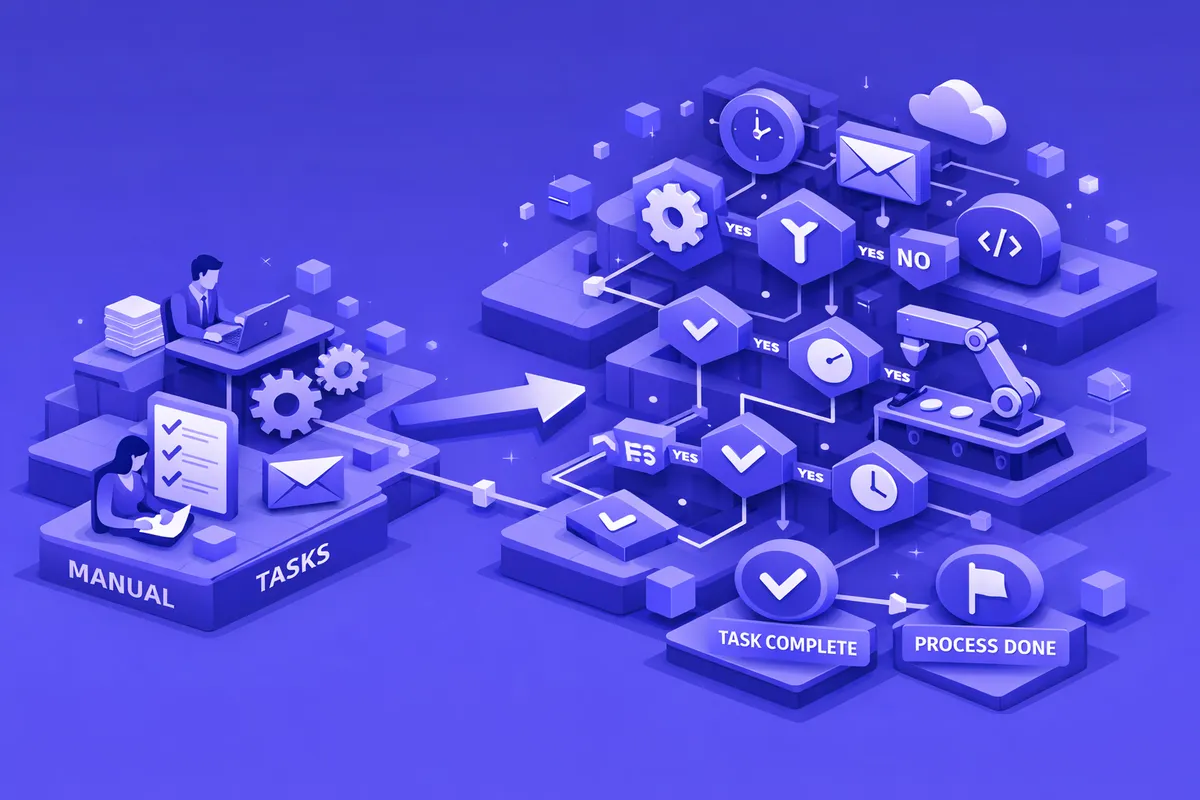
How We Build Business Process Automation for Streeterville
We start by following one process end to end. For a Streeterville medical practice, that might mean tracing a referral from the moment it arrives to the moment the patient is scheduled, watching every system it touches and every person who handles it. We do this on site, often in an office tower near Fairbanks Court, because the real process is never the one in the procedure manual. The waiting and the re-keying only show up when you watch.
Then we identify where automation creates the most leverage. Not every step should be automated. The judgment calls stay with people. The repetitive routing, the data entry, the status notifications, the validation checks: those are engineering problems. We document the current workflow precisely, including the regulated steps that cannot be skipped, and design the automated path around them.
Streeterville's businesses run on systems that hold sensitive data, so we build automation that respects those constraints. A law firm on Grand Avenue has matter management and document systems with strict access rules. A practice near Northwestern Memorial Hospital has clinical and billing systems bound by health-data regulation. We connect the automation through the proper interfaces, keep audit trails intact, and never route protected information somewhere it should not go.
We pilot the automated process alongside the manual one first, compare the results, and only cut over when the automated path is proven. Then we expand to the next process. The point is reliability, because in a regulated Streeterville practice, an automation that is mostly right is worse than no automation at all.
Industries We Serve in Streeterville
Medical specialty practices in the towers around Northwestern Memorial Hospital use business process automation to move referrals, intake, and scheduling without manual re-keying between systems. A referral that arrives by fax or portal gets validated and routed automatically, so a practice on Fairbanks Court can process the fall insurance-year surge without the front desk falling behind on every other task.
Law firms and legal practices along Grand Avenue and Michigan Avenue rely on automation to run conflict checks, client intake, document routing, and matter status updates through defined paths. Instead of an associate emailing for approvals and a paralegal assembling status reports by hand, the workflow advances itself, and the audit trail every regulated firm needs is captured automatically.
Hospitals and large healthcare systems anchored in Streeterville deploy process automation across departments to handle the administrative volume that clinical staff should never touch. Patient communications, prior-authorization workflows, and inter-department handoffs near the McClurg Court corridor run on automated paths, freeing clinical and administrative teams for work that genuinely requires them.
Hotels and hospitality operations near Navy Pier and along Ohio Street use business process automation to manage reservations, group bookings, housekeeping dispatch, and billing reconciliation. When a property runs at high occupancy, automated routing of requests and approvals keeps the operation moving without a manager personally touching every handoff between front desk, housekeeping, and accounting.
Luxury retail and showrooms on Michigan Avenue use automation to connect sales, fulfillment, client outreach, and inventory replenishment into one flow. A purchase on the Magnificent Mile triggers fulfillment, updates records, and queues the follow-up automatically, so retail staff stay on the floor with customers instead of working through back-office steps between sales.
Real estate and property management firms in Streeterville's high-rise market use process automation to handle lease applications, tenant onboarding, maintenance request routing, and recurring financial reporting across condo and rental buildings near Lake Shore Drive. The repetitive document handling and status tracking that fill a property manager's week move onto automated paths that run reliably across every building in the portfolio.
What to Expect Working With Us
1. End-to-end process tracing. We follow one of your workflows from start to finish on site, often in an office near Fairbanks Court or McClurg Court, watching every system and handoff. The real process, including where it waits, only becomes visible when we walk it with your team.
2. Leverage mapping. We identify which steps are repetitive routing and data entry, the engineering problems, and which require human judgment and stay with people. We document the regulated steps in your Streeterville workflow that cannot be removed, and design around them.
3. Compliant integration. We connect the automation to your clinical, matter management, billing, or property systems through proper interfaces, preserve audit trails, and keep protected data inside its boundaries, because Streeterville's businesses run under real regulatory constraints.
4. Parallel pilot, then expand. We run the automated process alongside the manual one, compare the output, and cut over only once the automated path is proven. Then we move to the next process, prioritized by the volume tied to your fall intake surge and other peak cycles.