Your Cart (0)

Your cart is empty

Streeterville, Chicago

AI Integration Services in Streeterville

AI Integration Services for businesses in Streeterville, Chicago. We know the neighborhood, the customers, and what it takes to compete locally.

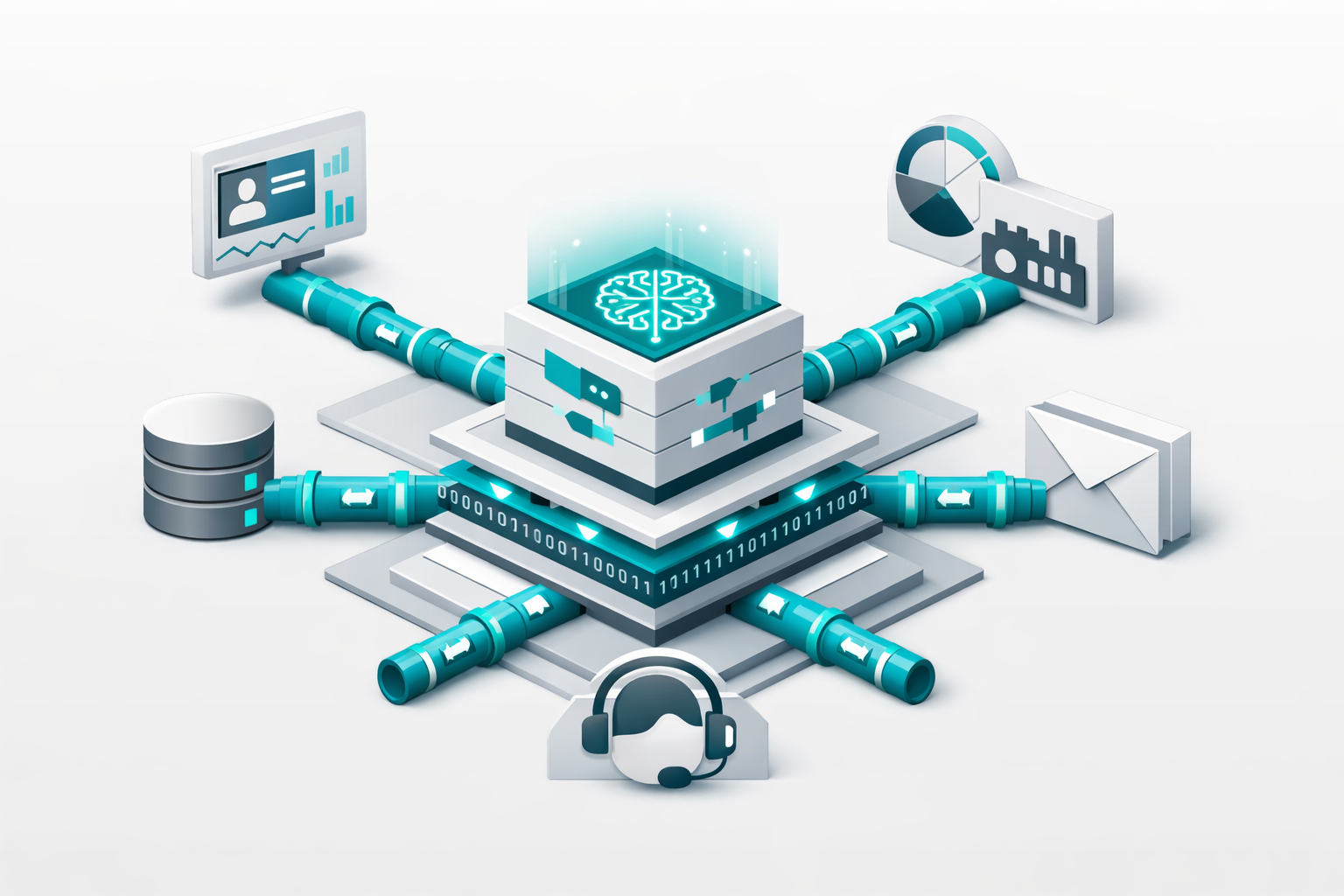
AI Integration Services in Streeterville service illustration

Financial Systems Integration for Illinois Center and AMA Plaza

Financial services AI integration in Streeterville requires both technical precision and regulatory awareness. A risk management AI that integrates with trading systems must do so without introducing latency that affects trading performance. A client analytics AI that integrates with portfolio management systems must access data through controlled API connections that satisfy the data governance requirements of your compliance program. An AI-assisted compliance monitoring system that integrates with communications surveillance infrastructure must produce outputs that satisfy the record-keeping standards applicable to your firm.

We build financial systems AI integrations with the reliability and auditability that regulated financial services clients require. Integration connections are built with redundancy and failover to prevent AI system failures from affecting operational systems. All integration activity is logged with the detail that supports regulatory audit and examination. Data flows between financial systems and AI platforms are governed by data use agreements that define what data is shared, how it is protected, and how it may be used.

For firms managing multiple AI tools from different vendors, we also provide AI infrastructure consolidation: building an integration layer that connects multiple AI platforms to shared data sources, rather than building separate integrations from each AI tool to each data system.

Hospitality Technology Integration for Navy Pier Area Properties

Hotel properties serving Streeterville's tourism and business travel markets typically have technology environments that grew through acquisition and legacy vendor commitments rather than through planned architecture. A property may operate a PMS from one vendor, a loyalty platform from another, a revenue management system from a third, and a restaurant POS from a fourth, with none of these systems designed to share data with an AI layer that did not exist when they were purchased.

AI integration for hospitality clients in Streeterville focuses on two primary outcomes: unified guest data and automated revenue optimization workflows. Unified guest data integration connects the PMS, loyalty platform, and ancillary revenue systems into a guest profile that feeds personalization and marketing AI. Revenue optimization integration connects the revenue management system, booking channels, and demand forecasting AI into a workflow where AI-generated pricing recommendations are surfaced directly in the revenue management interface rather than requiring the revenue manager to check a separate AI dashboard.

For event venues serving Navy Pier and the broader Streeterville tourism economy, AI integration connects event management systems to demand forecasting models, pricing AI, and client communication automation in a workflow that reduces the manual coordination burden on event sales and operations teams.

Enterprise Software Integration for Streeterville Corporate Tenants

The corporate tenants in Illinois Center and AMA Plaza use enterprise software platforms including Salesforce, ServiceNow, SAP, Workday, and Microsoft 365 that represent significant sunk investment and operational infrastructure. AI integration for corporate clients focuses on adding AI capability to these existing platforms rather than replacing them with AI-native alternatives.

Salesforce AI integration adds predictive lead scoring, account health monitoring, and automated communication personalization to CRM workflows that your sales team already uses. ServiceNow AI integration adds intelligent routing, predictive categorization, and automated resolution for IT service management. Microsoft 365 AI integration adds document processing, meeting summarization, and communication intelligence to the productivity tools your staff uses daily. Each of these integrations delivers AI value within your existing software investment rather than requiring your team to adopt and learn new platforms.

Frequently Asked Questions

Epic provides HL7 FHIR R4 API access for approved third-party integrations, and most AI integration with Epic-based systems uses this path. Integration requires Epic's review and approval of the AI application as a third-party app, configuration of appropriate SMART on FHIR scopes that limit the data the AI can access, and ongoing compliance with Epic's app security and data handling requirements. For integrations that write data back to Epic, additional validation workflows ensure that AI-generated outputs go through appropriate clinical review before modifying patient records. We have experience navigating Epic's integration approval process and design AI architectures that satisfy Epic's technical and contractual requirements.

The integration architecture depends on the PMS platform. For modern PMS platforms with API access, we use real-time webhook or polling integrations that keep the AI guest profile current as PMS records change. For legacy PMS platforms without API access, we use batch extraction approaches that sync data on a scheduled basis, typically nightly or more frequently for critical data like current reservations and check-in status. The AI platform receives PMS data through a secured integration endpoint, processes it into the unified guest profile, and delivers personalization outputs back to customer-facing systems through outbound API connections. The full integration architecture is documented for your technology team.

Integration timelines for financial services clients depend primarily on the complexity of source systems and the compliance review process. A single AI tool integration with a modern API-enabled system can be completed in three to five weeks. Multi-system integrations connecting an AI platform to trading systems, risk platforms, and client management infrastructure take eight to fourteen weeks. Compliance review and documentation, which is mandatory for regulated financial services applications, adds two to four weeks regardless of technical complexity. We provide a detailed integration timeline after an initial system assessment that documents all source systems, their integration capabilities, and any compliance requirements that affect the integration architecture.

Yes. Legacy system integration is one of the most common challenges we solve for Streeterville clients. Approaches for non-API systems include database-level integration using read-only connections to source databases (where contractually permitted), file-based integration using scheduled data exports from systems that produce reports, robotic process automation for systems with no programmatic access method, and middleware integration platforms that provide a translation layer between legacy systems and modern AI APIs. The approach is selected based on the system's technical architecture, the data freshness requirements of the AI application, and the operational impact constraints of each integration method.

Security is designed into the integration architecture from the start. Connections between source systems and AI platforms use encrypted transport with certificate authentication. Data minimization principles limit what data is transmitted to what the AI actually requires. Access tokens and API credentials are managed through secure credential vaults rather than hardcoded in integration code. Network segmentation isolates AI integration traffic from production financial system traffic where your security architecture supports it. All integration security controls are documented for your information security team's review and your compliance program's requirements.

Integrations require ongoing maintenance because source systems change. EHR updates, PMS version upgrades, Salesforce platform changes, and changes in your organization's data practices all require corresponding integration updates. We provide integration maintenance services that monitor connection health, respond to failures and degradation, and update integration logic as source systems change. For clients with in-house IT teams, we provide documentation and training that supports self-service maintenance with our team available for complex issues. Learn more about our [AI integration services across Chicago](/chicago/ai-integration-services) or explore other [digital services available in Streeterville](/chicago/streeterville).

Ready to get started in Streeterville?

Let's talk about ai integration services for your Streeterville business.