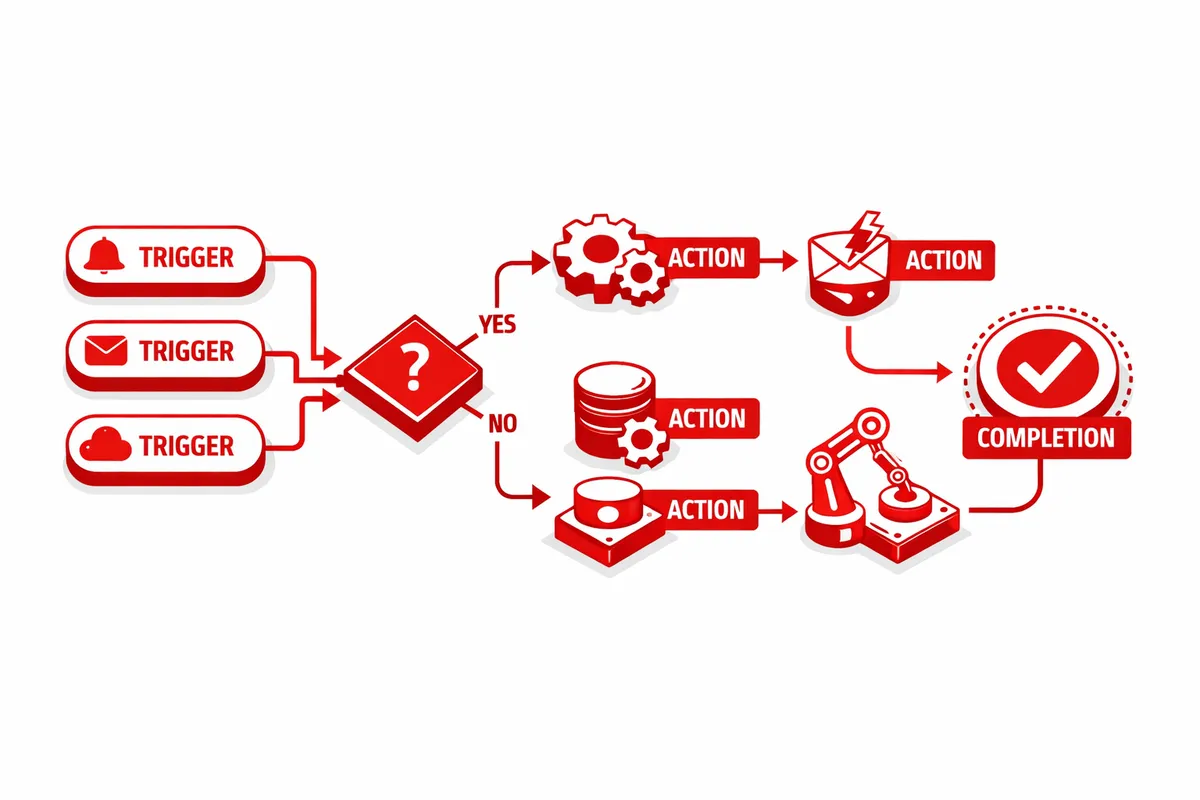
Our Workflow Automation Work in South Shore
- Grant reporting automation for South Shore nonprofits: pulling outcome data from program systems, formatting to funder specifications, tracking submission deadlines, and routing reports for review before submission
- Program enrollment automation: intake form processing, eligibility verification, confirmation communication, and participant record creation without manual data entry between steps
- Customer communication automation for South Shore service businesses: inquiry acknowledgment, quote follow-up, appointment confirmation, and post-service follow-up all triggered automatically at the right moments
- Invoice generation and payment tracking automation for South Shore contractors and service businesses, reducing the time between job completion and invoice delivery and improving cash flow
- Donor management automation for South Shore nonprofits: gift acknowledgment letters, recurring giving management, lapsed donor outreach, and the reporting that supports development operations
- Catering and event coordination automation connecting inquiry intake, availability checking, quote generation, contract routing, and event confirmation into a managed workflow rather than a series of manual steps
- Volunteer coordination automation: application processing, scheduling communication, reminder sending, and hours tracking without manual management of each step
Industries We Serve in South Shore
Nonprofits and community organizations connected to South Shore's social service and community development landscape use workflow automation to manage the administrative backbone of their programs: enrollment processing, outcome tracking, grant reporting, and donor communication that currently consumes staff capacity needed for direct community service.
Restaurants and food businesses on the Bryn Mawr restaurant row and throughout South Shore use automation for inquiry management, catering coordination, staff scheduling communication, and the operational workflows that connect the dining room to the kitchen to the back office.
Contractors and home services professionals working South Shore's residential neighborhoods use automation for job scheduling, quote follow-up, invoice generation, supplier ordering, and the customer communication that keeps client relationships organized as job volume grows.
Retail shops and boutiques along 71st Street and Stony Island use inventory management automation, purchase order generation, and customer communication systems that maintain operational accuracy as product variety and customer volume increase.
Faith communities across South Shore use automation for member communication, event registration, giving acknowledgment, and the administrative workflows that connect congregation management to ministry planning.
Social enterprises and creative businesses building in South Shore's growing entrepreneurial community use automation to manage the operational complexity of running a business without a large administrative staff.
What to Expect Working With Us
1. Process discovery and mapping. We begin by systematically mapping your current workflows through structured interviews with the people doing the work, observation of actual process execution, and documentation of rules, exceptions, and volumes. This mapping produces the evidence base for the automation ROI calculation and the prioritization framework that determines which processes to automate first.
2. Automation opportunity assessment. With processes mapped, we assess automation feasibility and expected impact for each candidate. We prioritize by volume, time cost, error rate, and strategic importance, producing a phased roadmap that delivers the highest return early.
3. Build and integration. We design automation logic and build using the appropriate tooling for each situation. Integration work connects automation to the systems your organization already uses, creating the data flows that eliminate manual transfer between platforms.
4. Testing, deployment, and monitoring. Automation is tested against real process data before production deployment. Monitoring is configured so failures surface immediately rather than accumulating silently. Post-deployment optimization handles the edge cases that emerge in production with your actual operations.