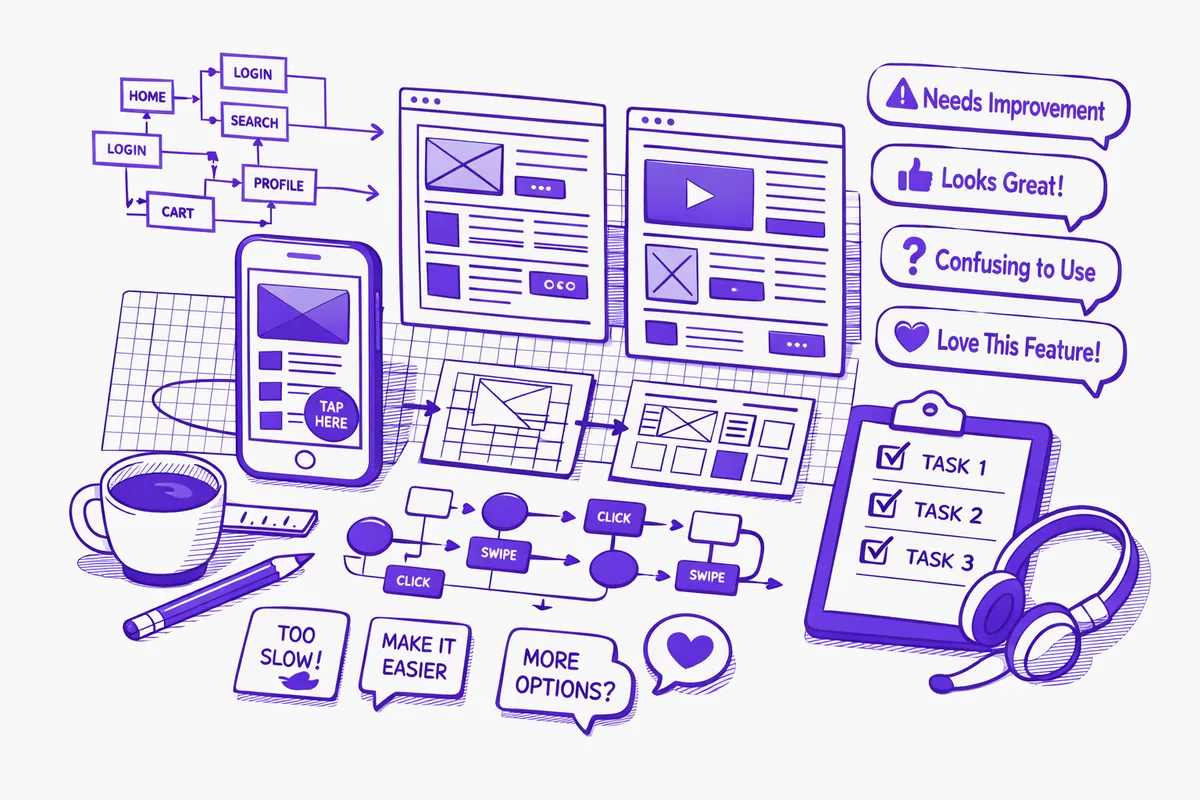
Our UI/UX Design Work in South Shore
- User research with South Shore community members: moderated interviews, usability testing, and contextual inquiry with the actual users your product is built to serve
- User journey mapping that identifies the specific points where South Shore users encounter friction in current digital tools or processes
- Information architecture design for websites, apps, and platforms serving diverse community audiences
- Wireframing and low-fidelity prototyping for rapid concept validation before visual design investment
- High-fidelity interface design in Figma including interactive prototypes that stakeholders and users can test before development begins
- Mobile app design for iOS and Android with explicit attention to accessibility and performance on mid-range devices common in the South Shore population
- Design systems and shared component libraries that enable development teams to build consistently at speed
- Accessibility design meeting WCAG 2.1 AA standards for organizations serving public programs and diverse community populations
- Nonprofit digital tool design for program management, member portals, volunteer coordination, and community-facing service platforms
- Developer handoff documentation with annotated Figma components, interaction specifications, and accessibility requirements
Industries We Serve in South Shore
Nonprofits and community organizations including those connected to By the Hand Club, Little Black Pearl, and South Shore's broader social service landscape use UI/UX design to build digital tools that actually get adopted by community members. Research-grounded design for community-serving organizations produces tools that reduce staff burden instead of creating new ones.
Restaurants and food businesses along the Bryn Mawr restaurant row use UX design for online ordering systems, reservation interfaces, and the digital menus and loyalty platforms that shape how South Shore customers interact with their brand outside the physical space.
Community development organizations and social enterprises building platforms to connect South Shore residents with services, opportunities, or each other use UX design to ensure those platforms are genuinely usable by the range of community members they are intended to serve.
Small businesses and entrepreneurs building digital products, whether apps, e-commerce experiences, or client portals, use UI/UX design to ensure their products are adopted by their target users rather than abandoned after first contact.
Health and wellness practitioners building patient-facing or client-facing digital tools use UX design to create experiences that reflect their professional standards and that clients find comfortable and easy to use across a range of health states and tech comfort levels.
Faith communities building member portals, giving platforms, and community event tools use UX design to create digital experiences that feel appropriate to the relationship between the congregation and its institution.
What to Expect Working With Us
1. Discovery and research. We begin by understanding your users and your organization's context. This means reviewing existing data, interviewing current or target users from South Shore's community, mapping the current user journey, and identifying the specific points where experience fails. For community-serving organizations, this phase is particularly important because user needs in South Shore may differ significantly from generic design assumptions.
2. Information architecture and wireframing. With research complete, we design structure before surface. Information architecture defines how content and features are organized. Wireframes establish flow and layout without visual design. We review with stakeholders and test lightly with users before committing to high-fidelity work.
3. High-fidelity design and prototyping. We build precise interface designs in Figma including interactive prototypes that stakeholders and test users can experience before any code is written. Design systems ensure every component is consistent and documented for developer use.
4. Testing and iteration. We test prototypes with real users from your target population. Testing surfaces issues that designers and stakeholders cannot find alone. We incorporate findings before handoff so the development team builds what is known to work rather than what looked good in a review session.