Our Supply Chain Automation Work in South Shore
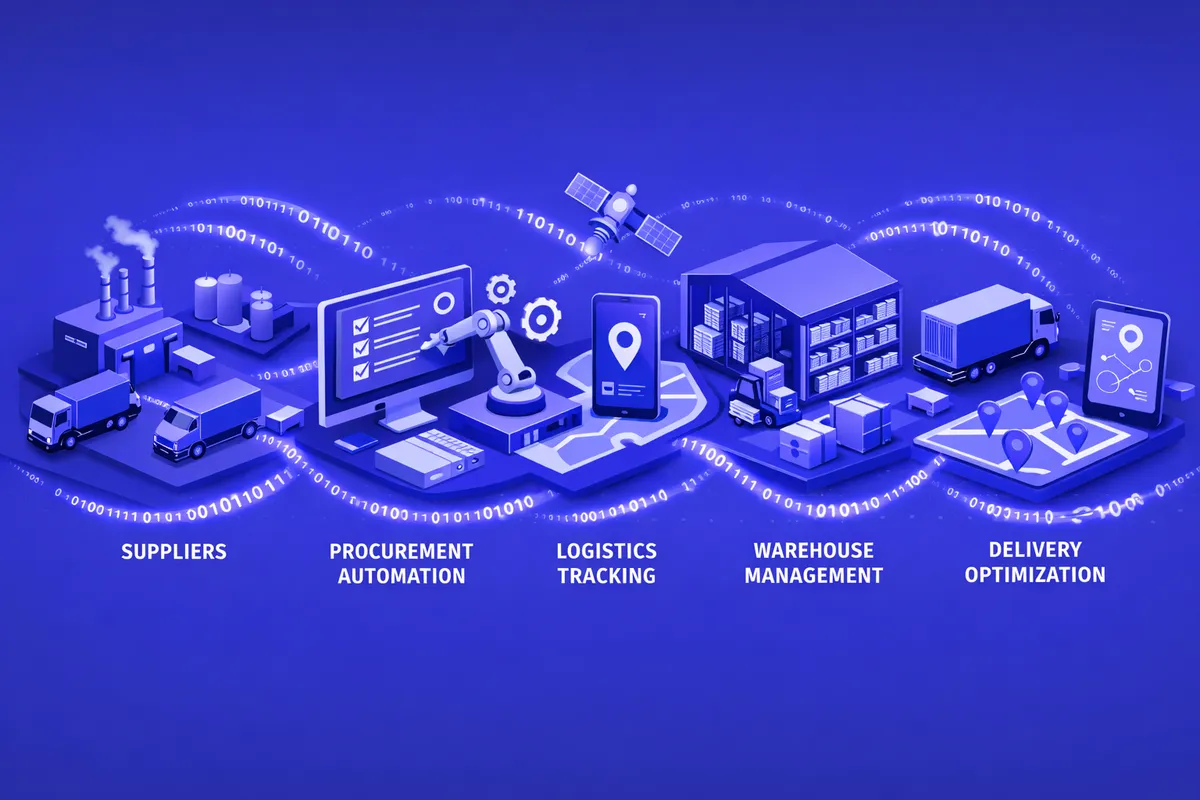
- Procurement automation for South Shore food businesses and retailers including demand-triggered purchase order generation, supplier communication automation, and delivery confirmation tracking
- Inventory management automation for South Shore restaurants and retailers with real-time depletion tracking, low-stock alerts, and replenishment trigger logic calibrated to your specific business rhythms
- Supplier communication automation handling order confirmations, advance ship notices, delivery updates, and exception alerts without manual follow-up for each transaction
- Contractor materials management including job-level material tracking, supplier order coordination, and the cost tracking that connects material purchases to job profitability
- Food distributor logistics automation for South Shore businesses managing temperature-sensitive supply chains with compliance documentation and real-time status visibility
- Integration with ERP, POS, and accounting systems common in South Shore businesses to create a connected operational picture without manual data entry between systems
Industries We Serve in South Shore
Restaurants and food businesses on the Bryn Mawr restaurant row and throughout South Shore's commercial corridors use supply chain automation to manage daily supplier relationships, monitor ingredient inventory, trigger replenishment orders before stockouts occur, and track supplier performance without daily manual checking.
Food distributors and wholesalers operating in South Shore and serving the broader Far South Side restaurant and retail market use automation to manage order intake, fulfillment coordination, delivery scheduling, and the compliance documentation that food distribution requires.
Contractors and home services companies working the Jackson Park Highlands and surrounding residential neighborhoods use materials management automation to track job-level consumption, coordinate supplier orders, and maintain the parts inventory that lets them complete jobs without delays.
Retailers and boutiques along 71st Street and Stony Island Avenue use inventory automation to monitor sales velocity, trigger replenishment orders at optimal points, and manage seasonal stock adjustments without manual tracking across multiple product categories.
Community organizations and social enterprises that manage physical program supplies including food pantries, community resource centers, and social service organizations use supply tracking and replenishment automation to ensure supply availability without manual monitoring.
What to Expect Working With Us
1. Process assessment. We map your current supply chain workflows, identify the highest-cost bottlenecks, and produce a prioritized automation roadmap with realistic ROI estimates for each opportunity. This phase takes one to two weeks and produces the evidence base for every subsequent decision.
2. Design and integration architecture. We design automated workflows, define integration architecture with your existing systems, and produce the technical specification before implementation begins. You review and approve before any building starts.
3. Implementation. We implement highest-priority automations first, test against real operational data, and deploy with monitoring that surfaces any performance issues immediately. Most South Shore businesses see measurable impact within the first four to six weeks of live operation.
4. Expansion and optimization. We extend automation to additional process areas, optimize live workflows based on operational data, and expand reporting capabilities as the automated footprint grows. Supply chain automation improves continuously as your business generates more data and the system learns your patterns.