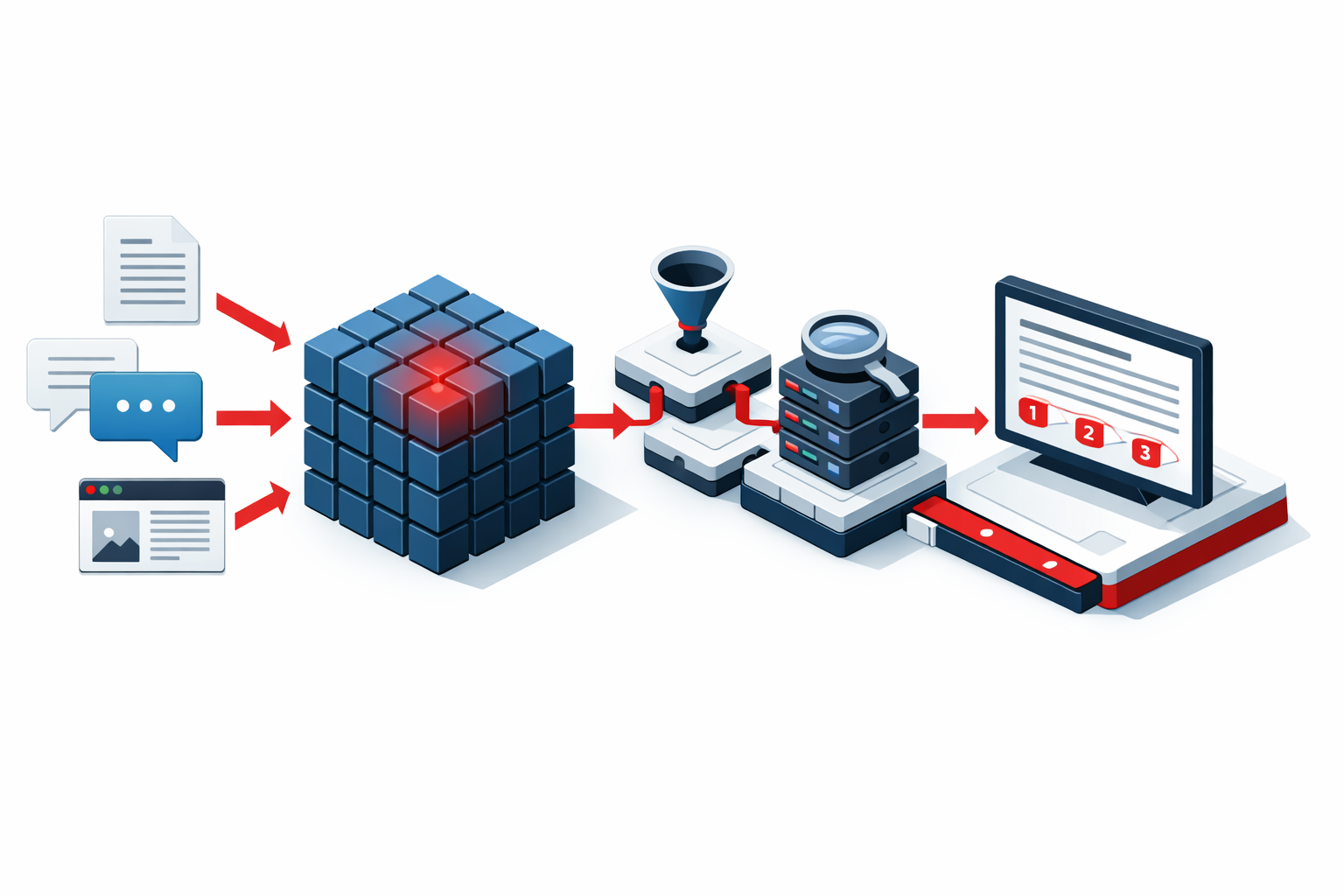
Our RAG Development Work in South Shore
- Nonprofit knowledge bases for South Shore community organizations indexing grant reports, program documentation, funder correspondence, and policy records with role-based access that keeps sensitive information appropriately protected
- Business document search for South Shore enterprises making supplier records, customer correspondence, product specifications, and service histories searchable in plain language
- Faith community archives for South Shore churches and religious organizations indexing meeting minutes, program records, and institutional history that represents decades of community life
- Policy and procedure search for organizations needing to surface internal guidelines, compliance documentation, and operational procedures without manual document navigation
- Program outcome databases for nonprofits connecting historical participant records, program reports, and outcome documentation into a system that answers funder questions with cited evidence
- Staff knowledge bases for growing South Shore businesses making onboarding information, operational procedures, and institutional knowledge accessible to new employees without requiring knowledge transfer from specific individuals
Industries We Serve in South Shore
Nonprofits and community organizations connected to South Shore's social service infrastructure use RAG systems to make years of program documentation, funder correspondence, and organizational records accessible to current staff. This reduces the knowledge dependency on long-tenured employees and improves the quality of grant applications and impact reports.
Faith communities across South Shore use RAG to make decades of institutional records accessible: meeting minutes, program histories, member correspondence, and policy documentation that represents the congregation's memory and serves governance and ministry planning.
Small businesses and entrepreneurs along 71st Street and Stony Island Avenue use RAG to make supplier records, customer histories, product documentation, and operational knowledge searchable without depending on specific employees or extensive folder navigation.
Contractors and home services businesses use RAG to make job histories, product specifications, supplier contacts, and pricing records accessible from a single query interface, improving the consistency and speed of customer service.
Community development organizations use RAG to surface the policy documentation, community research, and historical records that support advocacy, planning, and the grant applications that fund their work.
What to Expect Working With Us
1. Knowledge audit. We audit your existing knowledge base: where documents live, how they are organized, who needs access to what, and what questions your team asks most frequently. This shapes every design decision from the ingestion pipeline to the permission model.
2. System design and ingestion. We connect to your document sources, process content into optimally sized chunks for retrieval, generate embeddings, and store them in a vector database configured for your organization's domain vocabulary. Permission-aware retrieval integrates with your existing access controls.
3. Deployment and interface. The system deploys as a web interface, Slack integration, Teams bot, or embedded application depending on how your team works. Guardrails decline to answer when confidence is low rather than generating plausible but incorrect responses. Every answer includes source citations so your team can verify.
4. Optimization and ongoing improvement. We monitor retrieval accuracy, track questions the system cannot answer, and improve the system as your knowledge base grows. Automated pipelines re-index updated content within hours of changes. Monthly reviews tune retrieval quality based on real usage patterns.