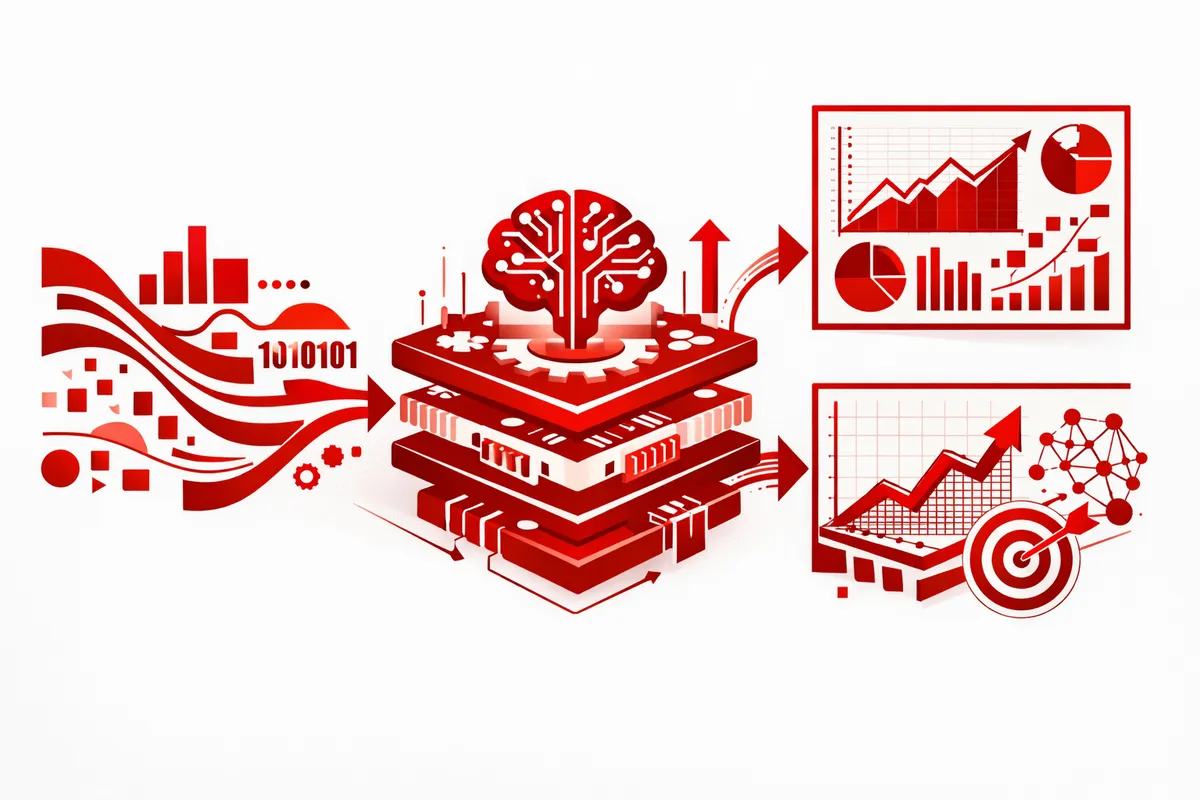
How We Build Data Analytics & AI for South Shore
Every engagement starts with a discovery conversation about the decisions your operation needs to make better. For a South Shore retailer on 79th Street, that might be understanding which product categories drive the most repeat purchase, or which days of the week generate the highest basket values. For a nonprofit serving the Highlands area, it might be tracking program completion rates by participant demographic to identify where additional support would reduce dropout. We map the decision to the data before we touch a single spreadsheet.
We then assess what data you already have and where it lives. Most South Shore businesses have more data than they realize: payment processor records, point-of-sale history, social media engagement metrics, email open rates, and website analytics. We consolidate these sources into a single view that eliminates the manual aggregation that currently takes hours and produces incomplete pictures.
For organizations ready for more advanced analytics, we build predictive models trained on your historical data. A South Shore restaurant that has operated through multiple summers and winters has enough seasonal pattern data to generate reliable demand forecasts. A contractor with three years of project records can model which job types generate the best margin and which customer segments are most likely to refer additional work. We build these models with the data you have, not the data a large corporation might have.
Our dashboards are designed for operators, not data scientists. Every visual is connected to an action: if this number is high, here is what you do. If this number drops, here is what you investigate. South Shore business owners do not need to become analysts. They need clear signals that improve the decisions they are already making every day.
Industries We Serve in South Shore
Community nonprofits and social service organizations near Rainbow Beach and the South Shore Cultural Center use analytics to track program outcomes, measure demographic reach, support grant reporting, and allocate limited resources across competing program priorities.
Restaurants and food businesses on Bryn Mawr restaurant row and along 75th Street use customer behavior data and sales analytics to optimize menus, staffing schedules, and promotional activity around South Shore's seasonal patterns and community event calendar.
Contractors and home services businesses operating throughout South Shore and the broader Far South Side use project analytics to track job profitability, identify high-value customer segments, and model capacity to support business planning.
Retail and personal care businesses including barbershops, salons, and boutiques along 71st and 79th Streets use sales and customer data to understand repeat visit frequency, service mix trends, and the customer acquisition sources that drive the most valuable clientele.
Multi-generational family businesses throughout South Shore that have operated for decades often hold years of historical transaction data in aging systems. We extract, clean, and analyze that history to surface the patterns that experienced owners sense intuitively and can now see in numbers.
Faith communities and cultural institutions affiliated with South Shore's strong church network and organizations like Little Black Pearl use program and attendance data to measure community engagement and make stewardship decisions on limited operating budgets.
What to Expect Working With Us
1. Discovery and question mapping. We start by identifying the three to five decisions your organization makes most often that better data would improve. This conversation produces a clear analytics priority list tied to real business outcomes, not a technology wish list.
2. Data audit and consolidation. We inventory every data source you have, assess data quality, and design a consolidation approach that brings relevant information into a single system your team can actually use. For South Shore businesses with older or manual record systems, we design practical migration approaches that do not require replacing operational systems overnight.
3. Dashboard build and model development. We build reporting dashboards for your core metrics and, where your data supports it, predictive models that move you from reactive to forward-looking decision-making. Every deliverable is reviewed with your team before handoff.
4. Training and ongoing support. We train your team on using the dashboards and interpreting the outputs. Post-launch support ensures your team is confident using the analytics independently, and we offer ongoing retainer arrangements for organizations that need continued model maintenance and new analysis as business questions evolve.