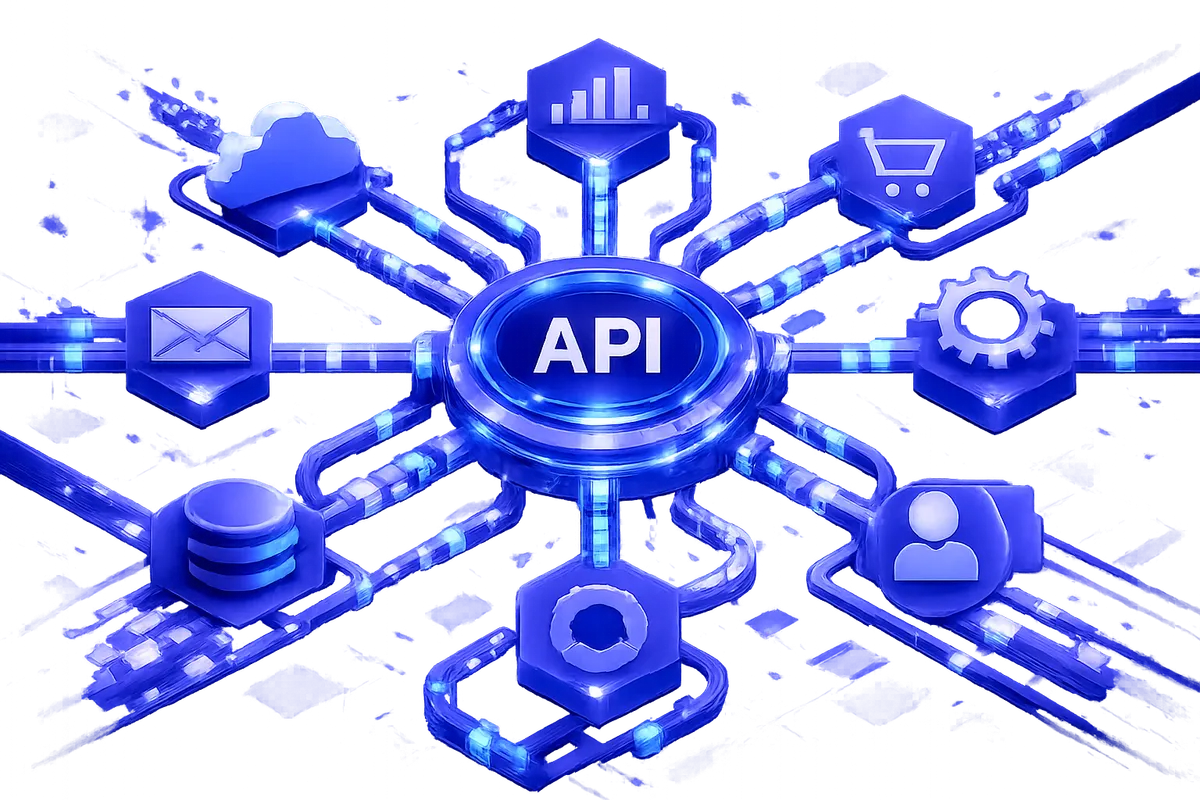
How We Build API Integration for South Shore
Every integration project begins with mapping what you actually have. We document every software platform your organization uses, what data lives in each system, how often that data needs to move, and what happens today when it needs to move. That map almost always reveals integrations that are already overdue alongside the ones you already knew you needed.
Requirements analysis and prioritization. We work with your team to identify which integration would deliver the most immediate value. For most South Shore organizations, that is the connection between a donor or client intake system and a backend CRM or case management platform. We prioritize based on time consumed, error frequency, and downstream business or program impact.
Architecture selection. Not every integration needs a custom-built connector. We assess whether your platforms have existing APIs, webhooks, or Zapier-compatible connections that can be configured without custom code. When pre-built options do not exist or do not meet your requirements, we build purpose-designed connectors. We do not over-engineer: South Shore organizations need solutions that are maintainable and reliable, not impressive-looking and fragile.
Build and test with real data. We build integration logic against your actual data, not representative samples. This matters because real data always has edge cases: duplicate records, incomplete fields, unusual formats. Testing against real data surfaces those edge cases before they become production problems. We include error handling and dead-letter logic so that when a record cannot be processed, it is flagged and logged rather than silently lost.
Monitoring and ongoing health. After launch, every integration includes monitoring with alerting. When a data flow stops or produces errors above expected thresholds, we know before your team does. Integration health dashboards give you visibility into data flow status without needing to check each system manually.
Industries We Serve in South Shore
Community nonprofits and social service organizations manage client data, program outcomes, and funder reporting across platforms that were often selected independently. We connect intake systems, case management platforms, and grant reporting tools so staff work from one consistent picture.
Contractors and skilled tradespeople operating in South Shore and the broader Far South Side need integrations between job scheduling systems, supplier portals, accounting software, and customer communication tools. Clean connections between these platforms reduce the administrative overhead that competes with billable work.
Small retailers and service businesses along 71st Street, 75th Street, and Bryn Mawr restaurant row use a mix of point-of-sale, inventory, and CRM tools that rarely communicate automatically. We build the connectors that make these systems share data.
Faith communities and civic organizations that manage membership, event scheduling, and donor relationships across multiple platforms benefit from integrations that eliminate duplicate data entry and keep contact records current across systems.
Real estate and property management professionals serving the Jackson Park Highlands and surrounding residential areas use multiple tools for listings, tenant management, maintenance requests, and accounting. Integration between these platforms reduces the manual reconciliation that consumes property manager time.
What to Expect Working With Us
1. Integration audit and strategy. We map your technology environment, document where data needs to move between systems, and prioritize the integrations that will deliver the most operational value. For most South Shore organizations, this conversation reveals integration needs they had not yet named alongside the ones that prompted the conversation.
2. Design and architecture review. We present the integration design for your review before writing any code. You understand what the system will do, how it will handle errors, and what monitoring will look like. No technical surprises in implementation.
3. Build, test, and launch. We build each integration incrementally, testing against your real data before deployment. Simple integrations between two well-documented APIs launch in two to four weeks. More complex multi-system integrations with custom transformation logic take six to ten weeks.
4. Monitoring and support. Every integration we build includes ongoing health monitoring. We resolve issues proactively and provide monthly reporting on data flow volume and any exceptions. South Shore organizations on maintenance retainers have a partner who keeps their integrations running as their software stacks evolve.