How We Build Supply Chain Automation for South Loop
Supply chain automation development begins with a procurement audit. We map your current purchasing process: how orders are placed, how inventory is tracked, how vendor relationships are managed, and where the manual overhead and errors are highest. For a South Loop restaurant group managing multiple locations near Museum Campus and Soldier Field, that map includes the current ordering workflow for each supply category and the management time currently devoted to purchasing coordination.
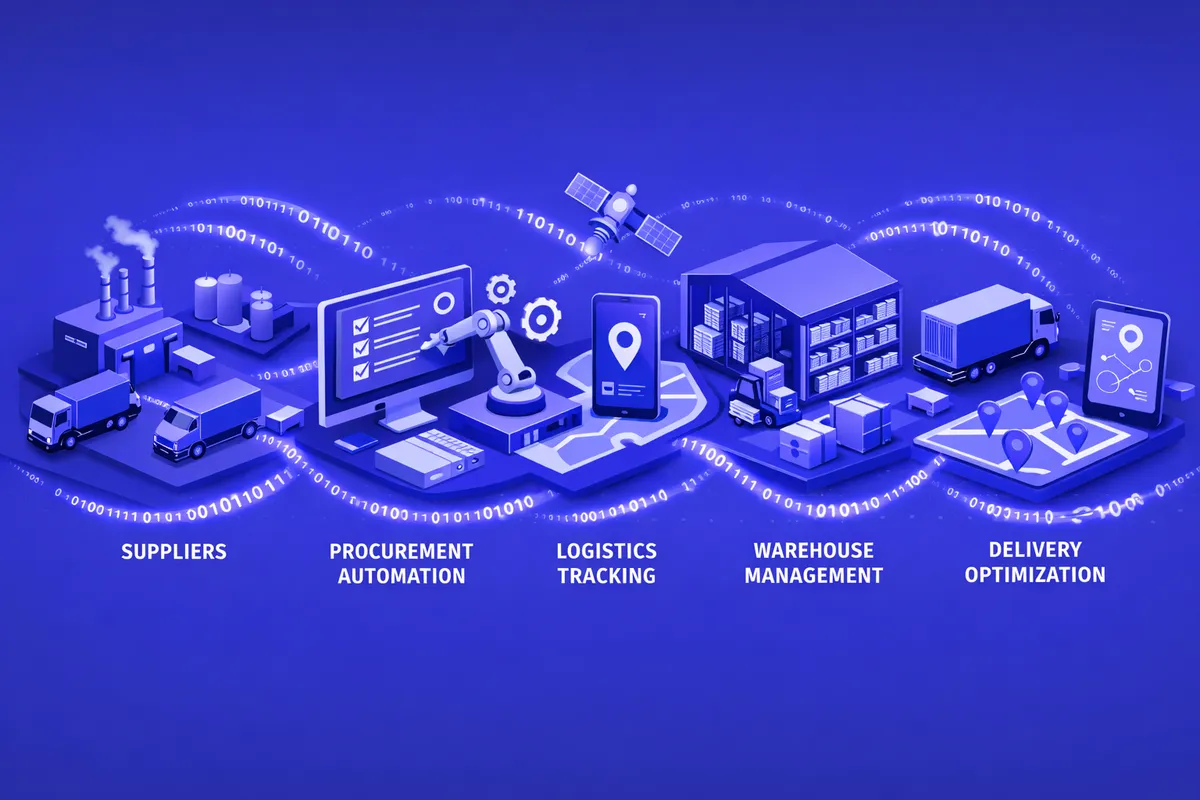
From the audit, we design the automation architecture. For most South Loop hospitality and food service businesses, this involves configuring an inventory management and procurement platform like BlueCart, Orderly, or Restbase, which handle the supplier connection, order generation, and receiving workflow in an integrated system. For South Loop businesses with more complex supply chains, custom automation that connects existing inventory, ordering, and accounting systems through API integrations creates the procurement workflow without requiring full platform replacement.
The event-based demand adjustment is a South Loop-specific configuration that we build into every supply chain automation we implement here. The Soldier Field event calendar, the Museum Campus programming schedule, and the Columbia College academic calendar all feed into the purchasing logic as demand multipliers that adjust reorder quantities automatically during high-demand periods rather than requiring manual override by the purchasing manager.
Industries We Serve in South Loop
Restaurant groups and multi-location food service managing properties along Michigan Avenue, Roosevelt Road, and Wabash Avenue benefit most from supply chain automation because the coordination overhead of managing purchasing across multiple locations manually creates errors and inefficiencies that automation eliminates. A South Loop restaurant group that centralizes its supplier relationships and purchasing workflows in an automated system reduces the management time devoted to procurement by 40 to 60 percent while improving purchasing accuracy and reducing waste.
Hotels and hospitality operations near Museum Campus and Soldier Field manage multi-category supply chains: food and beverage, housekeeping supplies, amenities, maintenance materials, and the event-specific supplies that Soldier Field-adjacent hospitality businesses need for high-occupancy periods. Supply chain automation for South Loop hotels connects procurement across these categories with the occupancy data that drives demand, automating routine restocking while flagging exceptional demand for management review.
Catering and event businesses servicing the South Loop events market, including large-format events near Museum Campus and the corporate catering market in the Michigan Avenue office corridor, manage event-specific procurement cycles that are high-stakes and time-constrained. Supply chain automation for event businesses includes the event-level ordering templates, supplier lead time tracking, and the receiving verification workflows that ensure every event is fully supplied without excess waste.
Specialty food and beverage retail near Printers Row and on State Street manages perishable inventory that requires tight rotation discipline and purchasing quantities calibrated to actual demand rather than fixed reorder quantities. Supply chain automation for specialty retail tracks inventory levels against actual sales velocity, generates purchase orders at the right quantity for the current demand pattern, and flags items that are approaching waste before they become losses.
Property management operations across South Loop's residential towers manage maintenance supply chains that include both routine consumables and project-specific materials. Supply chain automation for property management creates the vendor catalog, requisition workflow, and receiving verification that transforms an informal procurement process into a documented system with audit trails.
Corporate and institutional food service in South Loop's Michigan Avenue office buildings and Museum Campus institutional operations manage high-volume, complex supply chains that benefit from the systematic ordering, quality tracking, and vendor performance monitoring that automation provides.
What to Expect Working With Us
1. Procurement audit and automation design. We document your current supply chain, identify the highest-cost manual processes and error patterns, and design the automation architecture that fits your South Loop business's specific procurement mix and supplier relationships.
2. Platform configuration or custom automation build. We configure the procurement platform or build the custom automation that implements your South Loop supply chain workflow. The South Loop event calendar integration is part of every configuration rather than an add-on.
3. Supplier onboarding and system integration. We onboard your existing suppliers to the ordering platform, configure the ordering parameters for each supplier relationship, and integrate the procurement system with your inventory management and accounting platforms so that purchase orders flow through a connected system rather than requiring separate data entry in each.
4. Team training and process launch. We train the purchasing and receiving teams on the automated system, establish the exception workflows that route non-routine purchasing decisions to the appropriate manager, and support the first full procurement cycle in the new system.