How We Build No-Code Solutions for South Loop
No-code development begins with a requirements session that documents the operational problem the tool needs to solve, the users who will interact with it, the data it needs to track, the automations it needs to run, and the other systems it needs to connect to. A South Loop property management firm's maintenance tracking tool has different requirements from a Museum Campus nonprofit's grant management portal, and we build from specific requirements rather than from a template.
From the requirements, we select the platform or combination of platforms that fits the use case. Airtable is excellent for relational data management and project tracking. Notion works well for documentation and knowledge management with structured database components. Glide builds mobile-first internal tools from existing spreadsheets. Webflow creates publishable client portals and websites. Zapier and Make handle the automation layer that connects platforms together. For most South Loop no-code projects, the solution uses two or three tools connected by automation rather than a single platform.
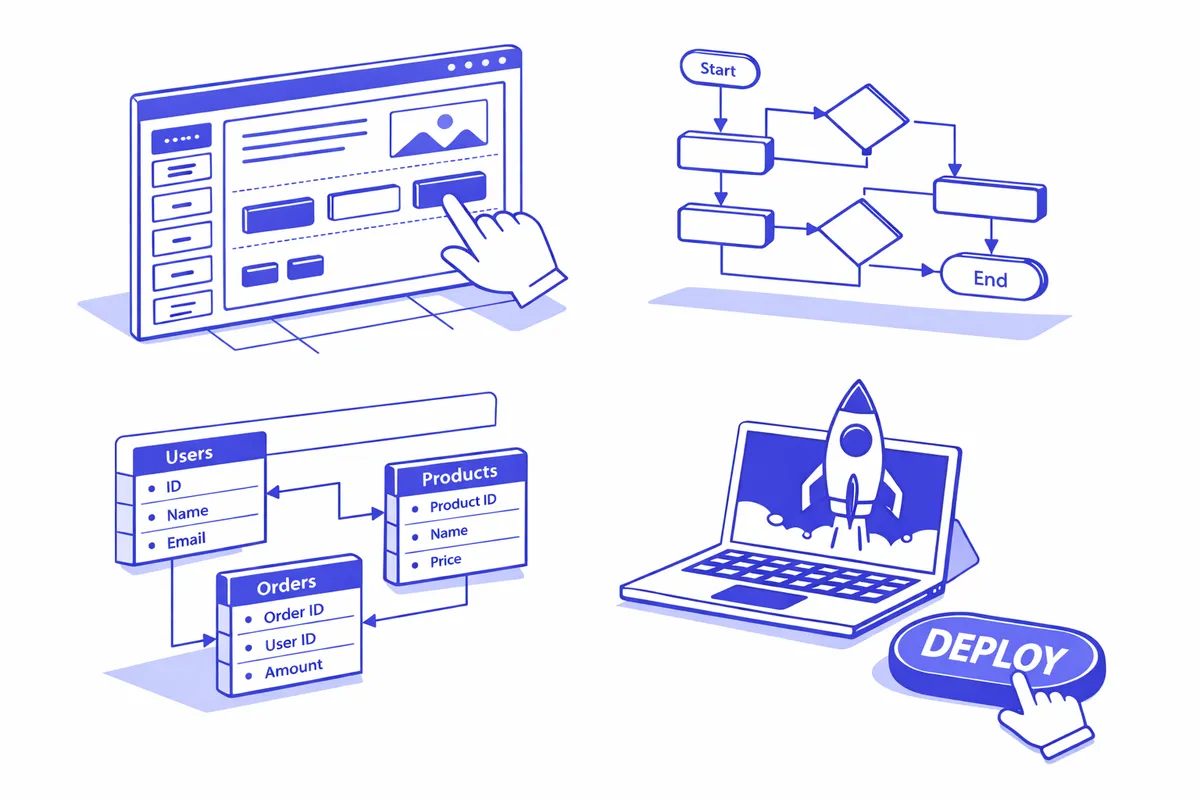
The build follows a structured process: data architecture first, interface second, automations third. Data architecture decisions made during the build phase are the hardest to change later, and getting them right at the start is worth the time investment. A South Loop organization that needs their no-code tool to grow with their business needs proper relational data design from the beginning, not a retrofit after the tool has been in production use for six months.
Industries We Serve in South Loop
Property management firms on Roosevelt Road and State Street managing South Loop's residential towers use no-code tools for maintenance request tracking, tenant communication logs, vendor management, and the property-level reporting that helps management teams keep track of multiple buildings simultaneously. Airtable-based property management tools serve mid-size South Loop property operations at a fraction of the cost of enterprise property management software.
Nonprofits and cultural organizations near Museum Campus use no-code tools for grant tracking, program management, volunteer coordination, and the donor and member relationship management that small nonprofit CRM systems do not always handle well. A Museum Campus-adjacent nonprofit with five staff members managing twenty grant relationships and two hundred members needs a practical tool, not an enterprise system.
Creative agencies and studios near Columbia College on Wabash Avenue use no-code tools for client intake, project management, asset delivery, and the creative brief and feedback workflows that make client collaboration efficient. A South Loop creative agency that uses Airtable for project management and Webflow for client portals has operational infrastructure that would have required expensive custom software a decade ago.
Professional services firms near Printers Row and Michigan Avenue use no-code tools for internal knowledge management, client onboarding workflows, compliance tracking, and the reporting automation that produces regular status reports from live data without manual assembly. A South Loop legal or financial firm with a well-designed Notion workspace and Airtable database for client matter tracking operates more efficiently than one managing the same information in disconnected email threads and spreadsheets.
Hospitality and restaurant businesses near Museum Campus and Soldier Field use no-code tools for event booking management, vendor coordination, staff scheduling, and the operational checklists and SOPs that make consistent service possible across multiple staff members. A South Loop restaurant on Michigan Avenue that manages private events through an Airtable form and database rather than email threads and notebooks handles event inquiries faster and with fewer errors.
Retail and small business operations on Roosevelt Road and State Street use no-code tools for inventory tracking, customer relationship management, and the supplier and order management workflows that small businesses manage less efficiently in spreadsheets than in purpose-built no-code databases.
What to Expect Working With Us
1. Requirements session and tool selection. We document your operational requirements in detail, select the no-code platform or combination of platforms that fits the use case, and present the proposed architecture for your approval before building begins. South Loop clients understand the design before they approve the build.
2. Data architecture and build. We design the data structure, build the core tool, and configure the views and interfaces that each user type needs. Data architecture decisions are made with the organization's growth trajectory in mind rather than only for today's scale.
3. Automation and integration setup. We build the Zapier or Make automations that connect your no-code tool to the other platforms in your South Loop organization's operational ecosystem: email, calendar, Slack, accounting software, and any other systems that need to exchange data with the new tool.
4. Training and handoff. We train your South Loop team on the tool with hands-on sessions that build the capability to maintain and extend the tool without requiring ongoing support for routine modifications. We document the tool's data structure and automation logic so future changes can be made confidently.