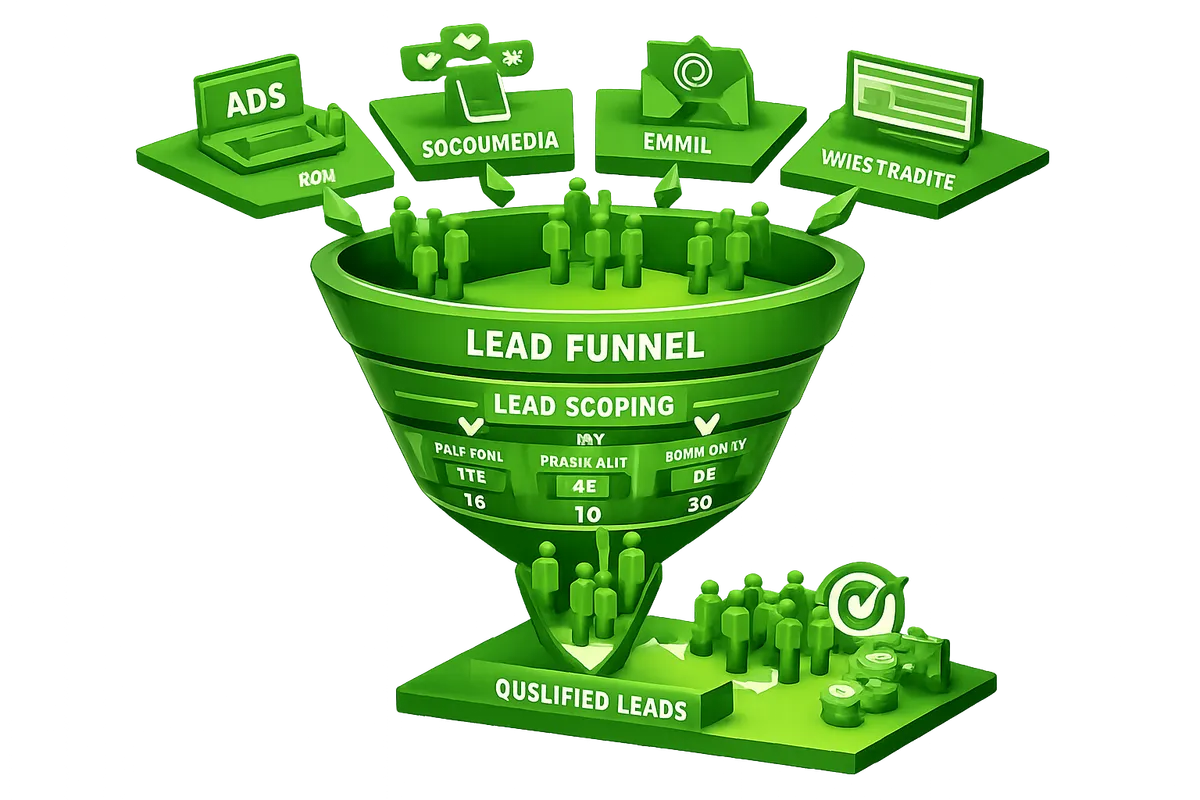
Lead Generation in South Loop
Lead Generation for businesses in South Loop, Chicago. We know the neighborhood, the customers, and what it takes to compete locally.

Lead Generation from Museum Campus and McCormick Place Traffic
Museum Campus draws approximately ten million visitors annually across its three institutions. McCormick Place hosts major conventions and trade shows that bring hundreds of thousands of visitors to the South Loop each year. Soldier Field adds Bears games, concerts, and events. This combined traffic represents the South Loop's largest lead generation opportunity, and the most commonly wasted one.
The challenge is that most Museum Campus and McCormick Place visitors are focused on their primary destination. They walk past South Loop restaurants, shops, and cafes without entering because they did not know those businesses existed or because they already have plans. Capturing leads from this traffic requires intercepting the visitor during the planning phase, not the walking phase.
Google Ads targeting queries like "restaurants near Museum Campus," "coffee near McCormick Place," and "lunch near Soldier Field" capture visitors who are actively searching for exactly what South Loop businesses offer. These searches spike on event days, convention dates, and peak museum visiting periods (weekends, summer, school breaks). A restaurant that runs Google Ads only during the 30 highest-traffic days per year, timed to major conventions and summer weekends, captures the highest-intent searches at the lowest waste.
Convention-specific lead generation targets attendees of major McCormick Place events before they arrive in Chicago. When a major industry conference is scheduled, South Loop restaurants and services can run LinkedIn ads targeting the conference hashtag, sponsor content in the conference mobile app, or partner with the convention center's visitor guide. A restaurant that appears in the "where to eat near McCormick Place" section of a convention guide captures diners who plan their meals days or weeks before arrival. The pre-trip planning phase is the moment of highest intent for restaurant and entertainment leads.
Museum Campus partnership marketing creates reciprocal lead generation. A South Loop restaurant that offers a "Museum Campus Meal Deal" promoted through museum websites, email newsletters, and visitor guides captures leads from museum-goers who are already planning their visit. The partnership benefits both parties: the museum enhances the visitor experience with a dining recommendation, and the restaurant receives qualified leads from a trusted source.
Lead Generation for South Loop's Educational Market
Columbia College Chicago's campus spans several blocks in the heart of the South Loop, and Roosevelt University's campus sits near the northern edge of the neighborhood. These institutions create a permanent population of students, faculty, and staff who represent consistent, predictable demand for food, coffee, retail, and services.
Student lead generation requires price-conscious offers delivered through mobile-first channels. A coffee shop offering a student loyalty program, tracked through a mobile app that captures email and purchase history, builds a database of high-frequency customers. Students visit daily, and a coffee shop that captures 500 student emails in September can market consistently to that audience through the academic year. Back-to-school campaigns in August and January capture new students who are building their neighborhood routines.
Faculty and staff represent a different segment: higher spending power, more predictable schedules, and longer tenure in the neighborhood. A restaurant that builds a faculty lunch program, offering a fixed-price lunch special that can be pre-ordered through email and picked up at a designated time, captures a recurring revenue stream from an audience that eats lunch near campus every weekday. The pre-order system captures email and ordering data that powers personalized marketing: dietary preferences, favorite items, and ordering frequency.
Student organization and event partnerships provide concentrated lead capture opportunities. A South Loop business that sponsors a Columbia College student organization event captures email addresses from event attendees who are predisposed to support businesses that support their community. A cafe that hosts a student art show or a poetry reading captures creative, engaged students who become regular patrons.
Lead Generation for South Loop Residential Businesses
The South Loop's residential population has grown rapidly as new tower developments along Michigan Avenue, Indiana Avenue, and Wabash have attracted young professionals and retirees. These residents represent the neighborhood's most valuable long-term customer base. A resident who discovers a South Loop restaurant, fitness studio, or salon and has a positive experience may become a customer for years.
New resident targeting is the highest-ROI lead generation strategy for South Loop businesses serving the residential population. Move-in dates for major residential buildings can be anticipated based on construction and leasing timelines. A coordinated new resident welcome campaign, delivering a neighborhood guide featuring participating South Loop businesses, reaches residents at the exact moment they are establishing their local routines. The guide can be distributed digitally through building management partnerships or physically through lobby placements.
Google Business optimization captures the daily searches of South Loop residents looking for nearby services. "Dry cleaner South Loop," "gym near Roosevelt Road," and "dentist Wabash Avenue" are high-intent, high-frequency searches from residents making routine purchasing decisions. The business that appears at the top of these results, with a complete profile, strong reviews, and recent activity, wins the customer for potentially years of repeat service.
Fitness and wellness businesses in the South Loop generate leads through trial programs targeted at the residential population. A fitness studio offering a "South Loop Resident Welcome Week" with free classes for anyone who lives within the 60605 zip code captures leads from residents who are geographically qualified and actively evaluating fitness options. The trial captures email, address (verifying residency), and class preferences. The post-trial sequence converts trial attendees to members through a limited-time enrollment offer.
Community event marketing builds relationships between South Loop businesses and the neighborhood's growing residential community. A restaurant that hosts a monthly "South Loop Social" mixer builds a list of residents who attend. A salon that sponsors the neighborhood block party captures leads from attendees. A coffee shop that hosts a weekly morning running group starting and ending at its location captures fitness-oriented residents who become regular morning customers. Each event creates a lead capture opportunity wrapped in a community-building activity that strengthens the business's position in the neighborhood.
Measuring Lead Generation in the South Loop
The South Loop's three distinct audiences (visitors, students, and residents) require segmented measurement. A restaurant's overall lead generation metrics might look mediocre when averaged across all segments, but the data tells a different story when broken down: visitor leads convert quickly but rarely return, student leads convert slowly but visit frequently during the academic year, and resident leads take the longest to convert but generate the highest lifetime value.
Attribution modeling must account for the South Loop's geographic specificity. A lead captured through a "restaurants near Museum Campus" Google Ad should be measured against a different conversion expectation than a lead captured through a "South Loop neighborhood restaurant" organic search. The first is likely a one-time visitor; the second is likely a potential regular. Different acquisition costs, different conversion rates, and different lifetime values require different performance benchmarks.
Monthly reporting should track new lead volume by segment, conversion rate by segment, customer lifetime value by acquisition source, and cost per acquired customer for each audience type. This segmented view enables budget optimization: if visitor-focused campaigns generate the highest volume but the lowest lifetime value, and resident-focused campaigns generate lower volume but 5x the lifetime value, the budget allocation should shift accordingly.
Frequently Asked Questions
The South Loop's unique combination of tourism traffic (Museum Campus, Soldier Field, McCormick Place), educational institutions (Columbia College, Roosevelt University), and rapidly growing residential population creates a three-audience lead generation environment. Most Chicago neighborhoods rely on one or two audience types. South Loop businesses that build lead generation systems addressing all three audiences create revenue diversification that insulates against the seasonality and variability inherent in each individual segment.
Google Ads targeting "restaurants near Museum Campus," "coffee near Shedd Aquarium," and similar location-based queries capture visitors during the planning or discovery phase. Partnership marketing with museum institutions (visitor guide placements, email newsletter features, on-site signage) captures visitors during their visit. In-store capture mechanisms (receipt offers, table cards, QR codes) capture visitors who have already walked in. The most effective strategy layers all three approaches to maximize capture across the visitor journey.
Mobile-first digital channels dominate student lead generation. Instagram and TikTok build awareness. Google Maps and "near me" searches drive discovery. Email captures through loyalty programs and event signups build ongoing relationships. Student organization partnerships provide concentrated capture opportunities. Pricing strategies must reflect student budgets while maintaining profitability. The most effective student campaigns offer genuine value (loyalty rewards, student-specific programming) rather than simple discounts that attract one-time bargain seekers.
Restaurants and cafes should allocate $1,500 to $4,000 per month, with budget weighted toward Google Ads during high-traffic convention and tourism periods and email marketing for residential and student retention. Service businesses should invest $2,000 to $5,000 per month in Google Business optimization, Google Ads, and referral programs. Fitness and wellness businesses should allocate $1,500 to $4,000 per month for trial program marketing, Google Ads, and email automation. Businesses near McCormick Place should reserve additional budget for convention-season campaigns.
We build lead generation campaigns that match the South Loop's traffic patterns: convention-aligned campaigns for McCormick Place traffic, academic calendar-aligned campaigns for student audiences, summer-weighted campaigns for Museum Campus tourism, and consistent year-round campaigns for the residential population. Email lists captured during high-traffic periods power marketing during slower periods. The goal is building a captured audience large enough that email and owned channels can generate revenue even when walk-in traffic drops during winter months and academic breaks.
Yes. The South Loop's rapidly growing residential population means that new residents arrive without established business preferences, creating a level playing field for new businesses. A new restaurant or shop that launches with a complete lead generation system (optimized Google Business, active review generation, email capture from day one, targeted Google Ads) can capture new residents before established competitors who rely on existing reputation and walk-in traffic. The first-mover advantage in lead generation is particularly strong in a neighborhood where new residents are arriving monthly. [Learn more about our lead generation services across Chicago](/chicago/lead-generation) [Explore our work in South Loop](/chicago/south-loop)
Ready to get started in South Loop?
Let's talk about lead generation for your South Loop business.