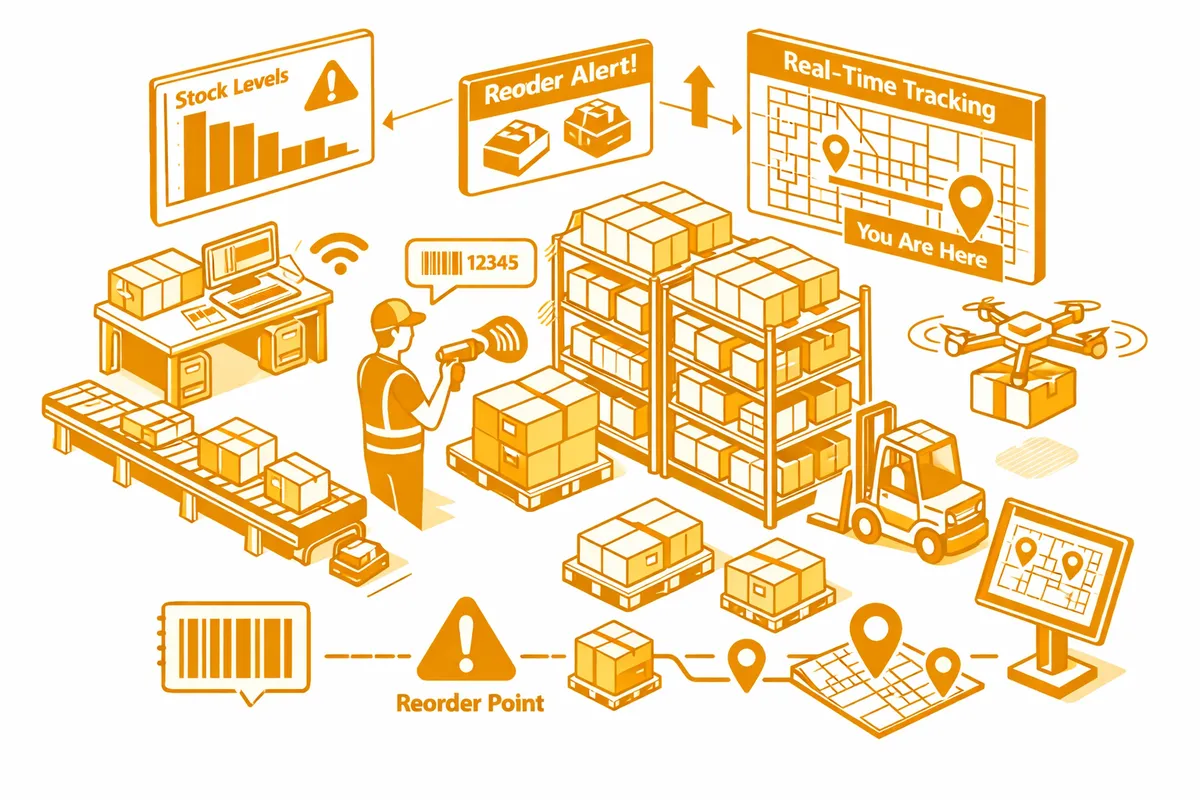
How We Build Inventory Management for South Loop
We assess your current inventory processes: how you track stock, how you make reordering decisions, what your waste and shrinkage rates look like, and how well your current system handles the demand spikes that South Loop's event calendar produces.
From that assessment, we select and configure an inventory management platform that fits your business category. Restaurant inventory management systems like MarketMan, BlueCart, or Toast Inventory differ from retail inventory platforms like Shopify, Lightspeed, or Square for Retail. We match the platform to your specific South Loop business type, the volume you manage, and the integrations your system needs to connect with your POS, accounting software, and supplier ordering systems.
The configuration covers item catalog setup, unit of measure definitions, supplier records, reorder points calibrated to South Loop's demand patterns, and the integration connections that make inventory data flow automatically from sales transactions rather than requiring manual count entry. For South Loop restaurants, we configure recipe costing and theoretical versus actual usage comparison that identifies where waste and theft are occurring.
Event-based inventory planning is a specific capability we build into South Loop systems. The inventory management setup includes calendar views that flag upcoming Museum Campus events and Soldier Field games so that purchasing decisions are made with demand forecasts rather than historical averages alone.
Industries We Serve in South Loop
Restaurants and food service businesses near Museum Campus, Soldier Field, and along Michigan Avenue and Roosevelt Road deal with the full complexity of food inventory management: perishable items with variable shelf lives, recipe-level costing requirements, multiple supplier relationships, and the event-driven demand swings that make accurate forecasting essential. Inventory management for South Loop restaurants tracks actual versus theoretical usage, generates automated supplier orders when stock drops below reorder points, and provides the food cost reporting that restaurant operators use to manage margins.
Bars and beverage operations near Soldier Field and Grant Park manage high-volume liquor, beer, and wine inventory that has both significant dollar value and high theft risk. Inventory management for beverage operations in South Loop includes pour cost calculation, count-to-count variance reporting, and the event-day ordering templates that ensure adequate stock before high-volume periods without over-purchasing for lower-volume weekdays.
Retail and gift shops near Museum Campus serving tourist customers manage seasonal inventory patterns that require sophisticated purchasing calendar management. A gift shop near the Field Museum needs summer inventory positioned by April, fall clearance managed in September, and holiday stock planned by October. Inventory management for retail in South Loop connects purchasing decisions to historical seasonal patterns and upcoming Museum Campus event programming.
Specialty food retailers on Printers Row and State Street serving the professional residential audience manage perishable specialty inventory that requires tight rotation discipline and accurate shelf life tracking. Inventory management for specialty food in South Loop reduces waste by generating reorder quantities calibrated to actual consumption rather than supplier minimums.
Hotel and hospitality operations near Michigan Avenue and Museum Campus manage minibar inventory, amenity stock, restaurant inventory, and banquet supplies across multiple operational areas simultaneously. Inventory management for South Loop hospitality connects these separate stock areas into a single system with category-level visibility and the event-day planning tools that hotel operations near Soldier Field require.
Event and catering operations serving the South Loop events market, including Soldier Field ancillary events and Museum Campus venue bookings, manage event-specific inventory that must be purchased, allocated, and reconciled for each event separately. Inventory management for event operations in South Loop handles event-level costing and per-event inventory allocation within a system that also manages the baseline operation stock.
What to Expect Working With Us
1. Inventory audit and system assessment. We review your current inventory processes, calculate your estimated waste and shrinkage rates, and document the purchasing decision process that currently drives your stock levels. The audit establishes the baseline against which the new system's performance can be measured.
2. Platform selection and item catalog build. We select the inventory management platform that fits your South Loop business category and configure the full item catalog with units of measure, cost data, supplier information, and reorder points calibrated to your demand patterns. South Loop-specific demand adjustments are built into the reorder logic from the start.
3. POS and accounting integrations. We connect your inventory management system to your point-of-sale platform so that sales transactions automatically reduce inventory counts, and to your accounting system so that purchase orders and cost of goods data flow without manual entry.
4. Team training and process documentation. We train your receiving, kitchen, and purchasing staff on the system, establish the counting schedules and receiving procedures that maintain data accuracy, and document the processes that your team follows to keep the system current.