How We Build ERP Integration for South Loop
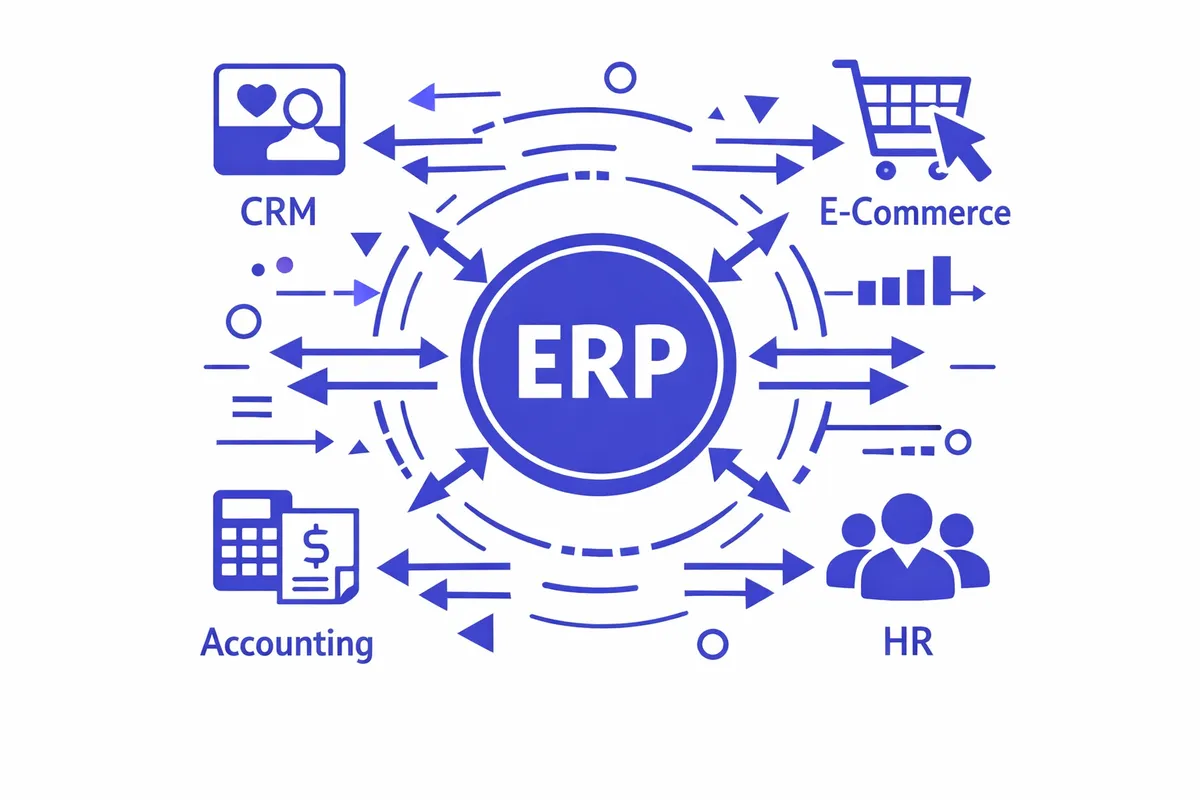
ERP integration projects begin with a systems inventory and data flow audit. We map every system your South Loop business uses, what data lives in each, where data is being duplicated, and where manual data transfer is happening. For a hospitality group near Museum Campus, that map might include a POS system, an event management platform, a payroll system, a purchasing database, and an accounting platform. The audit shows which connections create the most operational value and which are lower priority.
From the audit, we design the integration architecture: which systems need to connect, what data flows between them, how often synchronization should occur, and what error handling is required when data does not match. We build integrations on middleware platforms like Zapier for simpler connections, MuleSoft or Boomi for enterprise complexity, or direct API integrations where the systems support them.
Implementation includes the integration build, thorough testing with real data from your South Loop operation, and a phased rollout that gives your team time to verify that the integrated data is accurate before fully retiring manual processes. We document every integration and provide operational runbooks so your team understands what is connected, how it works, and what to do when something needs troubleshooting.
Industries We Serve in South Loop
Financial and professional services firms on Michigan Avenue and State Street integrate CRM, project management, time tracking, and accounting systems to eliminate the data reconciliation that eats into billable staff capacity. An integration that connects a CRM opportunity close to a project management engagement record and a billing milestone means that no deal falls through the cracks and no invoice is created from stale data.
Hospitality and restaurant groups managing multiple South Loop properties near Soldier Field and Museum Campus integrate POS systems, inventory management, payroll, and financial reporting to create a single operational view. A South Loop restaurant group with locations on Roosevelt Road and State Street needs consolidated reporting that the individual property systems cannot provide without integration.
Property management firms in South Loop's residential tower market integrate maintenance management, tenant billing, vendor management, and accounting systems to eliminate the manual reconciliation that plagues multi-property operations. An integrated property management system means a work order in the maintenance platform automatically generates a billing record in the accounting system.
Healthcare and wellness practices on Roosevelt Road integrate practice management, billing, EHR, and scheduling systems to reduce administrative burden and improve billing accuracy. Healthcare ERP integration in South Loop must account for HIPAA compliance requirements in every data connection that involves patient information.
Event management operations near Soldier Field and Museum Campus integrate event planning, catering management, vendor contracts, and billing systems to create a connected view of event profitability and operations. Large-scale events on 18th Street and the Museum Campus grounds involve enough moving parts that disconnected systems create genuine operational risk.
Columbia College-adjacent creative firms use ERP integration to connect project management, creative asset management, client billing, and accounting systems. A design or production firm near Wabash Avenue that connects time tracking directly to billing eliminates a significant source of revenue leakage.
What to Expect Working With Us
1. Systems audit and integration design. We inventory your South Loop business's software stack, map the data flows and manual processes connecting them, and design an integration architecture that eliminates the highest-cost manual connections first.
2. Integration development and testing. We build the integrations, configure the data mappings, and test thoroughly with real South Loop operational data. Testing includes error scenarios: what happens when a record does not match, when a system is temporarily unavailable, or when data format changes in one system.
3. Phased rollout and validation. We roll out integrations in phases rather than switching everything at once. South Loop businesses validate that integrated data is accurate against their existing manual processes before retiring those processes entirely.
4. Documentation and ongoing support. We deliver complete documentation of every integration and provide ongoing support for maintenance, modifications when systems are updated, and new integration needs as your South Loop business grows.