How We Build Customer Portals for South Loop
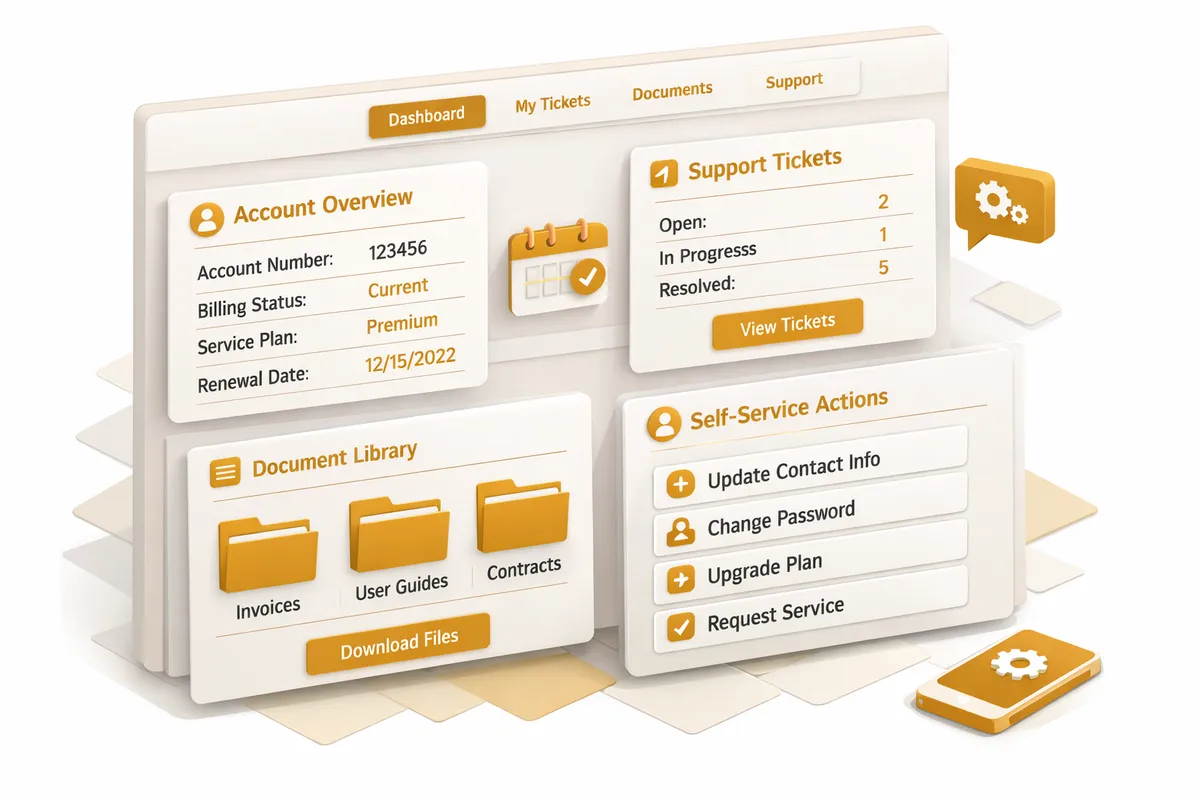
Customer portal development begins with a portal scope definition: what functions the portal needs to provide, which user types will have access, what data the portal needs to display or allow users to manage, and what systems the portal needs to connect with to provide these functions.
For a South Loop property management firm, the portal scope covers resident-facing functions: maintenance request submission, request status tracking, amenity booking, lease document access, payment status, and community announcements. The portal scope also covers owner-facing functions: property performance reporting, financial statements, maintenance cost tracking, and tenant status visibility. These are different portal experiences sharing a unified backend, designed separately for the different user types.
We build portals on modern web technology that is accessible on desktop and mobile browsers without requiring native app installation. For South Loop residents and clients who manage everything from their phone, mobile-first portal design is a requirement. For professional services clients who review documents on large screens, desktop-optimized document experience matters equally. We design for both.
Security is built into customer portal architecture from the start: authentication with role-based access control ensures each user sees only the data relevant to their relationship with the South Loop business, not data belonging to other clients or residents. For professional services portals handling confidential matter information, encryption and audit logging are part of the standard architecture.
Industries We Serve in South Loop
Property management firms in South Loop's high-rise corridor build resident portals and owner portals that handle the high-volume routine interactions that consume property manager time. A South Loop resident portal handling two hundred monthly maintenance requests frees property management staff for the judgment-intensive interactions, complex repairs and tenant disputes, that actually require human involvement.
Hotels and accommodation businesses near Museum Campus build guest portals for pre-arrival information access, online check-in, amenity booking, and post-stay communication. A Museum Campus-area hotel guest portal that handles check-in and room preference collection before arrival reduces front desk queue on arrival and improves the guest experience at the moment it matters most.
Creative agencies and studios near Columbia College on Wabash Avenue build client portals for creative review and approval, project brief access, deliverable download, and invoice history. A South Loop creative agency client portal that makes project status and deliverables accessible to clients in a professional digital interface reduces email volume and improves the professional perception of the agency.
Professional services firms on Michigan Avenue and Wabash Avenue build client portals for matter document access, billing statement review, appointment scheduling, and secure message exchange. For South Loop law firms and financial advisors competing for Loop corporate clients, a professional client portal signals the service quality and operational sophistication that these clients expect.
Event and entertainment businesses serving Soldier Field and Museum Campus build client portals for event planning document exchange, vendor coordination, event timeline tracking, and post-event billing. A South Loop event business client portal that gives clients a real-time view of their event planning status reduces the coordination calls that consume event manager time.
Retail businesses on Roosevelt Road build customer portals for order history, return management, subscription management, and loyalty program access. For South Loop specialty retailers with subscription or loyalty program customers, a customer portal improves the customer experience and reduces the customer service calls that generic e-commerce platforms generate.
What to Expect Working With Us
1. Portal scope and user requirements. We conduct a structured session to define the portal's functional scope, the user types who will access it, and the data and system connections required. For South Loop businesses serving multiple client types, such as property management firms serving both residents and owners, we define separate scope for each user type.
2. Design and information architecture. We design the portal's information architecture and user interface, prioritizing mobile accessibility for South Loop clients who access services primarily through their phones. Design is reviewed with the South Loop business before development begins.
3. Development and integration. We develop the portal and build the connections to the South Loop business's existing systems: property management software, project management tools, accounting platforms, or professional services systems. Integration ensures the portal shows current, accurate data rather than a static snapshot.
4. Testing, launch, and user onboarding. We test the portal against the full range of user scenarios, launch with the South Loop business, and support user onboarding. For property management firms and professional services firms, we provide user communication templates and onboarding guides that make the transition to portal-based interaction smooth.