How We Build Conversion Rate Optimization for South Loop
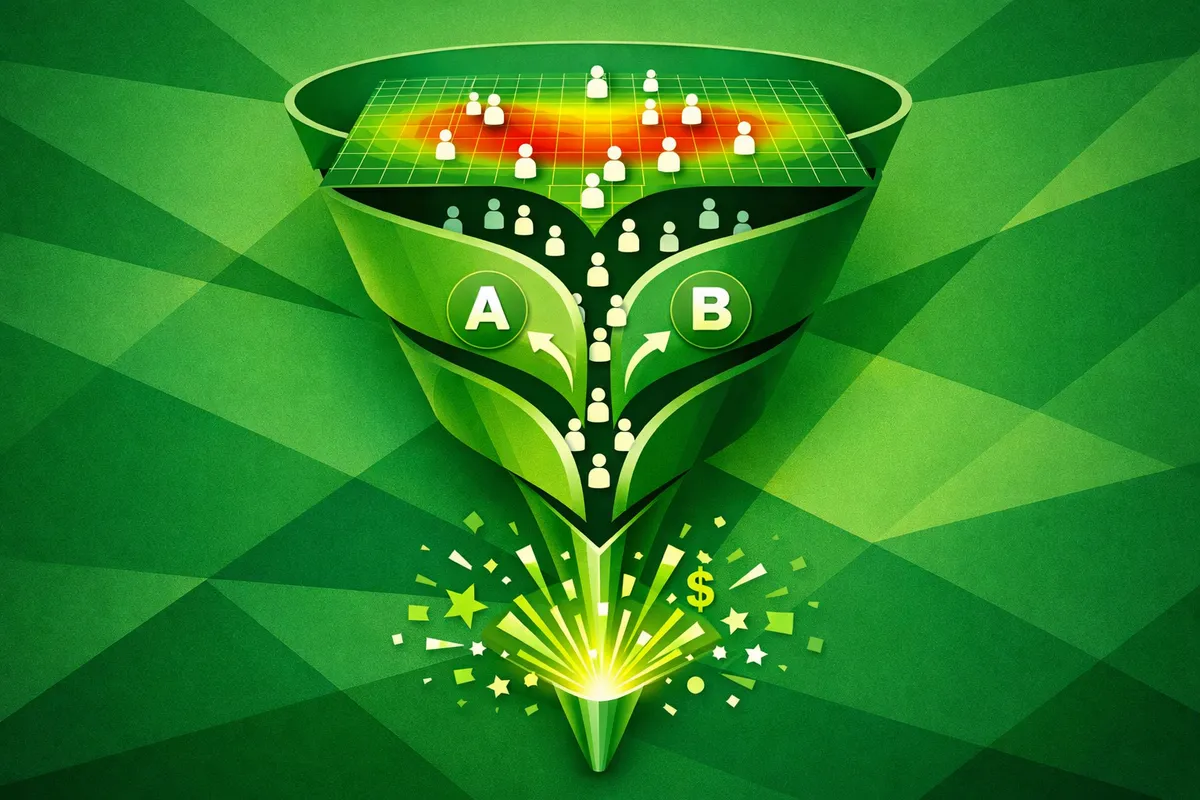
CRO for South Loop businesses follows a research, hypothesis, test, and implement cycle. Research reveals where South Loop website visitors are dropping off and why. Hypothesis proposes the specific changes that will improve conversion. Test validates the hypothesis against actual South Loop visitor behavior. Implement makes the validated change permanent.
Research uses a combination of quantitative and qualitative methods. Quantitative analysis of Google Analytics data identifies the specific pages and flows where South Loop visitors are dropping off. Session recording tools show exactly what individual visitors are doing before they leave: where they click, where they scroll, where they get stuck or confused. Heat maps show the aggregate patterns across hundreds of South Loop visitor sessions. Qualitative user research adds the why behind the behavioral data: what questions did the visitor have that the page did not answer?
For South Loop restaurants and hospitality businesses, research almost always identifies the reservation flow as the highest-priority conversion improvement opportunity. A three-step reservation widget that could be one step, a reservation button that requires scrolling to find, or a mobile reservation experience that does not match the desktop version are the specific failures that CRO for South Loop food and hospitality businesses addresses.
For South Loop professional services firms and creative agencies, research identifies the information architecture failures: visitors cannot find the service information relevant to their specific need, the pricing signals are either absent or confusing, and the next step, whether it is a consultation booking or a contact form, is not visible enough or compelling enough to prompt action.
Industries We Serve in South Loop
Restaurants and hospitality businesses along Michigan Avenue, State Street, and Roosevelt Road have reservation and inquiry conversion flows that are almost always improvable. South Loop restaurant CRO focuses on the specific flows where Museum Campus visitors and event-day diners convert: mobile reservation functionality, table availability visibility, and the menu and pricing information that visitors need before they commit to a reservation.
Hotels and accommodation businesses near Museum Campus compete for direct bookings against OTA platforms with professional conversion optimization teams dedicated to improving their booking flows. CRO for South Loop hotels builds the direct booking website experience that can compete with OTA conversion rates, retaining the margin that OTA commissions otherwise consume.
Creative agencies and studios near Columbia College on Wabash Avenue convert portfolio website visitors to client inquiries at low rates because most agency websites fail to make the next step obvious and the value proposition clear to prospective clients who are evaluating multiple options. CRO for South Loop creative agencies focuses on the portfolio presentation, the service clarity, and the inquiry call-to-action that converts visiting prospects into inquiring leads.
Professional services firms on Michigan Avenue and Wabash Avenue convert professional service website visitors at low rates because the services are complex and the decision is high-stakes. CRO for South Loop professional services focuses on the trust signals, social proof, and clear next-step design that reduces visitor hesitation and makes initiating a consultation feel accessible rather than presumptuous.
Retail and e-commerce businesses on Roosevelt Road convert product page visitors to purchases at rates that are almost always below industry benchmarks. CRO for South Loop retail focuses on the product page design, the checkout flow friction, and the trust signals that close the gap between browsing intent and purchase action.
Property management firms in South Loop's high-rise corridor convert prospective tenant website visitors to tour bookings and applications at low rates because property websites typically present information poorly for someone in the early stages of an apartment search. CRO for South Loop property management focuses on the virtual tour experience, the unit comparison functionality, and the tour booking flow that converts high-intent apartment searchers.
What to Expect Working With Us
1. Conversion research and audit. We analyze the South Loop business website's conversion data: funnel drop-off points, device breakdown, traffic source performance, and the session recording and heat map data that reveals how visitors actually use the site. For South Loop businesses near Museum Campus, we segment analysis by the visitor types that drive the most traffic.
2. Hypothesis development and prioritization. Based on research findings, we develop a prioritized list of conversion improvement hypotheses. For a South Loop restaurant, this might be: simplify the reservation flow, make the menu visible without leaving the homepage, and add social proof near the primary call to action. Hypotheses are prioritized based on traffic volume affected and likely impact magnitude.
3. A/B testing. We run controlled A/B tests on the highest-priority hypotheses, measuring conversion improvement against the control version. Testing requires sufficient traffic to reach statistical significance, which we calculate before starting each test.
4. Implementation and ongoing testing. Validated improvements are implemented permanently. The testing program continues with the next priority hypotheses, building a compounding series of improvements that raises the South Loop business website's conversion rate over time.