Your Cart (0)

Your cart is empty

South Loop, Chicago

API Integration Services in South Loop

API Integration Services for businesses in South Loop, Chicago. We know the neighborhood, the customers, and what it takes to compete locally.

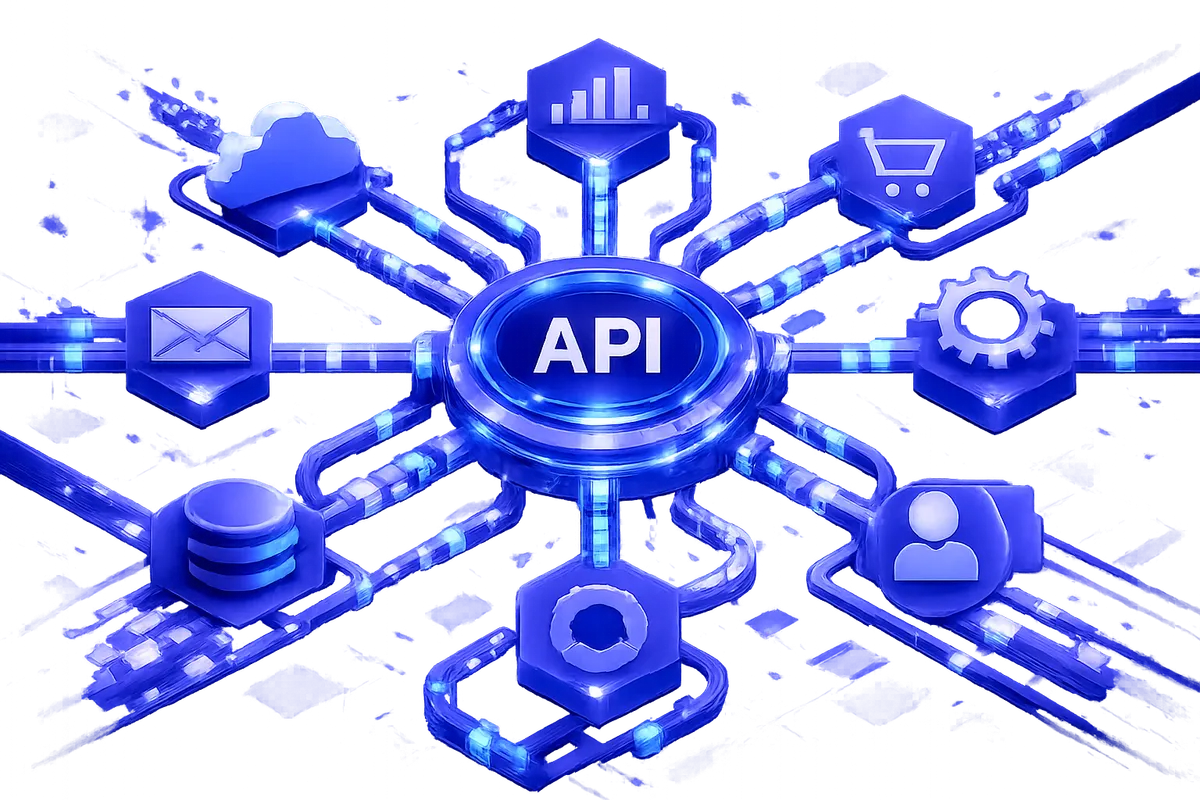
API Integration Services in South Loop service illustration

Our Integration Approach

We begin every integration project with a mapping exercise: documenting what data lives in each system, what manual steps currently move data between systems, and which of those steps are the highest-value targets for automation. This mapping phase often reveals automation opportunities the client had not identified, as well as dependencies between systems that affect integration design.

From the map, we design the integration architecture: which systems connect directly through their native APIs, which require a middleware layer, and what business logic needs to live in the integration itself. We design for both the current state and the likely evolution of your business: integrations that break when you add a new software tool or expand operations are more expensive than doing it right the first time.

Implementation follows the design, with testing against real data scenarios before production deployment. We provide documentation covering how each integration works, what monitoring is in place, and how to manage common scenarios like integration failures or data conflicts between connected systems.

The Hidden Cost of Manual Data Transfer

The true cost of unintegrated systems is rarely visible in a single transaction but becomes apparent when you measure it across an entire week of operations. Staff members who spend thirty minutes per day entering data from one system to another are spending roughly one hundred twenty-five hours per year on a task that produces no business value. For a South Loop restaurant with two or three staff members performing routine data transfers, that is two hundred fifty to three hundred seventy-five hours annually at current hospitality labor costs.

Beyond direct labor cost, manual data transfers introduce error rates that automated integrations do not. A staff member entering fifty transactions daily will make data entry errors at some frequency. Those errors compound in downstream systems: an incorrect amount in the accounting system requires reconciliation, an incorrect customer record in the CRM creates follow-up failures, a missed maintenance record in the property management platform creates compliance gaps that property managers discover during audits rather than in real time.

The business case for API integration for South Loop businesses is typically straightforward: the cost of integration is recovered within six to eighteen months through reduced labor and reduced error correction, after which the integration pays for itself continuously.

Integration Monitoring and Reliability

Integrations that run silently when working and fail silently when not working are dangerous in production business environments. We build monitoring into every integration we deploy: health checks that verify the integration is functioning on a defined interval, error logging that captures failure details, and alerting that notifies your team when an integration fails and provides enough context to diagnose the issue.

For South Loop property managers and restaurant operators who depend on integrations for daily operations, integration reliability is not optional. We design integrations with fault tolerance: retry logic for transient failures, dead letter queues for transactions that fail repeatedly so they can be reviewed and reprocessed, and graceful degradation so a single integration failure does not cascade into broader operational disruption.

Frequently Asked Questions

Both. For many South Loop business integration needs, commercial platforms like Zapier, Make, or native vendor integrations are the right choice: faster, less expensive, and easier to maintain than custom-built integrations for common use cases. We recommend commercial platforms where they meet the requirements. We build custom integrations when commercial platforms cannot handle the data volumes, real-time requirements, business logic complexity, or security requirements of a specific integration need.

Simple integrations using commercial platforms between two well-supported systems can be completed in one to two weeks. More complex integrations involving multiple systems, custom data transformation, or custom API development take four to twelve weeks depending on scope. We provide timeline estimates after the mapping exercise when we have a clear picture of what the integration involves.

Some platforms used by South Loop businesses do not offer API access, particularly older or niche-specific software. When a platform lacks an API, we evaluate alternatives: file-based integration using scheduled exports and imports, database-level integration where the architecture supports it, or screen-scraping automation for some use cases. We are transparent about the trade-offs of each approach and will raise the conversation about platform migration if the integration constraint suggests it.

Every integration we build includes error handling and monitoring. When a data transfer fails, the integration logs the failure, retries according to a defined policy, and alerts your team if the failure persists after retries. Unresolved failures appear in a monitoring dashboard so you can see integration health without proactively checking each system. We design integrations to fail safely.

Yes. Data security in integrations is a primary design consideration. We use encrypted transmission for all data in motion, implement proper authentication between systems with least-privilege access principles, avoid storing credentials in insecure locations, and log access for audit purposes. For South Loop businesses handling sensitive data, including tenant personal information, client financial data, or professional communications, we implement additional security measures appropriate to the data classification.

Simple integrations using commercial platforms run fifteen hundred to five thousand dollars depending on the number of integrations and configuration complexity. Multi-system integration projects with custom logic and development run eight thousand to thirty thousand dollars depending on scope. Ongoing integration management and support is available on a monthly retainer basis for businesses that want a managed service rather than a one-time implementation. South Loop businesses that invest in API integration eliminate the manual data transfer work that consumes staff time without producing value, and build a connected technology stack that scales with the business as it grows. The integration work done today compounds over time as each connected system produces better data for every other system it is linked to. Learn more about our [API integration services across Chicago](/chicago/api-integration-services) or explore other [digital services available in South Loop](/chicago/south-loop).

Ready to get started in South Loop?

Let's talk about api integration services for your South Loop business.