What We Build
Internal integration APIs. Custom APIs that connect your internal systems: property management to accounting, POS to inventory, CRM to billing. We design the data model, build the API endpoints, handle authentication and authorization, implement error handling, and provide the documentation your team needs to maintain and extend the integration over time.
Third-party integration APIs. APIs that connect your systems to external services: payment processors, shipping providers, map and location services, communication platforms, and the dozens of other external services that modern businesses rely on. We handle the authentication complexity, API version management, and error handling that external integrations require.
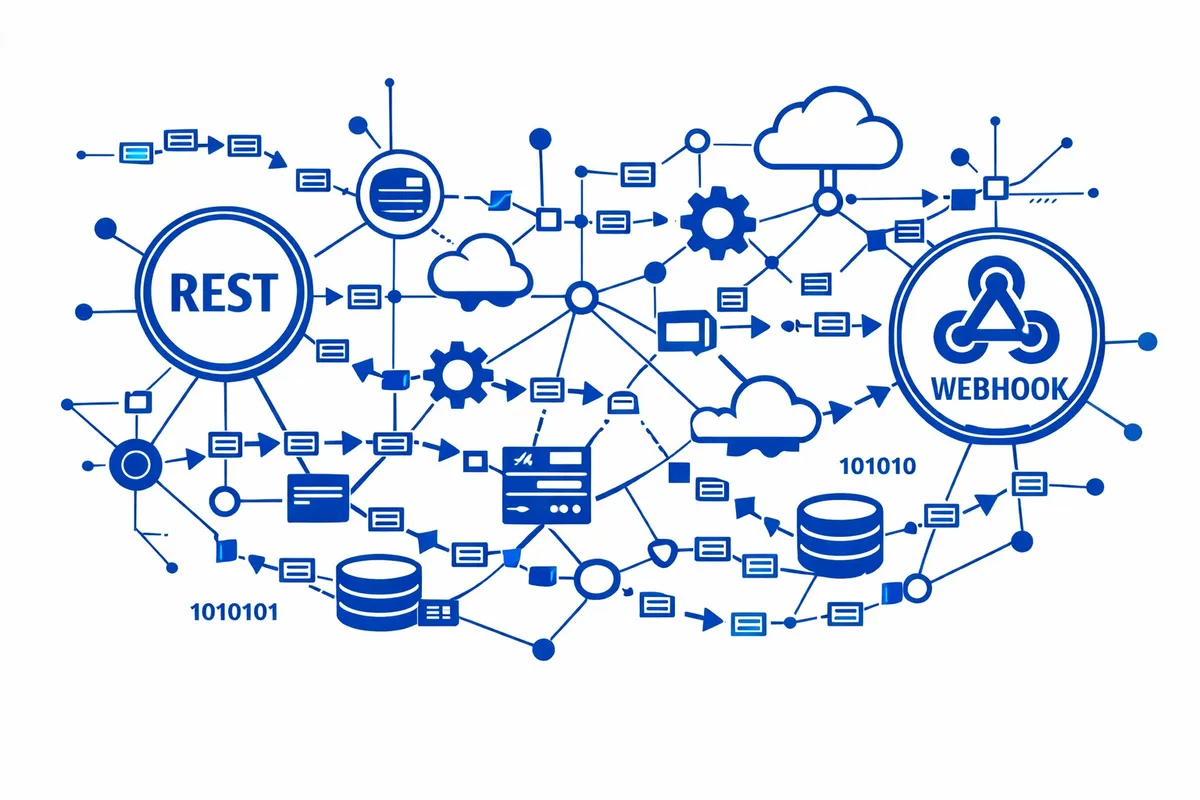
Webhook systems. Event-driven integrations where external services send data to your systems when things happen rather than your systems polling for updates. Webhook implementations are essential for real-time operations: payment confirmations, delivery status updates, reservation changes, and maintenance request status updates that need to trigger actions immediately.
Developer-facing APIs. For South Loop businesses building products or platforms that need to expose API access to partners, clients, or developers, we design and build public-facing APIs with proper versioning, authentication, rate limiting, and developer documentation. This includes the SDK and documentation infrastructure that drives developer adoption of your platform.
Data streaming and real-time APIs. WebSocket-based APIs and streaming data implementations for applications that require real-time data: live operational dashboards, real-time inventory systems, and event-driven architectures where data must be current to be useful.
APIs and the South Loop Data Ecosystem
South Loop businesses participate in a data ecosystem that extends well beyond their own operational systems. Property managers connect to credit bureaus for tenant screening, to third-party maintenance vendors for work order management, and to utility companies for usage reporting. Restaurants connect to delivery platforms, reservation systems, and loyalty platforms. Convention services companies connect to McCormick Place's exhibitor management systems, to equipment vendors, and to staffing agencies. Each of these external connections is a potential API integration that eliminates a manual data transfer step and reduces the error rate that comes from human data entry.
Building APIs rather than relying on manual processes for these external connections is a scaling decision as much as an efficiency decision. Manual data transfer between external systems and internal records works at low volume. As a South Loop business grows, its transaction volume grows with it. A property management company that manually imports utility usage data for twenty units can absorb the effort. At one hundred units, it cannot sustain it without adding staff whose entire job is data entry. An API that handles the import automatically scales to any volume without adding proportional staff time.
The McCormick Place connection is a specific South Loop API opportunity worth noting. McCormick Place publishes exhibitor data, show schedules, and attendance information through mechanisms that convention services businesses can consume programmatically. Businesses that build automated data flows from McCormick Place's published information into their own operational systems gain a structural advantage in timing their marketing, staffing, and service capacity decisions around the convention calendar.
Developer Experience and API Standards
APIs built without attention to developer experience create integration friction that discourages adoption and generates ongoing support burden. If your South Loop business is building a product that exposes an API to clients, partners, or developers, the quality of that API's documentation, consistency, and predictability matters for how many integrations get built against it and how much support burden falls on your team.
We design developer-facing APIs to the standards that professional developers expect: RESTful patterns with predictable resource naming, consistent error response formats, proper HTTP status codes, versioning strategy, rate limiting with clear documentation, sandbox environments for testing, and reference documentation with working code examples. These are not luxury additions. They are what separates an API that drives adoption from one that creates developer frustration.