How We Build AI Customer Service in South Loop
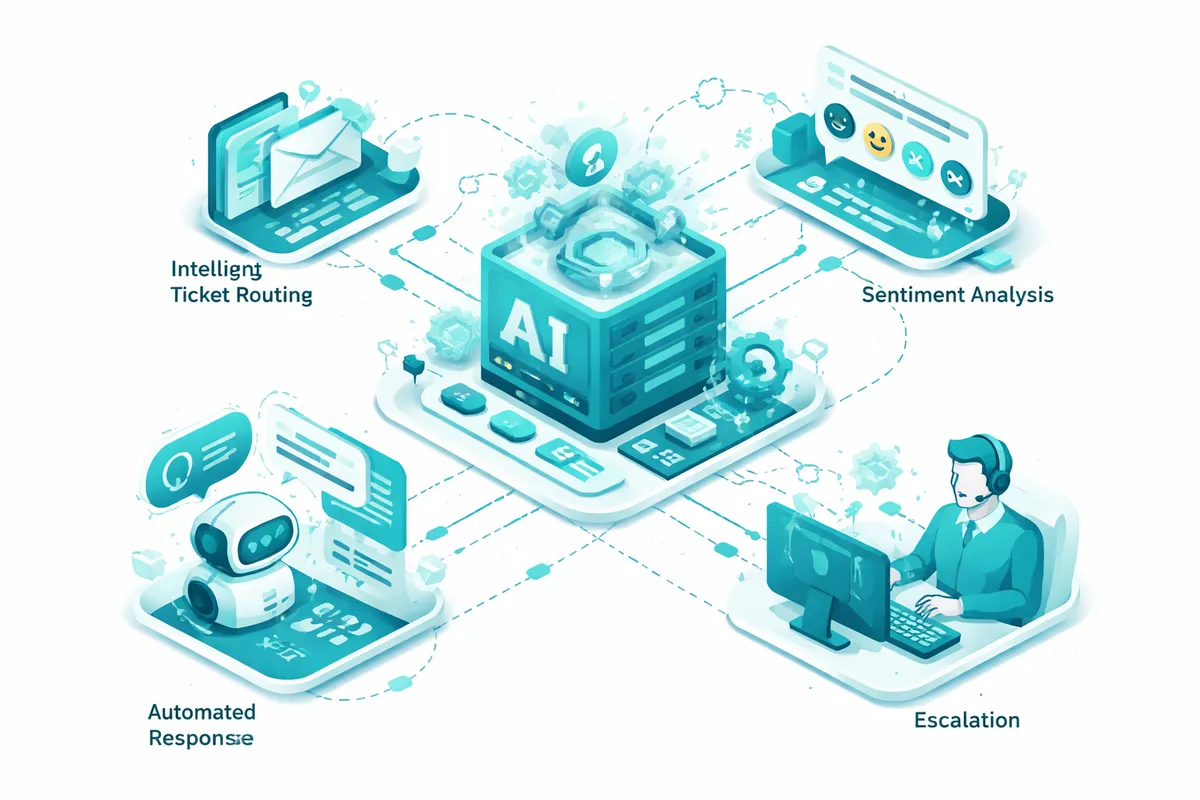
We integrate AI support into every channel your customers use and train the system on your specific business's products, services, policies, and South Loop context. For restaurants near Printers Row and Museum Campus, the AI handles menu questions, reservation requests, hours, walking directions from nearby attractions like the Shedd Aquarium and Field Museum, and event-specific messaging like updated hours during Bears games or extended service on exhibit opening weekends.
For retail shops along State Street and in Printers Row, it manages product inquiries, availability checks, purchase guidance, and the event-adjacent questions that convention attendees and museum visitors ask when exploring the neighborhood. For property management companies in the residential towers along Wabash and Michigan Avenue, it handles maintenance requests, package notifications, amenity booking, building information, and the routine tenant communications that consume front desk and management time without requiring human judgment.
The system recognizes when a conversation needs human attention and transfers it with full context rather than starting the conversation over. A complaint that requires management involvement gets transferred to the right person with the conversation history already included. A complex group booking inquiry that requires a human sales conversation gets routed to the sales team with the group's size, date, and initial requirements already captured.
Industries We Serve in South Loop
Restaurants near Soldier Field and Museum Campus use AI customer service to manage event-driven inquiry spikes that would otherwise go unanswered. On a Bears game Saturday or a sold-out Field Museum exhibit weekend, the system handles forty to sixty simultaneous digital conversations that would otherwise sit unread in the DM inbox until Monday. The revenue captured during these surges represents a direct return on the AI deployment that most South Loop restaurant owners can calculate after the first event weekend.
Retail and service businesses in Printers Row and along State Street deploy AI to handle the steady stream of inquiries from neighborhood residents and McCormick Place convention attendees who explore the South Loop corridor between sessions. The system adapts its responses based on context: a local regular gets quick transactional answers about availability and hours. A first-time visitor from a convention gets more detailed information about the business, its location relative to their hotel, and what makes it worth the walk.
Property management and residential services in South Loop's high-rise towers use AI for tenant communication at scale. Maintenance requests get logged and routed automatically without front desk staff manually forwarding emails. Package notifications go out without anyone lifting a finger. Building information questions get answered instantly at any hour rather than requiring a tenant to wait until the office opens. For buildings with four hundred or more units, this reduces management workload on routine communications by thirty to forty percent.
Professional services firms along Michigan Avenue and Wabash Avenue use AI customer service for initial inquiry handling and appointment scheduling. A prospective client who finds the firm through a search during a McCormick Place conference gets an immediate response to their inquiry at any hour, with an appointment scheduled before they have time to move on to a competitor. The AI captures the lead at the moment of highest intent rather than losing it to a missed call or unanswered email.
Hotels and hospitality businesses near Museum Campus use AI customer service to handle the full spectrum of pre-arrival, during-stay, and post-stay communications at the scale that major tourism destinations require. A hotel receiving a hundred pre-arrival messages on the day of a major exhibit opening at the Field Museum has the same customer service capacity on that day as on any other, because the AI scales to volume.
Event venues and entertainment businesses serving Soldier Field programming and South Loop's cultural calendar use AI customer service to handle the ticketing questions, parking information requests, and accessibility inquiries that event days generate in volumes that no staff team can manage manually across digital channels.
What to Expect Working With Us
1. Discovery and event-load inquiry audit. We map the inquiry patterns that define South Loop's demand environment: Bears game day surges near Soldier Field, McCormick Place convention weeks, Museum Campus weekend traffic, and the steady residential inquiry volume from towers along State Street and Michigan Avenue. The deployment is designed to handle surge performance from day one.
2. Knowledge base build with context-awareness. We train the AI to recognize customer context: a tourist arriving from the Field Museum has fundamentally different needs than a resident checking on a loyalty order, and a convention attendee looking for group dinner options needs different information than a Columbia College student asking about happy hour specials. Context-aware routing is built into the system from the start.
3. Multi-channel integration and surge testing. We deploy across web chat, Instagram DMs, Google Business Messages, SMS, and phone. Before launch, we test against event-day scenarios specific to South Loop businesses to verify the system handles Soldier Field surge volumes and convention week traffic without degradation in response quality or accuracy.
4. Ongoing optimization. Monthly reviews update event-specific knowledge base content, refine audience context detection, and prepare seasonal content for the South Loop's major traffic events. Property management deployments receive building-specific updates as amenities, policies, and tenant rosters change throughout the year.