How We Build AI Compliance and Governance for South Loop
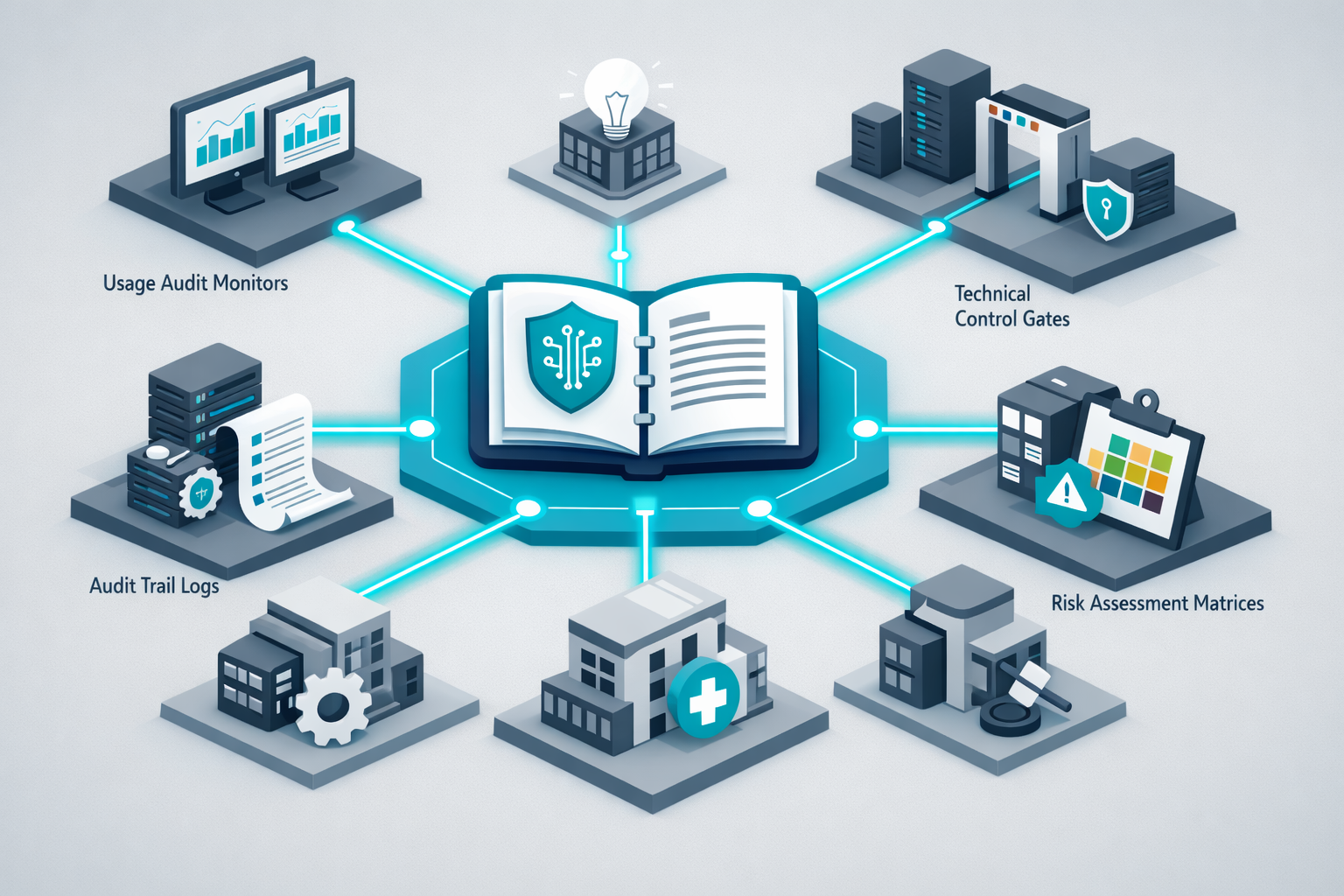
We begin with an AI use inventory: documenting every AI tool currently in use at the South Loop organization, the specific functions those tools perform, the data they process, and the outputs they produce. Most South Loop organizations using AI have not done this systematically. Tools adopted by individual practitioners without organizational visibility, AI features embedded in software the organization already uses, and experimental tools evaluated by specific team members all need to appear in the inventory for the governance framework to be complete.
From the inventory, we develop a risk matrix that scores each AI use by regulatory exposure, data sensitivity, and output reliability. A South Loop law firm's AI use for legal research scores high on regulatory exposure and output reliability risk. A restaurant's AI use for social media captions scores low on both. The risk matrix determines where the governance framework needs the most structure and where lighter-touch policy documentation is sufficient.
We then build the governance framework: AI use policies, review and approval processes, audit trail requirements, disclosure practices, and escalation procedures. For South Loop professional services firms, the framework integrates with existing professional responsibility infrastructure. For creative businesses near Columbia College, the framework includes the institutional disclosure requirements that academic clients expect when they ask vendors about AI use in their deliverables.
Industries We Serve in South Loop
Legal and professional services firms on Michigan Avenue and Wabash Avenue face bar association ethics rules and professional liability exposure from AI use without proper governance. We build AI governance frameworks for South Loop law firms that address the specific ethics rules of Illinois bar practice, including competence requirements around AI-generated legal research, client confidentiality when AI tools process privileged communications, and the supervision obligations that apply when AI tools are used in legal work product.
Financial services and investment firms in South Loop offices face FINRA, SEC, and fiduciary duty requirements that constrain how AI can be used in client-facing analysis, recommendation generation, and communication. We build governance frameworks for South Loop financial businesses that document AI use in ways that satisfy regulatory audit requirements and maintain the fiduciary standards that clients and regulators expect.
Columbia College Chicago vendors and creative agencies on Wabash Avenue serve an institutional client that has its own AI use policies developed in the context of academic integrity and creative education. We build governance frameworks for creative agencies that meet Columbia College's disclosure and attribution requirements, allowing these South Loop businesses to serve institutional clients without compliance friction on every project.
Healthcare-adjacent businesses serving South Loop's residential population face HIPAA considerations when AI tools process any patient-adjacent data. We assess AI use in healthcare-adjacent South Loop businesses and build governance frameworks that maintain HIPAA compliance while capturing AI efficiency benefits in scheduling, documentation, and patient communication.
Hospitality and event businesses near Museum Campus and Soldier Field use AI in marketing, customer communication, and operational planning. While regulatory exposure is lower than for professional services firms, governance frameworks for hospitality businesses address customer disclosure, data handling, and the vendor management practices that apply when third-party AI tools process guest data with uncertain retention and sharing policies.
Real estate and property management firms in South Loop's high-rise corridor use AI for lease documentation, tenant communication, and market analysis. We build governance frameworks that address the fair housing compliance considerations that apply when AI tools are used in tenant selection, property marketing, or any process that touches protected class characteristics.
What to Expect Working With Us
1. AI use inventory and risk assessment. We document every AI tool in use at your South Loop organization and assess each against the regulatory and policy requirements relevant to your industry. For professional services firms near the Loop, this inventory includes tools used by individual practitioners, not just enterprise software purchased through the IT department.
2. Governance framework development. Based on the risk assessment, we build the policy documents, process maps, audit trail requirements, and disclosure practices that constitute your AI governance framework. The framework is tailored to your industry's regulatory environment and your specific AI use pattern rather than adapted from a generic template.
3. Implementation support. We support implementation of the governance framework: training staff on new review processes, configuring audit trail tools, drafting disclosure language for client communications and vendor contracts, and helping leadership understand the ongoing governance obligations that responsible AI use requires.
4. Ongoing monitoring and updates. AI governance is not a one-time project. As AI tools evolve and regulatory guidance develops, governance frameworks need updating. We provide annual framework reviews for South Loop businesses that need current compliance posture as the AI regulatory landscape continues to develop.