How We Build RAG Systems for Schaumburg
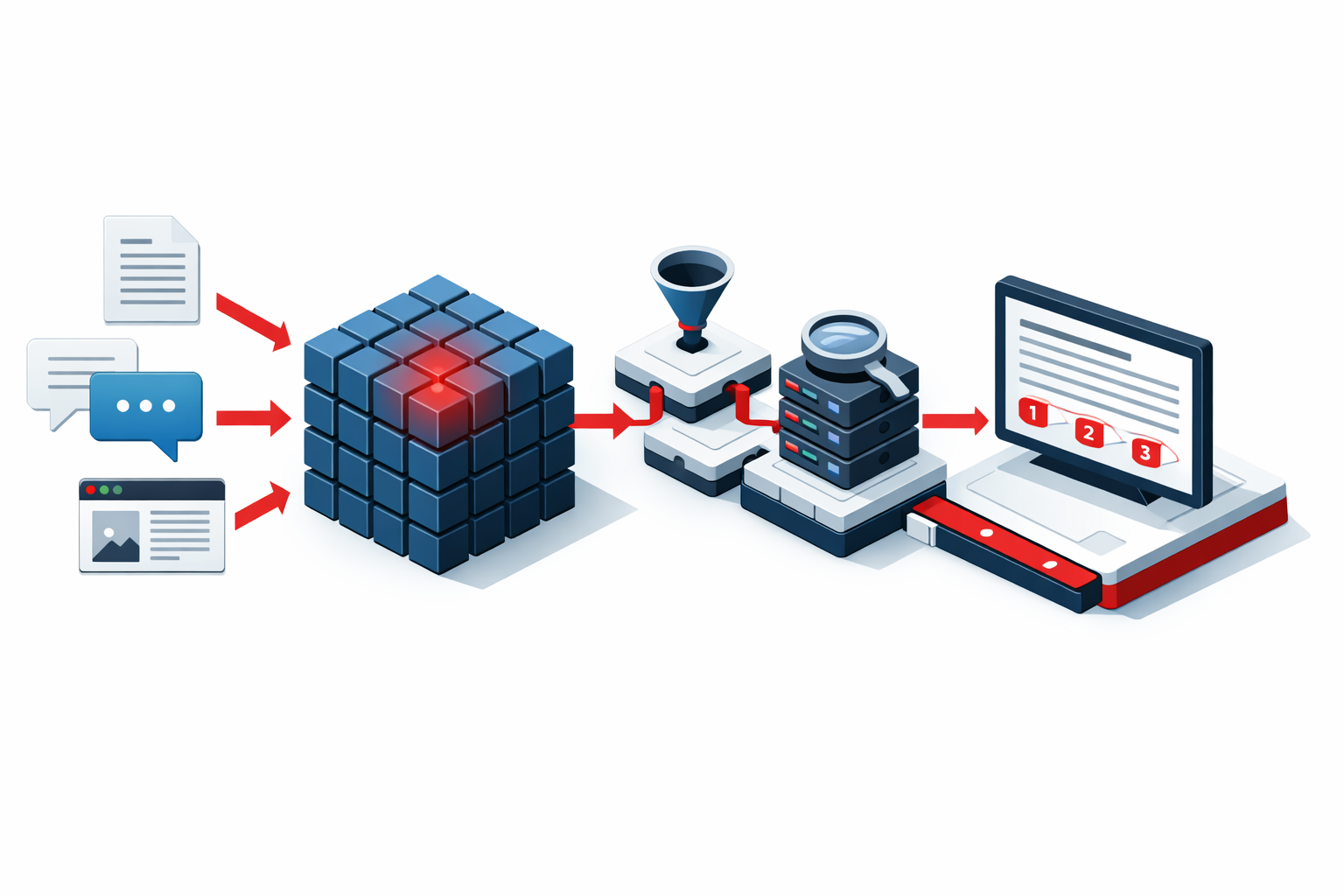
Our process begins with a knowledge audit. We work with your team to identify what knowledge matters most, where it currently lives, and what formats it takes. A Schaumburg technology firm might have technical documentation in Confluence, client records in Salesforce, project retrospectives in SharePoint, and HR policies in a shared drive. We map all of it, prioritize the most business-critical material, and establish an extraction and preparation plan before writing a line of code.
After the audit, we prepare the knowledge corpus. Documents are extracted, cleaned, and organized with metadata that improves retrieval accuracy. A ten-year archive of client engagement notes from a Schaumburg consulting firm gets tagged by industry, service type, and outcome so the RAG system can return the most relevant precedents rather than a generic pile of results. Procedures are chunked at the right granularity so answers are specific enough to be actionable.
We then build and deploy the RAG infrastructure, connecting your organized corpus to a natural language interface your employees actually use. We integrate with the tools already in your workflow: Slack, Microsoft Teams, an internal web portal, or a standalone chat interface depending on your architecture. The goal is zero friction between an employee's question and the answer the organization already has.
We run accuracy testing using real employee question samples before launch, identifying and correcting gaps in the knowledge base. Post-launch, we monitor query logs to identify questions the system handles poorly and improve coverage over time.
Industries We Serve in Schaumburg
Corporate headquarters and regional offices along Golf Road and Woodfield Road deploy RAG to make employee handbooks, department procedures, onboarding documentation, and organizational history instantly accessible. New hires become productive in weeks rather than months. Long-tenured employees stop reinventing answers the organization already has. HR departments reduce the volume of policy questions that consume their time each week.
Technology and software firms near Higgins Road and Meacham Road use RAG to organize technical documentation, past project architectures, engineering decisions, and solution patterns so engineers can reference existing work rather than starting from scratch. For managed services providers, RAG turns client runbooks and support histories into an instantly searchable knowledge asset that reduces ticket resolution time and improves first-call resolution rates.
Insurance agencies and financial services firms throughout the Schaumburg corridor deploy RAG to organize product information, underwriting guidelines, compliance procedures, and regulatory documentation so agents and adjusters can access accurate information instantly. Consistency across large teams improves as everyone draws from the same organized corpus rather than their individual training memories.
Professional services and consulting firms serving northwest suburban clients use RAG to turn past engagement archives into competitive advantage. Proposals benefit from relevant precedents. Client deliverables reflect accumulated expertise rather than starting from the beginning on each new account. Onboarding new consultants accelerates because the knowledge base is accessible and organized rather than locked in the heads of senior partners.
Healthcare organizations and medical practices near Schaumburg Road use RAG to organize clinical protocols, administrative procedures, coding guidelines, and compliance documentation so clinical and administrative staff can access needed information without interrupting colleagues. Consistency in patient-facing documentation improves when every team member draws from the same organized knowledge base.
Hotels and hospitality businesses serving the Schaumburg Convention Center corridor use RAG to organize group booking procedures, catering standards, event management checklists, and vendor relationships so event and operations teams handle volume and complexity without losing institutional knowledge when staff turn over.
What to Expect Working With Us
1. Knowledge audit and prioritization. We assess your full documentation landscape: what exists, where it lives, and how critical each category is to daily operations. We identify the highest-value knowledge categories first so your RAG system delivers immediate impact on the questions your team asks most often.
2. Corpus preparation and organization. We extract, clean, and structure your documentation for RAG. Documents are chunked, tagged, and organized so the system returns specific, actionable answers rather than long documents to scan. Proprietary content stays internal throughout the process, governed by access controls you define.
3. System build, integration, and testing. We deploy the RAG infrastructure and connect it to your preferred interface. We test with real question samples drawn from your team's actual inquiry patterns, iterating until accuracy meets the standard your organization requires before going live.
4. Knowledge culture and ongoing capture. We help your organization establish practices for documenting new knowledge as it is created. New procedures, completed projects, and resolved issues get added to the RAG corpus systematically, so the system improves over time rather than growing stale.