How We Build Multi-Agent Systems for Schaumburg
Our process begins with mapping your workflows. What steps happen in sequence? Where do they overlap? What dependencies exist? Where do humans need to make decisions? For insurance operations, this means mapping claim intake, classification, coverage verification, benefit calculation, fraud assessment, and adjudication. For healthcare data, this means mapping ingestion, validation, anomaly detection, security review, and routing. For supply chain, this means mapping procurement, supplier verification, quality assessment, and logistics. Workflow mapping shows where agents should exist and how they should coordinate.
We then design agent types. What should each agent specialize in? What information does it need? What decisions should it make? What should it escalate? For insurance, this might mean claims agents specializing in different claim types, verification agents checking coverage, calculation agents computing benefits, and fraud agents flagging suspicious patterns. For data, this might mean ingestion agents reading data, validation agents checking formats and completeness, security agents flagging anomalies, and routing agents sending data to appropriate teams. For supply, this might mean procurement agents requesting quotes, supplier agents assessing options, quality agents checking specifications, and logistics agents coordinating delivery.
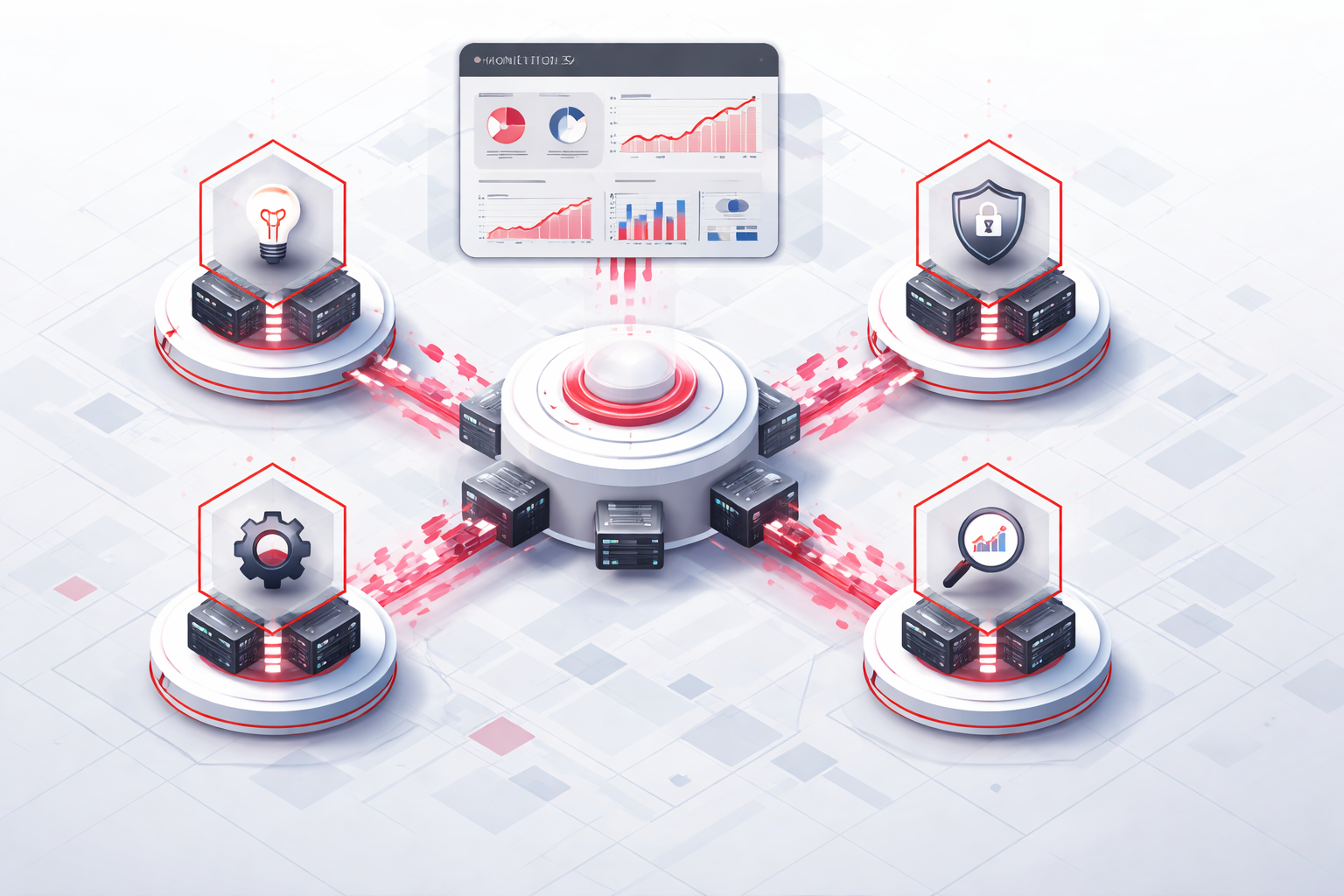
We then build the agent network, including agent-to-agent communication protocols, escalation pathways, and human oversight points. We define what agents do autonomously, what requires human approval, and what triggers alerts. We build dashboards showing what agents are doing, where work is moving, and what's escalated. We test the system extensively with your workflows to ensure coordination works as intended.
Finally, we deploy with oversight. Initial operation includes monitoring to ensure agents coordinate effectively. We adjust agent behavior and coordination based on what we observe. Over time, as the system proves itself, we increase autonomous operation.
Industries We Serve in Schaumburg
Insurance operations and claims centers deploy multi-agent systems for claims intake, classification, coverage verification, benefit calculation, and fraud detection. Agents coordinate across steps, with humans handling exceptions and complex cases.
Healthcare IT companies implement multi-agent systems for data processing pipelines, security validation, system integration, and incident response. Agents coordinate data flow while maintaining security and compliance.
Medical device manufacturers build multi-agent systems for supply chain coordination, quality assurance, regulatory compliance, and logistics. Agents coordinate across manufacturing and distribution while maintaining quality standards.
Healthcare operations and hospital networks deploy multi-agent systems for patient intake, triage, care coordination, and billing. Agents coordinate care processes while humans maintain clinical decision-making.
Financial services operations implement multi-agent systems for transaction processing, compliance checking, fraud detection, and reporting. Agents coordinate across compliance and operational requirements.
Manufacturing and logistics operations build multi-agent systems for production scheduling, inventory management, quality control, and order fulfillment. Agents coordinate operations while maintaining quality and safety.
What to Expect Working With Us
1. Workflow analysis and agent mapping. We map your complex workflows, identify where agents should operate, and define agent types and responsibilities. We identify coordination requirements and escalation points. Analysis takes 3-4 weeks. Deliverable: workflow diagram and agent specification document.
2. Multi-agent architecture and design. We design agent-to-agent communication protocols, define what agents do autonomously vs. escalate, and design human oversight mechanisms. We build prototypes demonstrating agent coordination. Design takes 4-6 weeks.
3. Implementation and testing. We build the full multi-agent system, test coordination with your workflows, and refine agent behavior based on results. We build monitoring dashboards and escalation alerts. Implementation takes 6-10 weeks depending on complexity.
4. Deployment and optimization. We deploy the system with human oversight, monitor agent behavior, gather feedback from operations teams, and refine agent coordination. We gradually increase autonomous operation as confidence grows. Optimization happens over 2-3 months post-launch.