How We Build HR Automation for Schaumburg
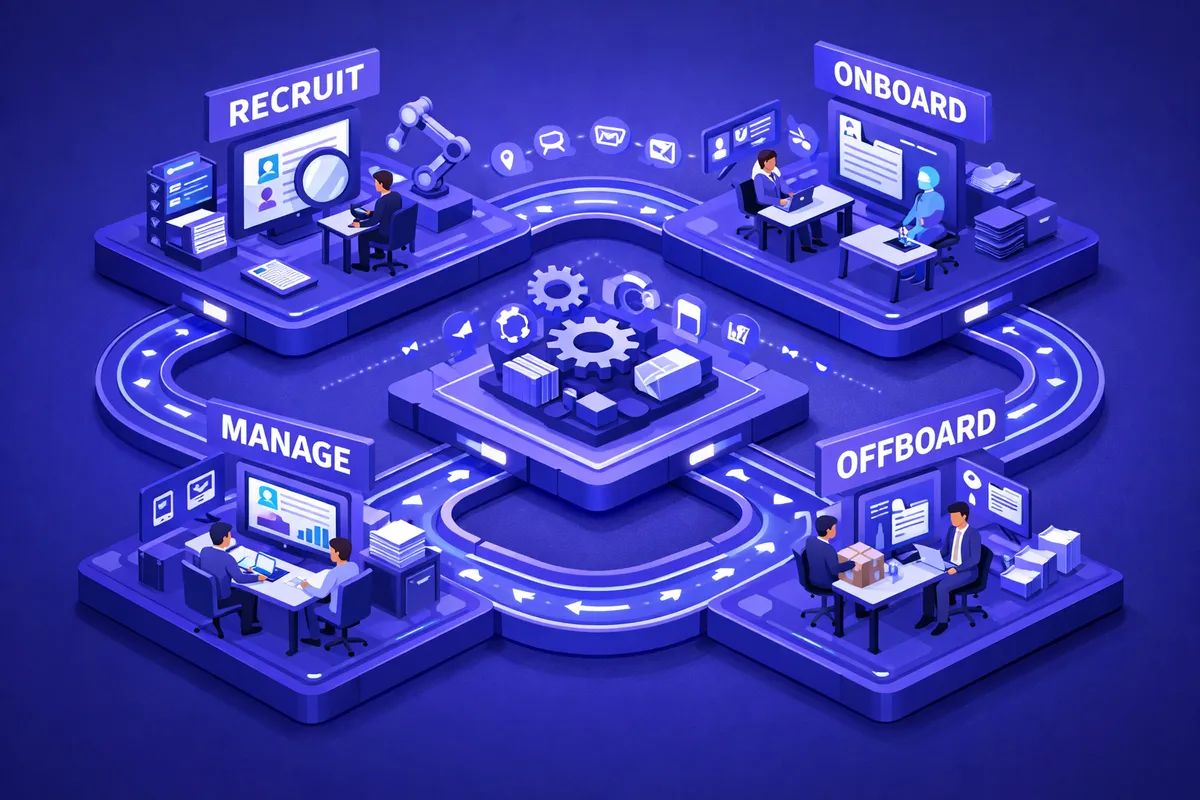
Schaumburg's corporate HR environment requires automation that connects to the enterprise payroll and HRIS platforms already in use: ADP Workforce Now, UKG, Paychex Flex, Ceridian Dayforce, and SAP SuccessFactors are common in the market. We design automation that integrates with your existing platform stack rather than replacing it. The goal is to automate the workflows that live between systems: the onboarding sequence that starts in the ATS and ends in the payroll system, the benefits enrollment that connects the HRIS to the carrier portal, the offboarding that revokes access across multiple systems when a departure is processed.
Implementation begins with a workflow audit mapping every HR process your team currently manages manually. We identify the highest-risk compliance gaps, the highest-volume administrative tasks, and the integration points between your existing systems. Discovery for a Schaumburg employer typically surfaces three to five automation opportunities that individually justify the implementation cost. We prioritize by impact and build in phases so your team sees benefit before the full program is complete.
The compliance layer deserves specific design attention for Schaumburg employers. Illinois employment law, Cook County ordinances, and federal obligations create a compliance calendar that requires systematic management across the full employee lifecycle. We build compliance tracking that monitors I-9 re-verification timelines, tracks Illinois One Day Rest in Seven Act scheduling compliance for your hourly workforce, manages ACA measurement and stability periods, and surfaces upcoming deadlines to the right team members before they become violations.
Industries We Serve in Schaumburg
Corporate Technology and Professional Services Firms: The tech employers along Higgins Road and the professional services firms near the Schaumburg Convention Center employ professional workforces with complex onboarding, benefits, and performance management requirements. Automation handles the administrative throughput that scaled teams need without proportionally scaling the HR function.
Healthcare Offices and Medical Practices: Schaumburg's healthcare offices near Woodfield Road manage credentialing, scheduling compliance, and the specific HR obligations that licensed healthcare workforces create. Automated credential tracking, license expiration monitoring, and scheduling compliance reduce the administrative burden on practice managers who are simultaneously managing clinical operations.
Insurance Agencies and Financial Services Firms: The insurance and financial services employers along Golf Road and Roselle Road manage producer licensing, continuing education compliance, and the documentation requirements of regulated industries alongside standard HR workflows. Automation handles the compliance tracking calendar that these obligations require.
Hotels and Hospitality Employers: The hotels serving the Schaumburg Convention Center and the Woodfield Mall corridor manage hourly workforces with high seasonal fluctuation, shift scheduling complexity, and the tip documentation and scheduling compliance that hospitality employment requires. Automated time tracking, scheduling, and compliance management reduce administrative load for property HR teams.
Retail Corporate Offices and Support Functions: Schaumburg's proximity to Woodfield Mall and its retail employer concentration creates demand for HR automation among retail companies whose corporate support functions are based here. Onboarding, benefits, and compliance systems that handle multi-location retail HR workflows are a specific automation need in this market.
Corporate Training and Consulting Organizations: The training and consulting firms based along Meacham Road and Woodfield Road manage project-based workforces with variable engagements, contractor classification obligations, and the specific HR complexity that professional services firms face. Automation handles the compliance documentation and classification tracking that these workforce models require.
What to Expect Working With Us
1. Workflow discovery and compliance audit. We map every HR process your organization currently manages manually, identify the compliance obligations that create ongoing risk for your headcount and employee type mix, and produce a prioritized automation roadmap with clear ROI estimates for each workstream.
2. Integration architecture design. We design the connections between your existing payroll and HRIS platforms and the automated workflows we are building, defining data flows, approval routing, and the points where human review remains appropriate.
3. Phased build and testing. We implement the highest-priority automation first, test against your actual employee data and workflow scenarios, and validate compliance outputs before launch. Each phase delivers operational benefit before the next begins.
4. Launch, training, and ongoing support. We train your HR team on exception management and dashboard monitoring, deliver 30 days of post-launch support, and provide quarterly compliance calendar updates as Illinois and Cook County employment law evolves.