Your Cart (0)

Your cart is empty

Schaumburg, Chicago

Email Marketing in Schaumburg

Email Marketing for businesses in Schaumburg, Chicago. We know the neighborhood, the customers, and what it takes to compete locally.

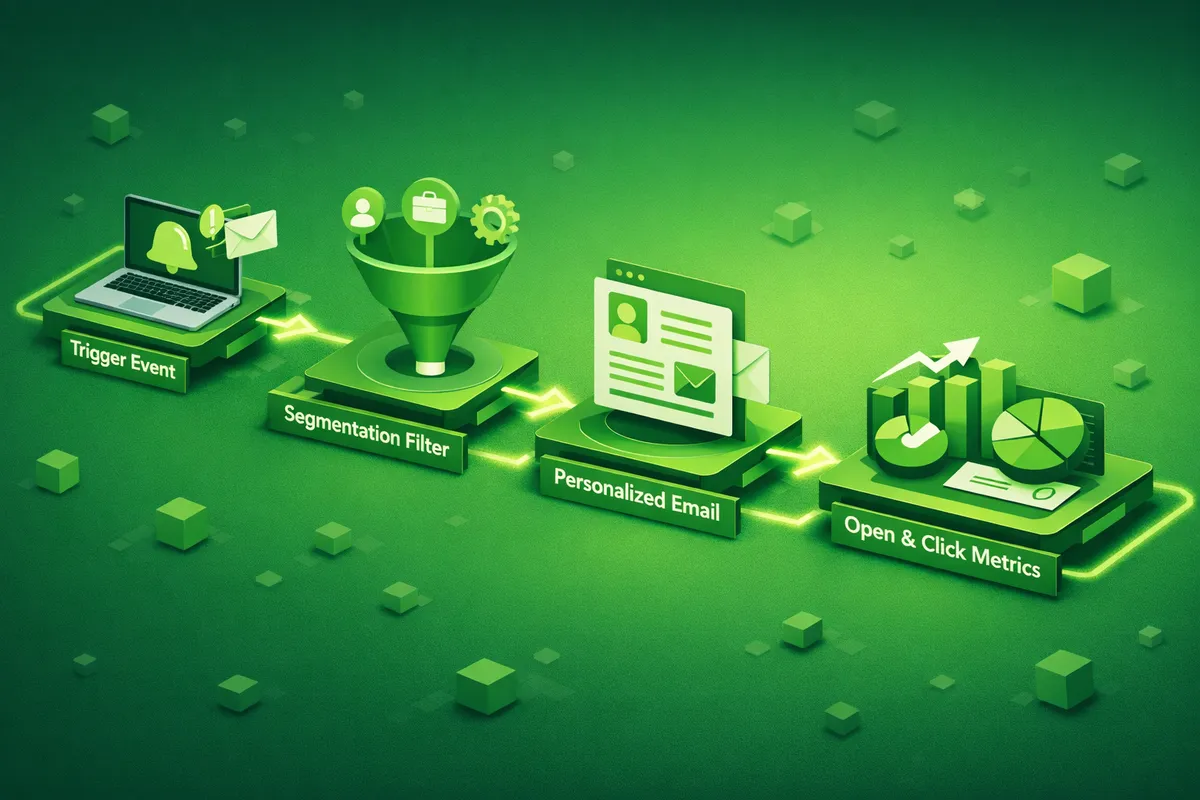
Email Marketing in Schaumburg service illustration

Consumer Email Marketing for Schaumburg's Woodfield Corridor

The consumer market around Woodfield Mall and along the commercial strips of Golf Road, Higgins Road, and Roselle Road is a high-volume suburban retail environment. Schaumburg's daytime corporate population creates a large lunchtime market that restaurants and food businesses can serve through well-timed weekday email campaigns. The residential population in Schaumburg proper and the surrounding suburbs creates a weekend retail and dining market with different characteristics.

Corporate workers in Schaumburg's office parks are a commuter audience with email behavior that resembles the Loop commuter audience in one important way: they are making lunch and after-work decisions based on what is convenient relative to their work location. A restaurant on Woodfield Road near the Zurich campus that sends a Tuesday email with a lunch special and a pre-order link will drive more corporate employee visits than a restaurant that relies solely on the proximity of its parking lot. Convenience is the key value proposition, and email that reduces the friction of making a lunch decision, by telling the subscriber exactly what is available and how quickly they can get it, wins the decision.

Woodfield Mall tenants have unique email marketing requirements because they serve both the local corporate market and a large regional shopper audience that comes specifically to Woodfield for the scale and selection it offers. Email marketing for mall-adjacent retailers should maintain two tracks: a local corporate worker segment focused on weekday convenience and a regional shopper segment focused on weekend destination content.

Segmenting Schaumburg's Dual B2B and Consumer Markets

The most important segmentation decision for a Schaumburg business is identifying which market each subscriber belongs to. A sign-up form that asks whether the subscriber is signing up as a business or as an individual, or that captures their company name for B2B context, gives you the data needed to run two distinct tracks from the beginning.

For B2B subscribers in the corporate corridor, the communication cadence, tone, and content type must be professional throughout. A lapse into consumer promotional language, discounts, flash sales, impulse offers, will feel inappropriate to a procurement manager or facilities director who is evaluating your business as a vendor. Keep the B2B track professional, substantive, and explicitly problem-solving in its orientation.

For consumer subscribers, segmenting by proximity to the Woodfield Mall area versus the residential neighborhoods of Schaumburg produces different timing and content needs. Mall-adjacent consumers make different decisions than purely residential consumers. The former have an errand-running orientation when they are near Woodfield. The latter are more likely to be planning a deliberate trip.

Frequently Asked Questions

You are not marketing to one person. You are marketing to a buying process. The decision to use a vendor in a corporate setting involves multiple stakeholders, a budget approval process, and a risk assessment that individual consumer decisions do not require. Your email program should nurture relationships with multiple contacts within a target organization, provide content that helps each contact make the internal business case for your product or service, and maintain consistent presence through the months-long decision cycle. A single promotional email blast will accomplish nothing in this market.

LinkedIn is the primary discovery channel, but email is the nurture channel. Connect with procurement, facilities, HR, and other relevant department leads at Schaumburg's corporate tenants through LinkedIn and industry events. Convert those connections to email subscribers by offering genuinely useful professional content: a corporate event planning guide, an industry trend report, a compliance checklist relevant to your service category. The content is the exchange. The email list is the channel for the ongoing relationship.

Tuesday and Wednesday mornings between 8:00 and 9:30 AM are the optimal B2B send window in any corporate market, including Schaumburg. This captures decision-makers early in the workweek when they are planning their agendas and are most receptive to professional communications. Avoid Monday morning, which is consumed by the week-start catch-up. Avoid Thursday and Friday, when attention shifts to end-of-week completion. For consumer email targeting the corporate lunch market, Tuesday and Wednesday sends at 10:30 AM capture the lunch planning moment.

Track engagement depth rather than just open rate. In a B2B context, a subscriber who opens every email, clicks on one article per month, and forwards two pieces of content per quarter to colleagues is more valuable than a subscriber with higher open rates who takes no qualifying action. Set up tracking for email forwards, shared content, and response-to-email-CTA actions. In B2B email, the conversion is not a purchase. It is a meeting request, a proposal inquiry, or a vendor qualification conversation. Design your calls to action accordingly.

Yes, in the specific areas where local advantage is real. A local restaurant near Motorola Solutions cannot compete with McDonald's on price or speed. It can compete on quality, relationship, and the personalization that a local business can offer that a chain cannot. An email from a Schaumburg restaurant owner that says "I saw your company announced a big win this week, come celebrate with us tonight" is not something a chain can send. That personalization, even at modest scale, is worth more than any promotional discount.

Ready to get started in Schaumburg?

Let's talk about email marketing for your Schaumburg business.