How We Build Document Management for Schaumburg
We start by following a document through your business from creation to archive. For a Schaumburg insurance agency, that means watching how a claim file is opened, what gets attached, who touches it, and where it sits when it is closed. For a healthcare practice off Golf Road, it means mapping intake, clinical records, and billing as separate document streams with separate access rules. We do not design the system from a template. We design it from how your office on Roselle Road or Meacham Road actually works.
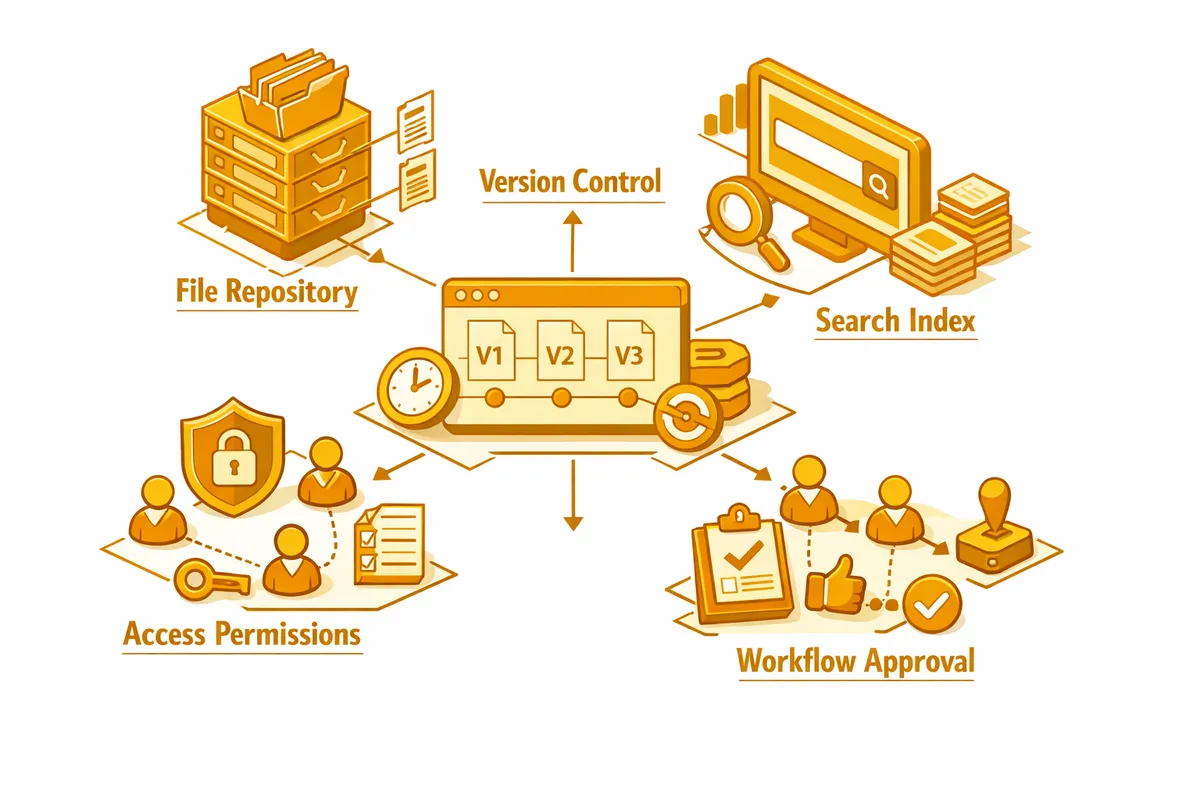
From there we build the structure: a folder and metadata taxonomy that matches your real categories, naming conventions the system enforces automatically, and version control so the current document is never in question. We set permissions by role, client, or matter, so a vendor file is visible to the people who need it and no one else.
Then we wire the workflows. Contracts route to legal review before signature. Claims move through adjuster and supervisor approval in sequence. Onboarding paperwork triggers the next step when a signature lands. For corporate offices in the campus parks along Higgins Road, this is where document management stops being storage and becomes operations. We also build the search and retrieval layer here, because a Schaumburg team should be able to find a signed document by client, date, or matter in seconds rather than by remembering which folder it was filed under.
We migrate your existing files into the new structure, train your team on the day-to-day, and stay on to adjust as your Schaumburg operation grows. The system should make the busy weeks feel routine, not exceptional.
Industries We Serve in Schaumburg
Insurance agencies clustered along Roselle Road and the Golf Road corridor use document management to govern policy files, claims documentation, and signed endorsements across multiple producers. The system enforces consistent file structure so a claim opened by one adjuster can be picked up by a supervisor without a hunt, and it keeps the retention trail carriers and auditors expect.
Healthcare and medical offices near Golf Road rely on document management to separate clinical records, intake forms, and billing paperwork into distinct streams with distinct access rules. Front-desk staff retrieve a referral letter in seconds, clinicians see only what their role permits, and signed consents stay linked to the right patient file through every visit.
Corporate offices and tech firms in the campus parks along Meacham Road and Higgins Road generate contracts, vendor agreements, and compliance records at headquarters volume. Document management gives these teams version control, approval routing, and a single source of truth, so a contract negotiated over six weeks never splinters into competing drafts across inboxes.
Professional services firms working near the Schaumburg Convention Center use document management to organize client deliverables, engagement letters, and project files by matter. When a client calls with a question about work delivered last quarter, the relevant document surfaces immediately instead of triggering a search across three storage locations.
Hotels and hospitality operators serving the Woodfield Mall and convention trade manage group contracts, vendor invoices, and event paperwork that spikes with the booking calendar. Document management keeps signed agreements, banquet orders, and supplier records structured, so a sales team can scale paperwork through a convention week without losing a file.
Retail and restaurant operators around Woodfield Road handle vendor agreements, lease documents, licensing paperwork, and supplier contracts across locations. A document management system keeps these records centralized and access-controlled, so a multi-unit operator near Woodfield Mall can pull a current lease or health permit without calling the property manager.
What to Expect Working With Us
1. Document flow mapping. We trace how documents actually move through your Schaumburg office, from the form a client signs to the file an auditor might one day request. This is where we learn the difference between how your insurance agency or healthcare practice is supposed to handle records and how it really does.
2. Taxonomy and permission design. We build the folder structure, metadata, naming rules, and access permissions around your real categories and roles. The structure matches the way your team near Roselle Road already thinks about its work, so adoption does not require relearning the job.
3. Workflow and migration. We configure review and approval routing, then move your existing files into the new system without losing history. Contracts route to the right reviewer, claims move through approval in order, and nothing critical stays parked in an inbox.
4. Training and seasonal readiness. We train your team and tune the system for the load patterns specific to Schaumburg, including the convention calendar and the Woodfield retail cycle. The goal is a system that holds its structure when the busy months hit.