How We Build Data Analytics and AI for Schaumburg
The engagement starts with a data inventory. We sit with your team, whether at a corporate campus off Schaumburg Road or a professional services office near Higgins Road, and map every data source your business generates: transactions, CRM records, customer interactions, operational logs, financial reports. Most Schaumburg businesses discover they have more usable data than they realized, and they also discover which data sources are inconsistent or disconnected in ways that undermine analysis.
We then define the decisions you actually need data to support. This is a deliberate step. Schaumburg's corporate clients often arrive with a general desire for "better analytics" but no specific decision framework. We push for specificity: which staffing decisions, which pricing decisions, which product decisions, which customer acquisition decisions should be data-driven? The answer shapes the entire analytics architecture.
For Schaumburg's hospitality and retail sectors, the analytics design often starts with seasonality. Woodfield Mall's Q4 pull, the Convention Center's trade show calendar, and Septemberfest all create demand waves that a well-instrumented analytics system can model with increasing precision year over year. The first year of data reveals patterns; the second confirms them; by the third, your team is making staffing and inventory decisions in September that are validated by three years of actual outcome data from those same weeks. That compounding accuracy is what separates data-driven operations from businesses that plan from memory.
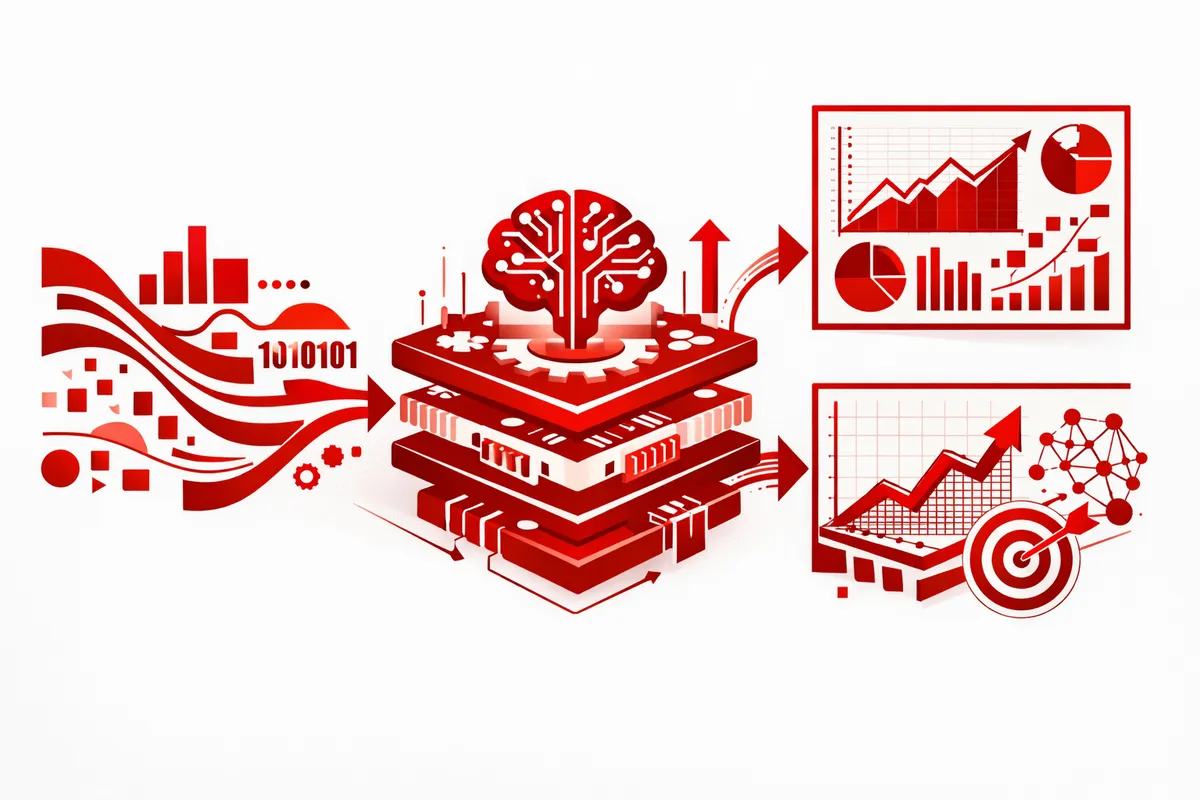
From there we build the data pipeline, the dashboards, and, where appropriate, the AI models. Dashboards are built for the people who will actually use them, not for the data team. An operations director at a Schaumburg insurance firm needs a different interface than a data analyst. We design for both. AI model development follows the same specificity principle: we build models that answer concrete business questions rather than impressive demonstrations of complexity that nobody acts on.
Testing runs against historical data before any model touches live operations. For clients in regulated industries, including insurance and healthcare, we document model logic and data handling in compliance-ready formats.
Industries We Serve in Schaumburg
Corporate headquarters and regional offices along Meacham Road and Schaumburg Road use analytics dashboards to unify reporting across departments that previously operated on separate spreadsheets. When a single source of truth replaces five competing versions of a monthly report, executive decisions happen faster and with less organizational friction.
Insurance agencies and financial services firms on Golf Road apply predictive analytics to underwriting, claims patterns, and customer retention. Identifying which customers are most likely to lapse on renewal before they do is worth more than any marketing campaign at the back end. Analytics turns that prediction from intuition into a systematic process.
Technology companies near Woodfield Road use product usage analytics and AI-driven customer success models to reduce churn and identify expansion opportunities within existing accounts. When you can see which usage patterns correlate with long-term retention, your customer success team knows exactly where to focus attention.
Healthcare offices and specialty clinics serving the Roselle Road corridor use clinical analytics to improve scheduling efficiency, track patient outcomes, and identify care gaps. Practices that measure what is working in their clinical workflows, and adjust based on data, deliver better results and run leaner operations.
Hotels and event venues near the Schaumburg Convention Center use demand forecasting and occupancy analytics to align pricing and staffing with the trade show calendar. Convention season brings predictable demand waves. Hotels that model that demand rather than reacting to it capture more revenue per available room.
Retail and restaurant operations with presence near Woodfield Mall and along Golf Road use customer transaction analytics to understand purchasing patterns, optimize promotions, and manage inventory through the Q4 holiday surge. The difference between a store that runs out of a top seller on December 20 and one that had it stocked all month is usually a forecasting problem, not a supply problem.
What to Expect Working With Us
1. Data source inventory and quality audit. We document every data source your business maintains, assess data quality and consistency, and identify gaps that would compromise analysis. This step often surfaces quick wins: duplicate records that inflate customer counts, missing fields that prevent cohort analysis, disconnected systems that could be unified with a simple integration.
2. Decision framework and model scoping. We translate your business questions into analytics specifications. What decisions do you make monthly where better data would change the outcome? What would you stop doing if the data showed it was not working? The answers determine what we build and what we skip.
3. Pipeline build and dashboard deployment. We build the data infrastructure that moves information from its sources into your analytics environment, then deploy dashboards calibrated to the decision-makers who will use them. For Schaumburg's corporate clients, this typically means multiple dashboard views at different levels of detail.
4. Model validation and team enablement. Before any AI model goes live, we validate it against historical outcomes and present the logic in plain terms to your team. Your people should understand what the model does and why it recommends what it recommends. Opaque AI that nobody trusts is useless. Clear AI that your team acts on is the goal.