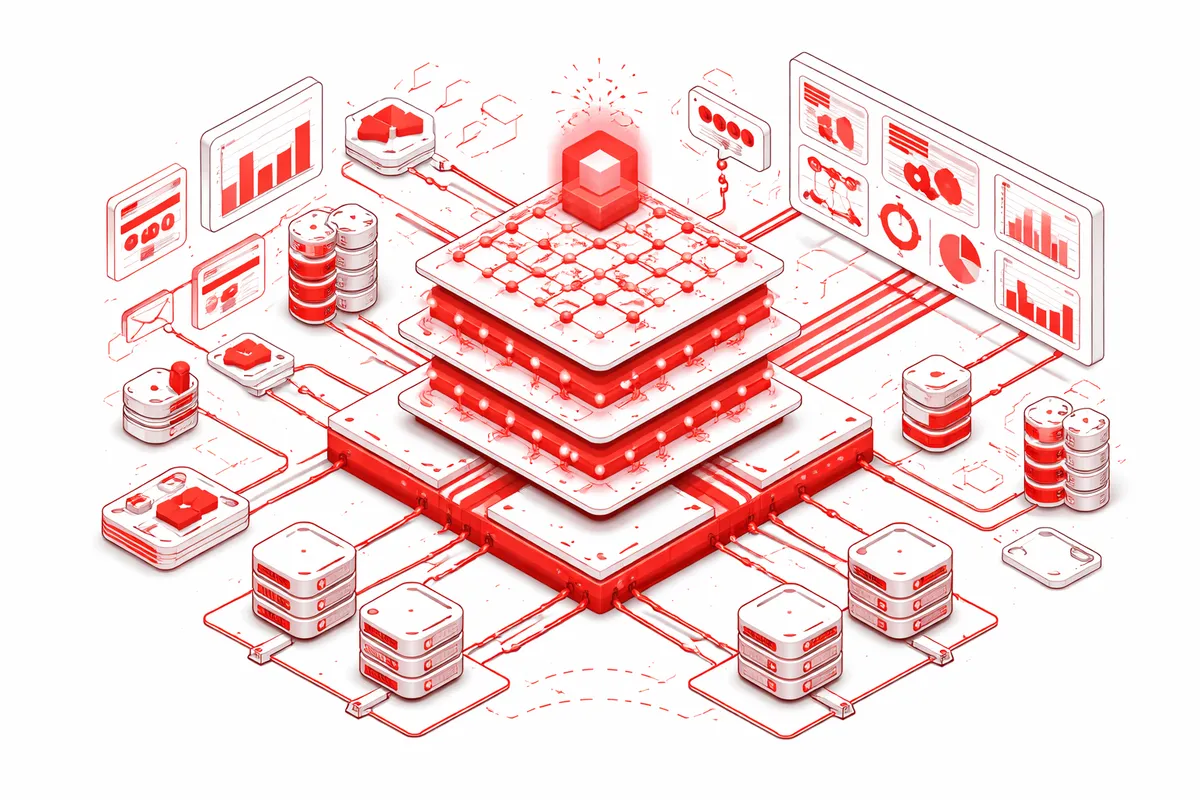
How We Build Custom AI Solutions for Schaumburg
Custom AI development at Running Start Digital follows a disciplined process that starts with the problem before it considers the technology. We spend the first phase of every custom engagement with your team, understanding the operational workflow or business decision that the AI system is meant to improve, the data that exists to support it, the constraints that apply, and the definition of success that will determine whether the project delivered value. Many AI projects fail not because the technology is wrong but because the problem definition was not precise enough to produce a system anyone could evaluate.
Problem definition leads to solution architecture. For Schaumburg clients, solution architecture choices are often between custom model development, fine-tuned foundation models with proprietary data, workflow orchestration with existing AI services, or a combination. Each option has different cost, timeline, and capability characteristics. We present the architecture options with honest tradeoffs rather than defaulting to whatever maximizes our development scope.
Data preparation is typically the most time-consuming phase of custom AI development, and it is where projects most often underestimate their actual complexity. For Schaumburg corporate clients, data preparation involves consolidating records from multiple enterprise systems, cleaning and labeling data to the quality standards required for model training, and building the data pipelines that will keep the training data current as the model continues to learn in production.
Model development, testing, and deployment follow. For regulated industries, we build the audit and explainability infrastructure alongside the model itself, not after deployment. Schaumburg insurance and healthcare clients require AI systems that can document why a classification was made, not just what classification it produced.
Industries We Serve in Schaumburg
Corporate technology and enterprise software companies on Golf Road build custom AI for the product features and internal operations that differentiate their business. Product-embedded AI, such as anomaly detection, predictive recommendations, and natural language interfaces, requires development calibrated to the specific product context and user base. Internal operations AI, such as custom sales forecasting or customer health models, requires development calibrated to the company's own historical performance data.
Insurance organizations along Meacham Road develop custom AI for claims classification, fraud detection, underwriting risk scoring, and policy renewal prediction. These models must be trained on the carrier's own claims and policy data to reflect their specific risk profile and coverage portfolio. Custom development with appropriate regulatory documentation enables these AI systems to operate in production under audit requirements that generic platforms cannot support.
Healthcare service providers in the Schaumburg corridor build custom AI for patient flow optimization, appointment no-show prediction, insurance authorization prediction, and population health risk stratification. Healthcare AI must operate within HIPAA requirements, produce explainable outputs that clinicians can evaluate, and integrate with clinical systems that each have specific data standards and integration requirements.
Professional services firms and consultancies on Schaumburg Road develop custom AI for research synthesis, proposal generation, client reporting, and knowledge management. A Schaumburg consultancy with a large library of proprietary research and client engagement history can build AI systems that leverage that institutional knowledge in ways that generic AI tools cannot access.
Hotels and conference properties near the Schaumburg Convention Center build custom AI for dynamic pricing models that reflect the specific demand patterns of the northwest suburban convention market, revenue forecasting models trained on their own booking history, and group business value prediction models that help revenue managers prioritize which opportunities to pursue aggressively.
Retail organizations near Woodfield Mall develop custom AI for demand forecasting, personalized merchandising, promotional effectiveness prediction, and loss prevention systems tuned to the specific layout and product mix of their locations. Retail AI systems that are trained on store-specific historical data perform materially better than industry-generic models for the operational decisions that determine margin.
What to Expect Working With Us
1. Problem definition and feasibility assessment. The first phase of every custom engagement is a structured problem definition process: we document the operational or decision workflow the AI will support, the data assets available to train and operate it, the constraints that apply, and the success criteria. For Schaumburg regulated-industry clients, the feasibility assessment includes a compliance mapping that determines what the AI system can and cannot do within applicable regulatory frameworks.
2. Architecture design and data assessment. We design the solution architecture and conduct a detailed assessment of your data assets: availability, quality, volume, and labeling requirements. For clients whose data requires significant preparation work, we provide a clear estimate of data preparation scope before committing to model development, because data quality is the primary determinant of model performance.
3. Development, validation, and compliance documentation. We build the AI system, validate it against held-out test data, and produce the documentation required for your regulatory and compliance review. For Schaumburg insurance and healthcare clients, this documentation is a deliverable equal in importance to the working model. A custom AI system that performs well but cannot be documented for audit is not deployable in regulated industries.
4. Deployment, monitoring, and model maintenance. Custom AI systems require ongoing monitoring to maintain performance as data distributions shift over time. We build monitoring infrastructure into every production deployment and provide a model maintenance schedule that includes periodic retraining, accuracy audits, and the re-evaluation of feature relevance as your business evolves.