How We Build CRM and Martech Programs for Schaumburg
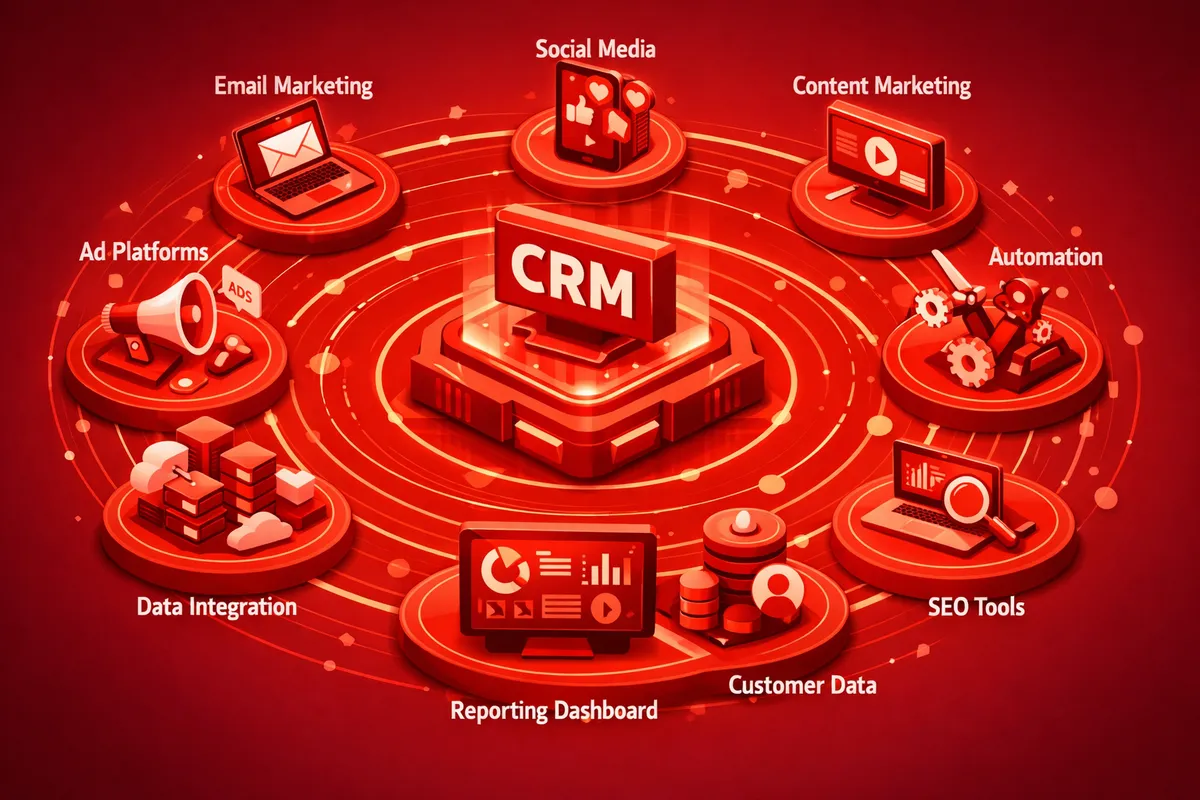
The engagement begins with a stack audit. We review every tool in your current martech environment, its cost, its utilization rate, its integration status, and its alignment with your actual go-to-market process. For Schaumburg corporate clients, this audit almost always reveals two things: tools that are paid for but underutilized because nobody was trained on them properly, and integration gaps where data should flow between systems but does not.
The CRM configuration audit goes deeper. We map your actual sales process, including the stages, the activities at each stage, the data fields your reps actually need to make decisions, and the handoff points between sales, implementation, and customer success. We compare that process map against your current CRM configuration and document every place where the system does not match how the business actually operates. That gap analysis becomes the CRM optimization roadmap.
Martech consolidation recommendations follow the audit. Most Schaumburg corporate clients discover they can achieve better results with fewer tools if the remaining tools are properly configured and integrated. We provide specific consolidation recommendations with expected cost savings and operational improvements for each proposed change.
Implementation follows the roadmap. For CRM work, that means reconfiguring objects, stages, and automations to match the actual process. For martech integration, it means building the data flows that ensure sales and marketing share context on every account and contact. We train the teams who will use the reconfigured system and monitor adoption in the first 60 days to ensure the changes are embedded rather than reverted.
Industries We Serve in Schaumburg
Corporate technology and software companies along Golf Road typically run Salesforce as their CRM and a combination of marketing automation, sales engagement, and enablement tools that were added individually over several years. CRM consulting for these organizations often centers on process reengineering: rebuilding the CRM object model to match the current go-to-market motion rather than the original startup sales process that shaped the initial configuration.
Insurance agencies near Roselle Road require CRM configurations that reflect the producer-driven business model. A Schaumburg agency with 20 producers needs CRM architecture that tracks producer activity, policy pipeline by line of business, renewal calendar automation, and client contact management in a way that makes the agency principal's oversight practical rather than requiring daily check-ins with each producer.
Professional services firms on Schaumburg Road use CRM primarily to manage the relationship pipeline from proposal to engagement to renewal. For consulting organizations where the partner relationship is the primary asset, CRM configuration must support partner-specific pipeline views, collaborative account management, and the engagement history that informs every client conversation. Generic CRM configurations that treat all deals as equivalent fail in this environment.
Healthcare practices in the Schaumburg corridor use CRM for patient relationship management alongside practice management software. The distinction between clinical records (which stay in the EMR) and relationship data (contact preferences, referral source, communication history) requires clear architecture that keeps systems appropriately separated while ensuring the relationship context that drives patient retention is accessible to the staff who need it.
Hotels and hospitality organizations near the Schaumburg Convention Center use CRM to manage group and corporate account relationships alongside their property management system. Group sales pipelines, account booking history, event planner relationships, and corporate rate agreements require CRM configurations designed for hospitality revenue management, not generic B2B sales processes.
Retail and e-commerce organizations in the Woodfield Road corridor use martech consulting primarily to improve customer data activation: connecting purchase history, loyalty program data, and behavioral signals into a unified customer profile that drives personalized marketing. The martech stack for a Schaumburg retailer with both in-store and online channels requires integration between point-of-sale, e-commerce, email platform, and loyalty systems that most out-of-the-box configurations do not address.
What to Expect Working With Us
1. Stack and process audit. We review your current tools, integrations, and go-to-market process in parallel. The audit produces a documented gap analysis and a prioritized list of CRM configuration improvements and martech integration fixes ranked by expected revenue impact.
2. Architecture recommendations and roadmap. We present specific recommendations: which configurations to change, which integrations to build, which tools to consolidate, and the sequence in which to make those changes to minimize disruption. For Schaumburg clients mid-way through a sales quarter, sequencing matters because some configuration changes require a brief system freeze while others can be implemented with zero operational impact.
3. Implementation and integration build. We execute the CRM reconfiguration and martech integration work, testing every data flow and automation rule against real scenarios from your sales and marketing processes before going live. For larger Schaumburg enterprise clients, we coordinate the implementation with IT and RevOps teams who are managing other system dependencies.
4. Adoption support and performance monitoring. New CRM configurations only deliver value if reps and managers actually use them. We run training sessions calibrated to each role, document new workflows clearly, and monitor adoption metrics in the first 60 days. For common reversion patterns, we provide additional coaching before bad habits solidify.