How We Build Computer Vision for Schaumburg
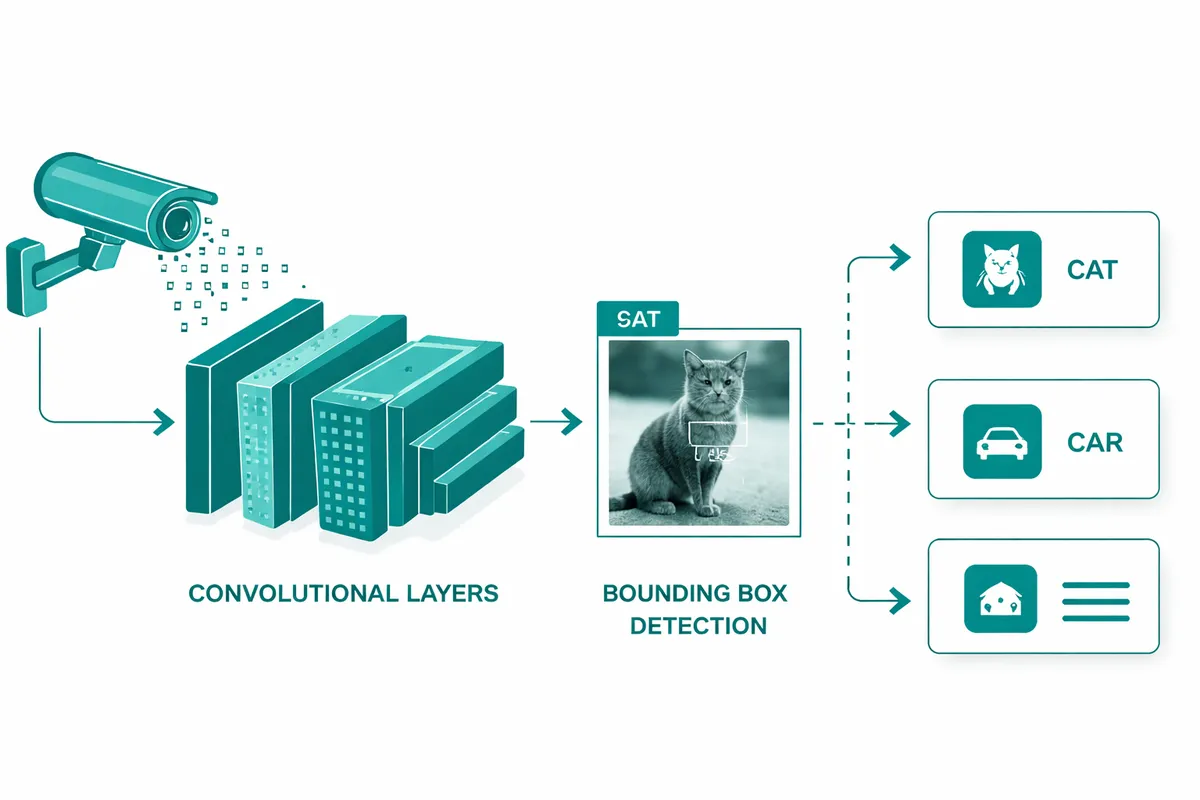
Computer vision development begins with a visual data audit. We assess what camera infrastructure exists, what it covers, what resolution and frame rate it operates at, and what the current workflow is for the visual monitoring problem we are addressing. For a Schaumburg retail client, that means understanding the floor layout, the products being monitored, the lighting conditions, and the accuracy requirements for detection tasks. For a corporate campus access control application, it means understanding the physical environment, the identity data sources that the vision system needs to integrate with, and the response workflow when an access event is detected.
Model selection and training follow the use case requirements. Standard computer vision tasks, like people counting, queue detection, or general object classification, can often be addressed with pre-trained models fine-tuned on your specific environment. Specialized tasks, like detecting specific product SKUs on a retail shelf or identifying compliance violations in a specific facility environment, require custom model development with training data drawn from your actual visual environment.
Deployment integrates the vision system with your existing operational infrastructure: access control systems, inventory management platforms, notification systems, and the dashboards where your team monitors operational performance. For Schaumburg healthcare facilities, integration with the scheduling and patient flow systems ensures that occupancy intelligence is connected to operational decisions rather than displayed on an isolated screen.
We design every system with a clear action layer: computer vision that detects an event but does not trigger a response or alert produces data without operational value. Every detection category is mapped to a response workflow before the system goes live.
Industries We Serve in Schaumburg
Retail organizations and shopping centers near Woodfield Mall deploy computer vision for customer flow analysis, queue length detection at checkout and service points, shelf availability monitoring, and loss prevention applications. Understanding peak traffic patterns at different times and days lets store managers schedule staff against actual demand rather than historical approximations. Queue detection that automatically opens additional checkout lanes when wait times exceed thresholds improves customer experience without requiring constant supervisor observation.
Corporate technology companies and office campuses along Golf Road use computer vision for space utilization analysis in hybrid work environments. A Schaumburg corporate headquarters managing 200 reservable desks and conference rooms benefits from occupancy sensing that shows real utilization patterns without requiring employees to check in manually. That data drives space planning decisions that affect real estate costs.
Healthcare facilities and medical offices in the Schaumburg corridor use computer vision for patient flow monitoring, waiting room occupancy tracking, and the documentation digitization that converts paper forms and records into structured electronic data. Document digitization with vision AI is particularly valuable for practices managing transition from paper-based workflows, extracting structured fields from patient intake forms automatically.
Hotels and conference properties near the Schaumburg Convention Center use computer vision to monitor event space setup compliance, track public area occupancy, and verify that housekeeping procedures are completed to standard. For properties managing large convention programs, visual compliance verification at scale is not feasible with human inspection alone.
Insurance and professional services organizations on Meacham Road apply computer vision in document processing workflows: extracting data from physical claim forms, verifying document completeness, and automating the classification of incoming physical mail that feeds the intake process. For an insurance organization processing high volumes of physical documents, vision-based extraction produces significantly better throughput and accuracy than manual data entry.
Light manufacturing and distribution operations serving the Schaumburg and Elk Grove Village corridor use computer vision for quality inspection, packaging verification, and process compliance monitoring. Vision systems that detect defects or deviations at line speed are more consistent than human inspectors and eliminate the performance variance that typically occurs across shift changes.
What to Expect Working With Us
1. Visual environment assessment and use case scoping. We evaluate your physical environment, existing camera infrastructure, and the specific detection or recognition task you need the system to perform. For Schaumburg retail clients, this assessment includes lighting analysis, camera positioning evaluation, and a review of the specific objects or behaviors the system needs to detect. We provide a clear recommendation on whether existing infrastructure is adequate or what changes are needed before model development begins.
2. Model development and training. For custom detection tasks, we gather or generate training data appropriate to your environment and build the model. Training data quality is the primary determinant of detection accuracy; we invest heavily in this phase rather than rushing to deployment. Standard computer vision tasks with available pre-trained models move faster; novel detection tasks unique to your environment take longer.
3. Deployment and integration. We deploy the vision system on appropriate edge or cloud infrastructure, depending on latency requirements and data privacy constraints. Healthcare and corporate environments with privacy sensitivities often require on-premise or hybrid deployment to ensure visual data stays within controlled infrastructure. We configure the integrations and response workflows that make detection events actionable.
4. Performance monitoring and model refinement. Computer vision systems require ongoing monitoring to maintain accuracy as environmental conditions change: lighting seasonality, new product introductions in retail environments, personnel changes in access control applications. We monitor detection accuracy monthly and schedule model refinement updates to address accuracy degradation before it affects operational performance.