How We Build AI Sales Intelligence for Schaumburg
Every engagement starts with an audit of your existing pipeline data. For Schaumburg's corporate clients, that typically means a CRM with years of contact records, deal history, and activity logs that have never been systematically analyzed. We pull that data and run it through a pattern analysis to identify what your closed-won deals actually have in common, what your churned accounts signaled before they left, and which segments of your pipeline have historically stalled at which stage.
From that baseline, we build a custom scoring model calibrated to your actual deal profile. Generic lead scoring tools score every account on the same criteria regardless of your business model. For a Schaumburg insurance agency with a primarily relationship-driven sales cycle, the signals that predict a close look different than those for a SaaS company selling to IT buyers along Woodfield Road. We build for your specific pattern.
We also incorporate Schaumburg-specific signal layers that generic sales intelligence tools overlook. The hiring patterns at corporate campuses near Higgins Road and Meacham Road are a reliable leading indicator of procurement activity. When a company in your territory adds senior operations or finance leadership, they are almost always evaluating vendor contracts in the following quarter. Real estate and permit activity along Roselle Road and Schaumburg Road signals office expansion or relocation, both of which trigger new vendor evaluations. The Convention Center's trade show calendar creates predictable windows of heightened buying intent among attendees from across the region. We wire those signals into the model from day one.
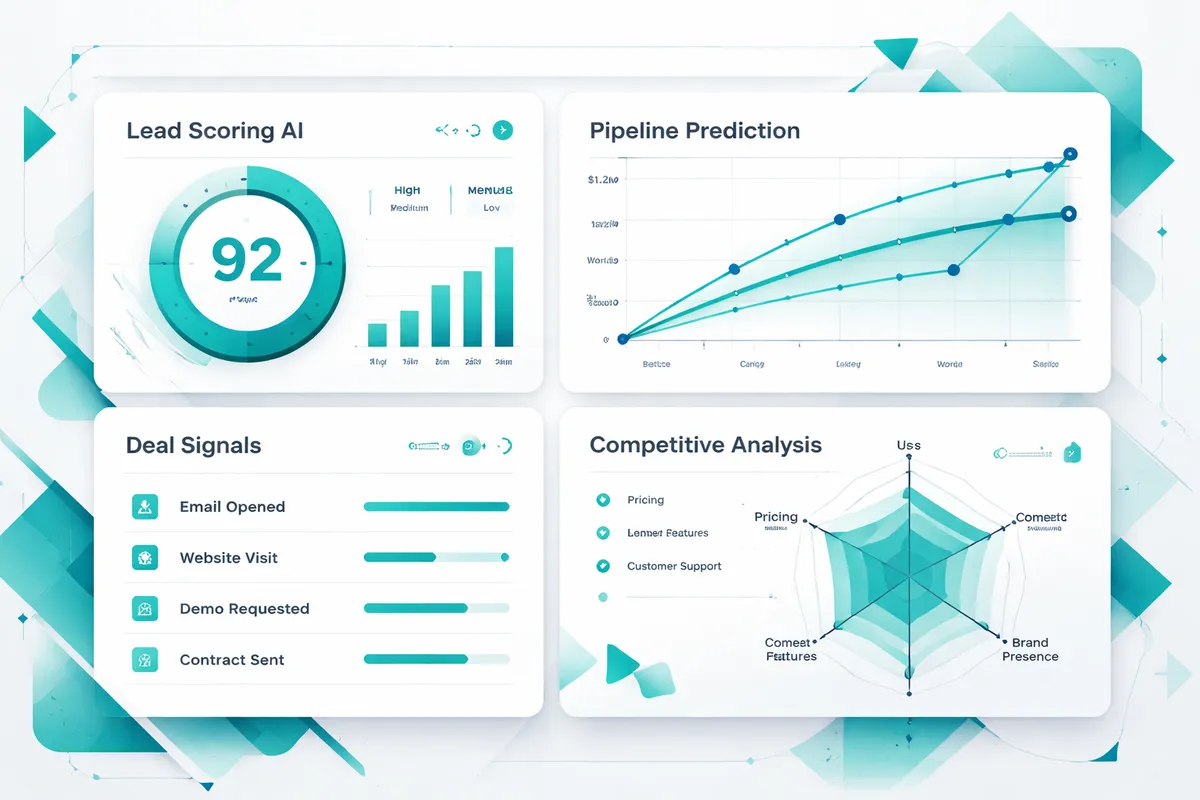
Deployment integrates directly with your CRM and marketing automation stack. Reps see AI-generated priority queues in the tools they already use, not a new dashboard they will ignore. We also configure signal feeds that push real-time alerts when monitored accounts cross behavioral thresholds: a contact visits your pricing page, a company posts three senior technology roles in a week, a competitor announces a price increase. Those signals hit your team before they hit anyone else's pipeline.
Industries We Serve in Schaumburg
Corporate technology and software firms along Golf Road use AI sales intelligence to prioritize enterprise accounts showing buying signals before formal procurement begins. A Schaumburg tech company managing a 200-account territory can reduce the noise in their pipeline and focus rep capacity on the 30 accounts with active buying intent rather than spreading effort evenly across the full list.
Insurance agencies and financial services firms near Meacham Road operate on renewal cycles and cross-sell motions that benefit from predictive scoring. AI signals flag when a commercial client's business profile has changed enough to warrant a coverage conversation, surfacing upsell opportunities that would otherwise be invisible until the annual review.
At the Schaumburg Convention Center, industry events bring potential buyers together in concentrated windows. Hotel operators and professional services firms that exhibit or attend those events use AI sales intelligence to pre-identify attendees worth prioritizing and post-event to score follow-up lists by engagement quality rather than business card volume.
Healthcare service providers and medical staffing companies in the Schaumburg corridor manage long buying cycles with committee-based approval. AI intelligence maps the stakeholder landscape within target accounts and identifies which contacts are actively engaged, helping reps navigate complex organizational structures without relying on a single champion.
Professional services firms on Roselle Road, including consultancies and B2B service agencies, use AI intelligence to identify which prospects are actively researching solutions and which are still in status quo mode. That distinction determines whether to pursue now or nurture, and makes the difference between a rep's time well spent and a meeting that leads nowhere.
Retail and hospitality organizations anchored near Woodfield Mall use AI sales intelligence in a different direction: identifying corporate accounts and groups for B2B revenue streams. A hotel property managing both transient and group business uses AI scoring to identify which corporate accounts have the volume potential to warrant dedicated outreach and custom rate negotiation.
What to Expect Working With Us
1. Pipeline archaeology. Before we design a single scoring model, we spend time understanding your historical deal data. What closed, what stalled, what churned, and what the patterns look like across your Schaumburg and surrounding territory accounts. This phase sets the foundation for a model calibrated to your actual performance, not industry benchmarks.
2. Custom signal architecture. We configure the data feeds that your scoring model will monitor: firmographic triggers, behavioral signals from your website and email sequences, third-party intent data, and event-based triggers tied to patterns like Schaumburg's spring hiring season or the annual convention center calendar. Every signal source earns its place by demonstrating predictive lift.
3. CRM-native deployment. We build the intelligence layer to surface inside the tools your team already uses daily. Reps do not need to log in to a new platform. Priority queues, account health scores, and signal alerts appear in your existing workflow, which is the only way adoption actually happens.
4. Performance calibration and iteration. We review model accuracy monthly, comparing AI-predicted priority accounts against actual close rates. As patterns shift with market conditions, personnel changes, or product evolution, we update the model. The system improves with every sales cycle.