Your Cart (0)

Your cart is empty

Schaumburg, Chicago

AI Integration Services in Schaumburg

AI Integration Services for businesses in Schaumburg, Chicago. We know the neighborhood, the customers, and what it takes to compete locally.

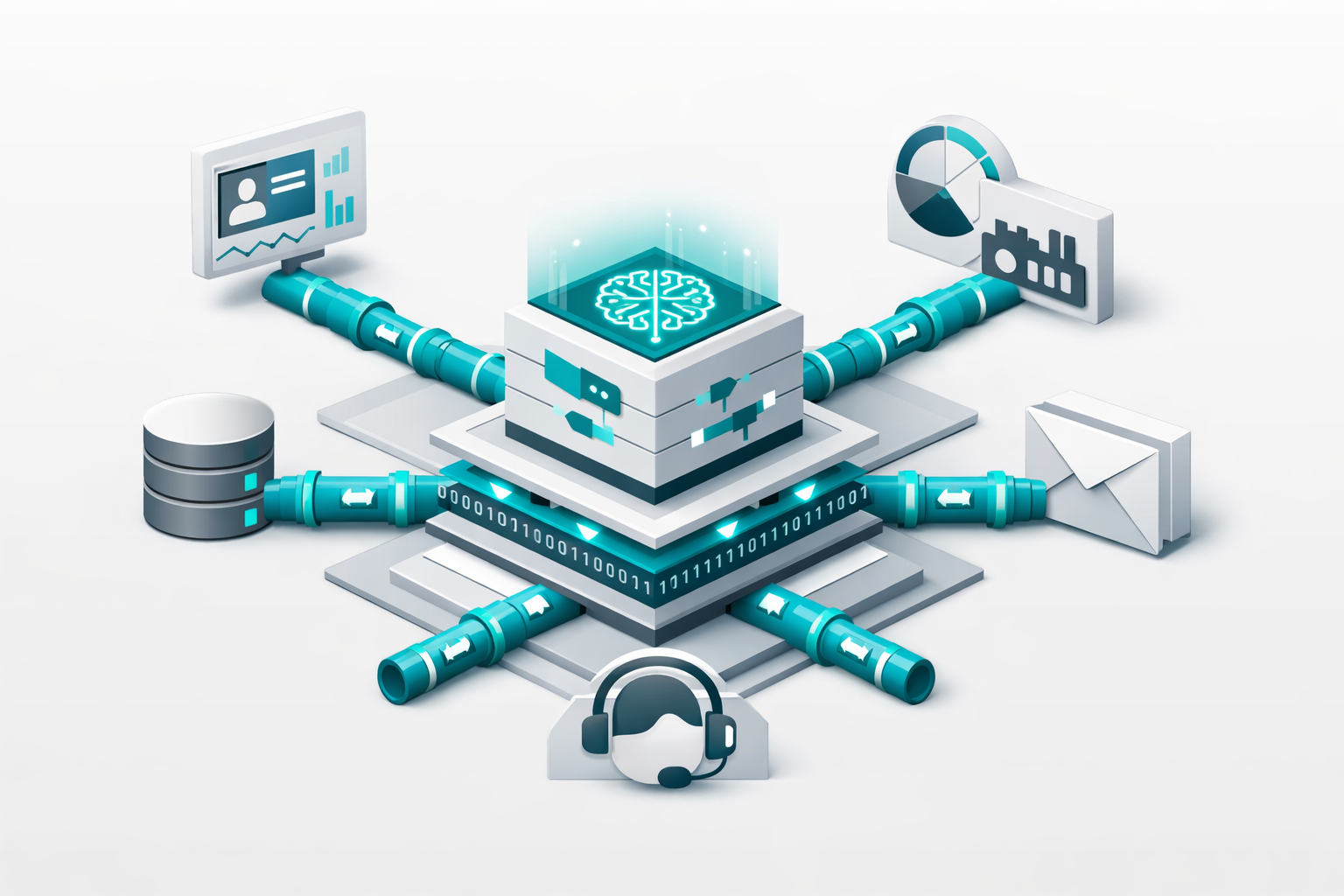
AI Integration Services in Schaumburg service illustration

Our Integration Methodology

Integration work in enterprise environments requires a methodology that manages risk, satisfies IT governance requirements, and delivers reliably without disrupting existing operations. We follow a structured process:

Integration architecture review. Before writing any integration code, we review your current system architecture with your IT team: what platforms you run, how they are connected today, what integration capabilities they expose, and what governance requirements apply to new integrations. This review produces an integration architecture that fits your environment rather than requiring the environment to accommodate our approach.

Sandbox and staging development. We develop and test integrations in sandbox environments before touching production systems. For Schaumburg businesses with enterprise IT environments, this means working within your designated testing environments and following your change management process for promotion to production.

Security and access control. AI integrations handle sensitive business data. We implement authentication and authorization according to your security requirements: OAuth 2.0 for API authentication, role-based access control for AI system data access, encryption for data in transit and at rest, and audit logging for integration operations. Security documentation is produced for every integration and available for IT review.

Performance and reliability standards. Enterprise integrations are expected to be reliable. We build monitoring into every integration we deploy: availability tracking, latency alerting, error rate monitoring, and data volume tracking. When integrations deviate from baseline performance, your team is notified before business operations are affected.

Frequently Asked Questions

Enterprise IT governance at Schaumburg's major corporate campuses typically requires security review of new integrations, vendor qualification, architecture approval, and change management compliance before deployment. We engage with IT governance processes from the beginning of integration projects: providing security architecture documentation, completing vendor qualification questionnaires, presenting integration designs for architecture review, and following your change management process for production deployment. We do not treat IT governance as an obstacle; it is a standard operating requirement in Schaumburg's corporate environment.

Yes. Legacy systems without modern API interfaces are common in Schaumburg's enterprise environment, where some operational platforms are decades old. We build integration approaches tailored to legacy system realities: file-based integration where APIs are not available, database-level integration where application APIs do not expose the required data, screen-scraping automation for systems with no other integration path, and middleware layers that translate between legacy data formats and modern AI system interfaces.

Integration timeline depends on the complexity of the platforms involved and the governance process your organization requires. Simple API integrations between two modern platforms with well-documented APIs take two to four weeks. Complex integrations involving legacy systems, multiple platforms, healthcare data standards, or extensive IT governance review take two to six months. We provide specific timeline estimates after an integration architecture review, which typically takes one to two weeks.

We have built integrations with Guidewire Policy Center and Claims Center, Duck Creek Policy Administration, Microsoft Dynamics 365, Salesforce Financial Services Cloud, and various data and reporting platforms common in insurance operations. Schaumburg's insurance market has specific integration requirements around regulatory reporting, claims workflow, and customer data management that require sector knowledge beyond general integration engineering. Our team brings that sector context.

Data security in AI integrations is an architecture decision, not an afterthought. We implement encryption for all data in transit and at rest, use service account credentials with minimum necessary permissions rather than user credentials, log all data access for audit purposes, and review integration data access scope with your security team before implementation. For healthcare integrations, this includes HIPAA-compliant data handling. For financial services, this includes controls appropriate to the sensitivity of customer financial data.

Yes. Many of Schaumburg's larger employers run AI and enterprise systems across AWS, Azure, and Google Cloud simultaneously, often with some systems on-premise. We design integrations that work across these environments using cloud-agnostic middleware patterns and network connectivity approaches that satisfy the security requirements of multi-cloud enterprise architectures. Cross-cloud data transfer, consistent authentication across cloud boundaries, and unified monitoring across environments are all standard elements of our multi-cloud integration work. Learn more about our [AI integration services across Chicago](/chicago/ai-integration-services) or explore other [digital services available in Schaumburg](/chicago/schaumburg).

Ready to get started in Schaumburg?

Let's talk about ai integration services for your Schaumburg business.