How We Build Supply Chain Automation for Roscoe Village
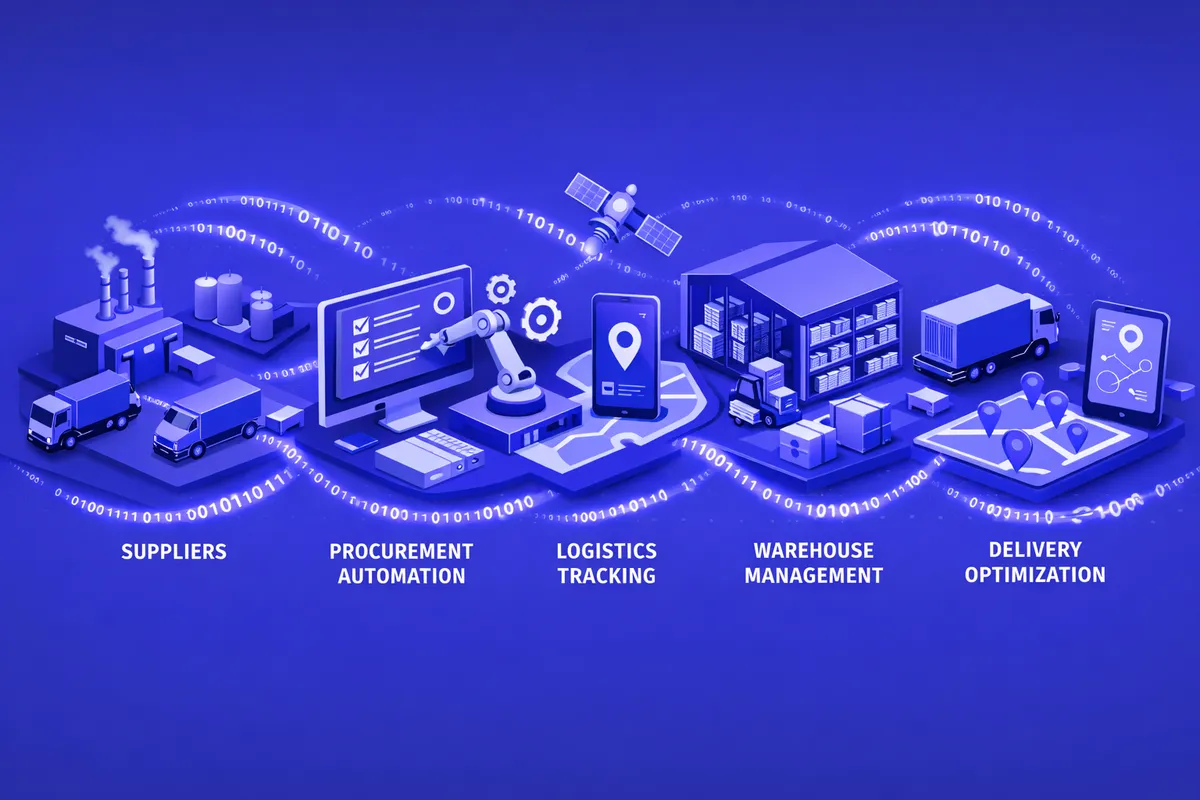
We start with a vendor and product catalog. Every vendor relationship gets documented: what you buy, at what frequency, at what contract price, with what lead time, from a vendor who communicates how. For a Roscoe Street boutique retailer, that catalog covers the full SKU portfolio across all suppliers. For a restaurant near Hamlin Park, it covers every food and beverage category from every supplier. The catalog is the foundation that makes automation possible.
From the catalog, we build reorder logic. For retail, reorder points are set at the SKU level based on sales velocity, vendor lead time, and desired days of supply. When any SKU drops below its reorder point, the system generates a purchase order and routes it for approval before transmission to the vendor. The buyer reviews and approves, but does not have to calculate the order manually.
For restaurants and food businesses, we connect inventory tracking to par-level management. Par levels are set based on weekly usage patterns and adjusted for known volume events. When inventory falls below par on any item, the reorder triggers automatically. For vendors who accept electronic orders, the PO transmits without manual intervention. For vendors who prefer phone orders, the system generates a call sheet.
Invoice reconciliation is the highest-value quick win for most Roscoe Village businesses. We connect the purchase order workflow to the receiving process and the invoice management process, so every invoice is matched against its corresponding PO and receiving record before it routes for payment. Discrepancies surface automatically rather than requiring manual comparison. Accounts payable approves matched invoices quickly and investigates only the exceptions.
Industries We Serve in Roscoe Village
Boutique retail stores along Roscoe Street manage procurement across seasonal collections, core inventory, and accessories from multiple vendors on different lead times and minimum order structures. Automated SKU-level reorder management based on sales velocity prevents both stockout on fast movers and over-buying on seasonal items that are approaching the end of their selling window. Vendor performance tracking across fill rates, lead time accuracy, and invoice accuracy gives buyers the data to make better sourcing decisions at each season's line review.
Independent restaurants and wine bars in Roscoe Village source from a combination of broadline distributors, local farms, specialty importers, and neighborhood producers. Automated par-level management accounts for day-of-week traffic patterns, reservation volume, and known event-period spikes when generating purchase orders. Food cost visibility improves when every purchase is documented in the system and reconciled against what was received, rather than reconstructed from memory at month end.
Pet services businesses near Hamlin Park manage inventory for retail products alongside the supplies needed for grooming, boarding, and veterinary services. Product procurement and operational supply procurement require different reorder logic: retail inventory is driven by sales velocity, while operational supplies are driven by service volume. Automated procurement handles both categories with the appropriate triggers and lead time calculations.
Pediatric practices and health services near Jahn Elementary School manage clinical supply procurement where stockout creates operational problems and patient experience issues. Automated reorder management with defined safety stock levels provides the buffer needed to prevent stockout during busy seasonal periods without overstocking supplies that have shelf-life constraints.
Personal care and beauty businesses on Roscoe Street manage product procurement from specialty distributors with promotional calendars, minimum orders, and pricing structures that change regularly. Automated contract management tracks pricing agreements and promotional periods, flagging when a promotional rate is expiring so buyers can decide whether to place a quantity purchase at the current price or accept the new rate.
Event and catering-adjacent businesses in Roscoe Village manage procurement for event-specific supply needs that sit outside the normal inventory cycle. Automated event procurement templates allow businesses to generate a complete purchasing plan for a catering engagement or a pop-up retail activation based on the event parameters, without starting the planning process from scratch each time.
What to Expect Working With Us
1. Vendor and product catalog documentation. We build the complete vendor and product catalog before any automation is designed. For retail businesses, this means cataloging every SKU with its current vendor, contract price, and reorder parameters. For food and beverage businesses, it means cataloging every product category with vendor, par level, and lead time. The catalog produces immediate operational value as documentation even before automation is deployed.
2. Reorder logic configuration and testing. We configure the reorder logic for your specific product catalog and test it against historical purchase data before going live. The test run shows which reorder points are too aggressive (triggering unnecessary orders) and which are too conservative (allowing stockout conditions) so we calibrate the parameters before the automation starts generating real purchase orders.
3. Vendor communication setup. We configure electronic order transmission for vendors who accept it and create the structured call-sheet workflow for vendors who prefer phone orders. Both categories of vendor are fully covered in the automation, and all orders are documented in the system regardless of transmission method.
4. Invoice reconciliation deployment and training. Invoice reconciliation goes live alongside the purchase order workflow. We train the team on the exception review process and configure the escalation path for discrepancies above specific thresholds. The goal is that the team reviews only the orders with genuine discrepancies, not every invoice.