How We Build RAG Systems for Roscoe Village
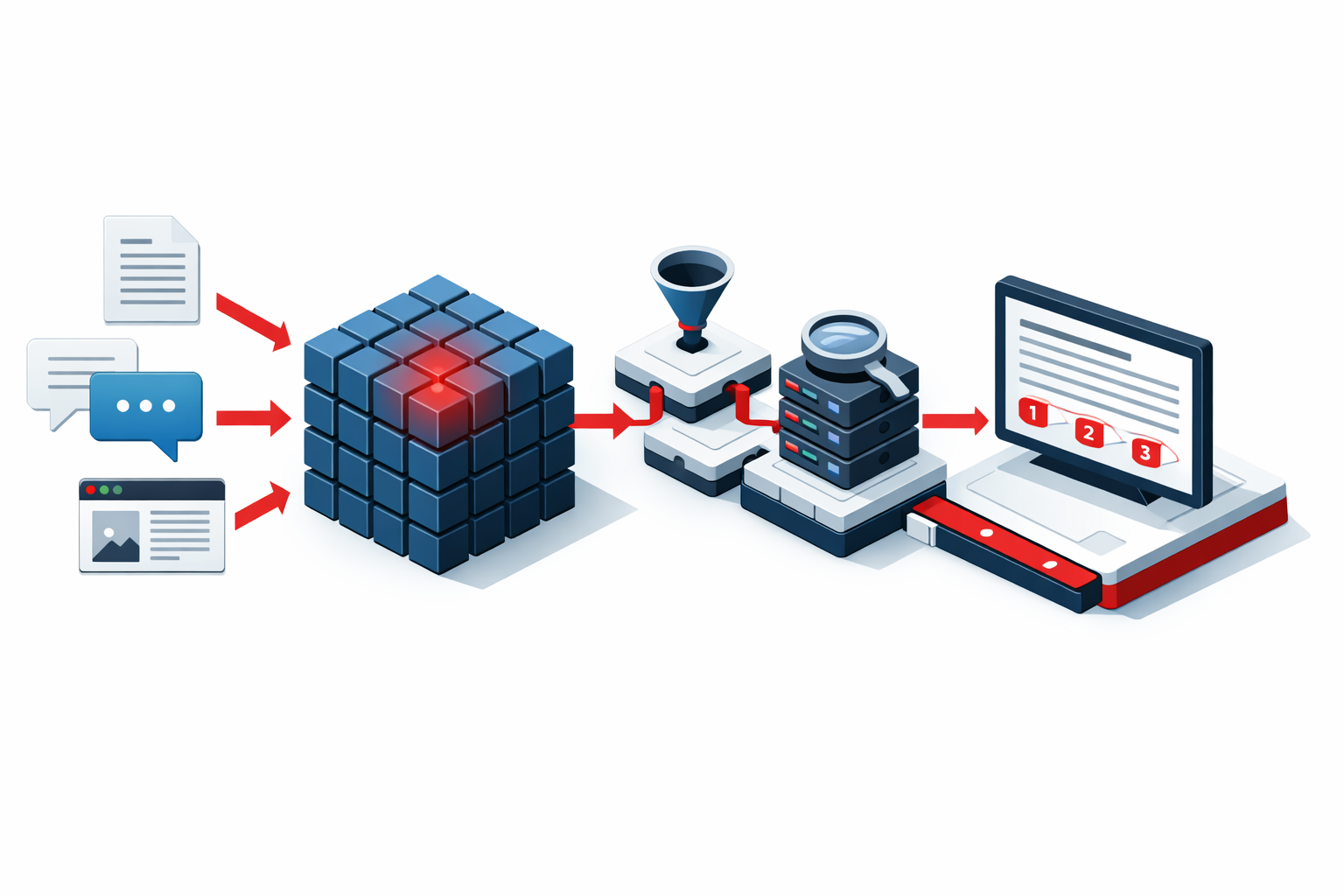
We begin by identifying your knowledge sources. We audit what data already exists: old client project files, email threads, design direction documents, brewery recipe notes, customer feedback forms, past proposals, menu iterations. We connect these sources,Google Drive, Slack, your project management tool, spreadsheets,into a unified index that your team can search in plain English.
Next, we define what your team should be able to ask. "What aesthetic did this client prefer in their last project?" becomes a query the system answers by retrieving relevant past work. "What's our signature hop profile?" retrieves your brewing documentation. "Who's this customer and what do they usually order?" pulls their interaction history. We configure the system to surface the right context type for each question type.
We test the system with real questions your team asks daily. A designer looking for precedent. A brewery manager comparing recipes. A manager onboarding a new team member. We refine the retrieval logic so results are accurate, relevant, and actionable. Once the system performs reliably, we train your team on effective question-asking. Throughout Roscoe Village, we've built RAG systems for design agencies with 8-15 designers across 200+ client projects, for breweries with five years of recipe development and seasonal experimentation, for independent studios and maker collectives.
Industries We Serve in Roscoe Village
Design Firms on Ravenswood Avenue use RAG to store client aesthetic preferences, past design direction, communication styles, and competitive positioning. New designers onboard faster because they query "What visual direction did Client X prefer?" and see past work instantly. Project turnaround time decreases and client satisfaction improves when fresh team members have immediate context.
Craft Breweries along Francisco Avenue use RAG to document recipes, ingredient sourcing, fermentation notes, seasonal experiments, and customer flavor preferences. Brewmasters reference historical data when developing new beers, ensuring consistency and enabling seasonal variation without losing signature flavor. Batch consistency improves and experimentation becomes data-informed.
Independent Coffee Shops use RAG to store regular customers' preferences, order histories, dietary needs, and conversation notes. New baristas onboard faster and regulars feel known and valued because their history is documented. Customer retention increases and word-of-mouth referrals strengthen when service feels personalized.
Boutique Restaurants use RAG to store recipe variations, supplier relationships, seasonal menu experiments, and customer feedback. Chefs instantly reference "What did we try last year with this ingredient?" and scale their kitchen without losing consistency. Menu iterations become faster and more informed.
Independent Retail Shops use RAG to track customer preferences, purchase histories, size and color preferences, and personal interests. Staff remember customers better and make personalized recommendations without needing to ask the same questions repeatedly. Sales increase and customer lifetime value grows.
Artist Studios and Galleries use RAG to store artwork descriptions, sales history, collector preferences, and exhibition records. This creates a professional archive while supporting future curation decisions. The collective's institutional knowledge is protected and shared across generations of artists.
What to Expect Working With Us
1. Knowledge Audit and Planning. We meet with key team members to identify where customer and project knowledge lives. We audit your Google Drive, Slack history, email, project management tools, and physical files. We document what's already stored versus what lives only in people's heads.
2. Connection and Indexing. We connect your data sources to a unified system and build an index that's searchable by natural language. Your team asks questions in plain English and gets relevant results instantly. We test with real questions from your team and refine as needed.
3. Workflow Integration and Training. We show your team how to query the system from tools they already use: Slack, Google Docs, or a dedicated search interface. We integrate RAG into your onboarding process so new team members immediately access institutional knowledge. We train your team on effective question-asking.
4. Continuous Improvement and Scaling. We review search results weekly for accuracy and refine the system based on what questions work and which don't. We add new data sources as your business generates them. We monitor usage and adapt the system to match how your team actually works.