How We Build POS Systems for Roscoe Village
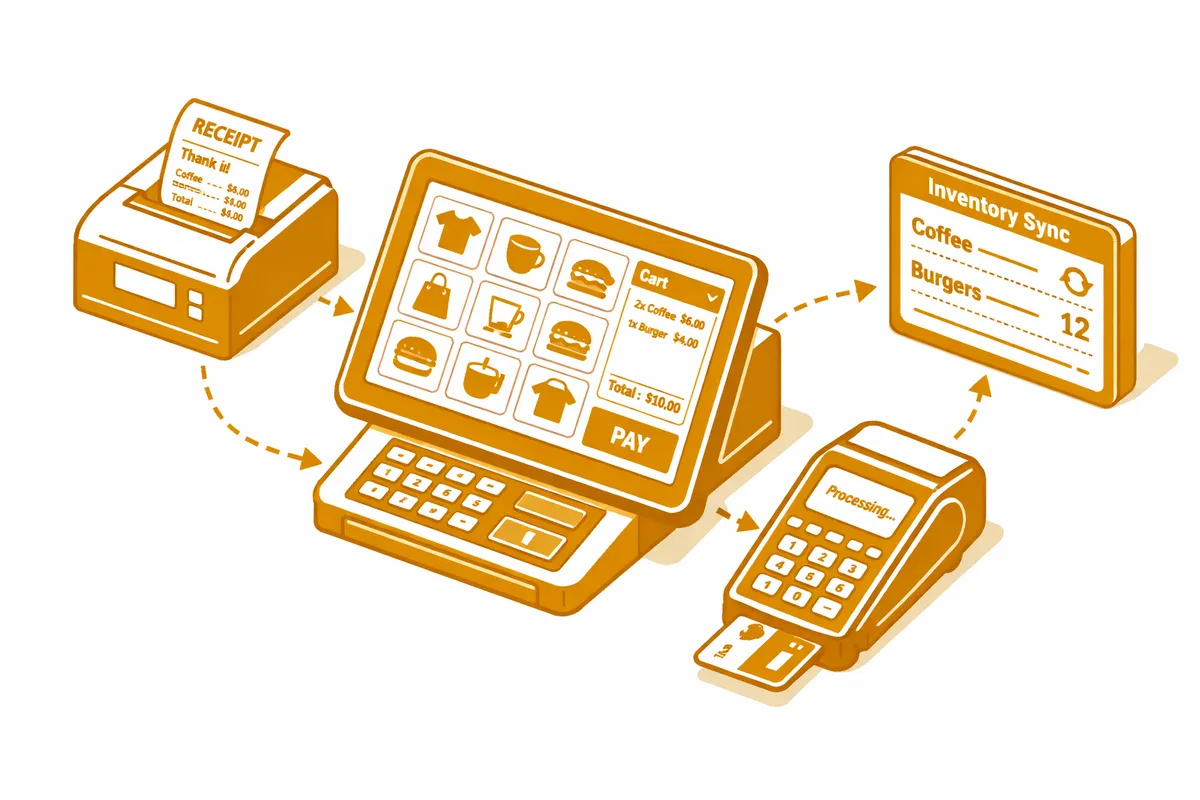
POS implementation projects in Roscoe Village start with a requirements session that covers the business's transaction types, average ticket size, table or inventory structure, reporting needs, and any existing software that needs to connect to the POS. For a Roscoe Street restaurant, that session covers floor layout, modifier logic, split check behavior, server tip handling, and which accounting platform the POS needs to export to. For a boutique near Belmont Avenue or Addison Street, it covers SKU structure, inventory counting workflow, online-to-in-store inventory sync, and loyalty program logic.
Platform selection happens after the requirements session, not before. We work with the major restaurant and retail POS platforms and select based on fit rather than familiarity. A wine bar near Fountainhead Tavern's stretch of Roscoe Street that runs both a bar program and a retail bottle shop needs a platform that handles both transaction types with different tax treatments, inventory tracking, and reporting views. That requirement eliminates most simple POS options and points toward a specific tier of platform. Getting this decision right before any configuration begins is what separates a smooth launch from months of workarounds.
Configuration is where most POS implementations fail. A correctly selected platform that is configured with the wrong menu structure, incorrect modifier pricing, or missing employee permission levels creates daily operational friction. We configure every element of the system before launch, test it against the full transaction scenario set, and do not consider the implementation complete until the system has processed every transaction type the business runs without error. For Roscoe Village operators preparing for a high-volume event like Burger Fest weekend or a surge of holiday shoppers along Roscoe Street, that test-before-launch discipline is the difference between a smooth service and an expensive scramble.
Industries We Serve in Roscoe Village
Full-service restaurants along Roscoe Street need POS systems that handle the complexity of a dining room: table management, course pacing, modifier customization, and tip processing, alongside clean reporting on server performance and menu item profitability. The right restaurant POS for a Roscoe Village operator also needs reliable integration with the accounting platform and the online ordering system, because manually reconciling those three data sources is a weekly time cost that compounds over years.
Wine bars and gastropubs, particularly those with a retail component, operate two transaction types with different inventory structures and tax requirements under one roof. A table of four ordering glasses of wine and a charcuterie board runs through one transaction logic. A customer buying two bottles to take home runs through another. A POS system that handles both in a single platform, with inventory decrements that work for open bottles and whole bottles simultaneously, removes the need for a manual inventory reconciliation at the end of each service.
Boutique retail shops near Belmont Avenue and Addison Street need POS systems that track inventory at the SKU and variant level, support in-store and online inventory as a single pool, run loyalty programs without a third-party subscription, and produce end-of-season reports that inform buying decisions for the next cycle. The right retail POS for a Roscoe Village boutique is one where the owner can pull a report on the fifteen best-selling items of the past ninety days in under two minutes.
Pet service businesses on Damen Avenue and near Western Avenue run a transaction mix that includes retail product sales, service bookings paid at checkout, recurring subscription packages for regular clients, and add-on services charged to an existing appointment. A service-commerce POS that handles all four transaction types cleanly, with client records linked to purchase history, beats the workaround of a retail POS duct-taped to a scheduling tool.
Children's boutiques and toy shops serving the Jahn Elementary-area family market benefit from POS systems with strong gift card programs, because the gift-giving behavior of the neighborhood's family demographic makes gift card sales a meaningful revenue line. A POS that tracks gift card balances, allows partial redemptions, and exports gift card liability accurately to accounting handles this without manual tracking.
Specialty food retailers and deli-style shops along the corridor need POS systems that handle variable-weight pricing, perishable inventory tracking, and the rapid transaction pace of a lunch service without slowing down between customers. The wrong POS in a specialty food context creates a line that never clears during peak hours.
What to Expect Working With Us
1. Transaction mapping and platform assessment. We document every transaction type the business runs, identify the reporting outputs the owner uses for decision-making, and assess the integration requirements with existing software. This produces a clear set of requirements against which we evaluate platform options, rather than defaulting to the most popular choice regardless of fit.
2. Configuration and staff permission structure. After platform selection, we configure the full system: menu or product catalog, pricing and modifier logic, employee accounts and permission levels, reporting views, and integration connections. For a Roscoe Street restaurant, this step includes building the full floor map in the POS and testing table management across a simulated service.
3. Staff training before the first transaction. We train every staff role on the functions they will use. Servers do not need to know how to run month-end reports. Managers do not need to know how to process a server's cash out. Training is scoped to role. For seasonal businesses with high staff turnover, we record the training session so it can be used for every new hire.
4. Launch support through the first peak period. We provide on-call support for the first high-volume service, whether that is the first Friday night after launch or the first Burger Fest setup the system runs. Problems that surface under load get resolved on the day they happen, not after the weekend.