How We Build ERP Integration for Roscoe Village
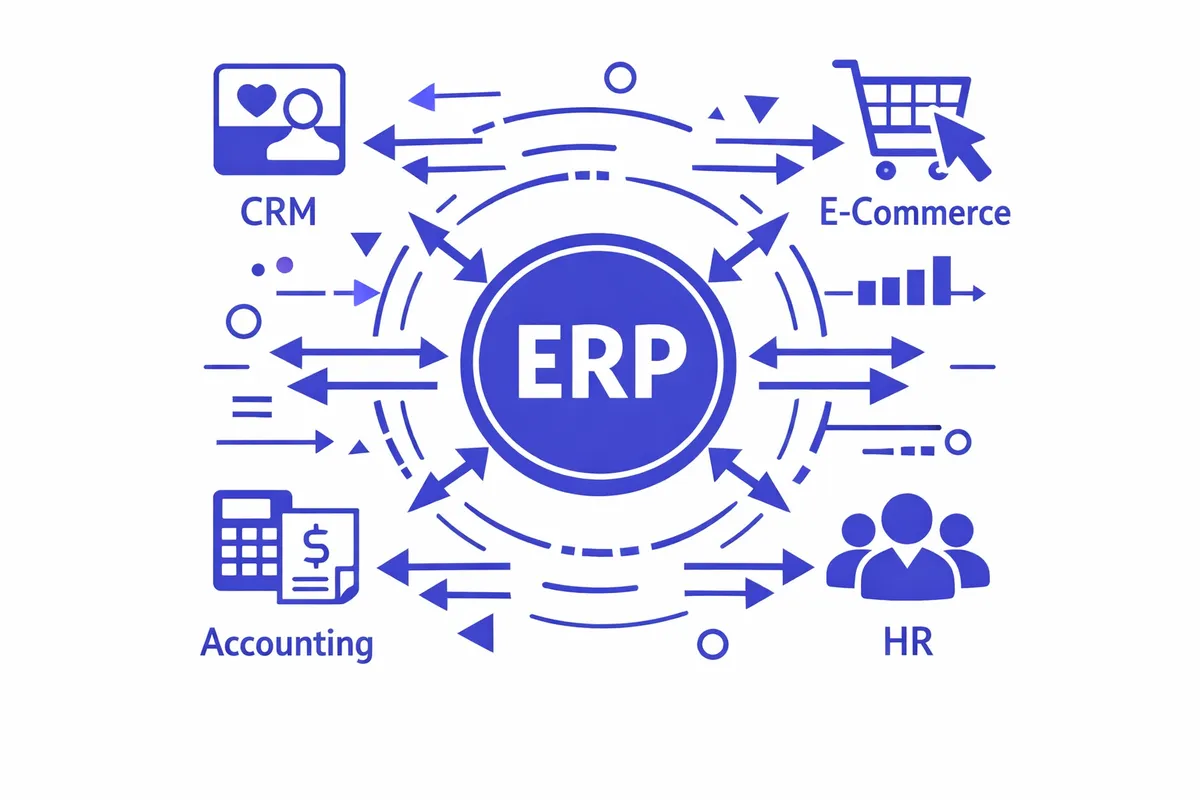
ERP integration projects for Roscoe Village businesses typically do not involve replacing all existing software. Most small operators have a POS system they trust, an accounting platform their bookkeeper knows, and a scheduling or inventory tool that works for their team. The integration work is about connecting those systems so data flows between them without manual re-entry. For a boutique children's retailer near Damen Avenue, that might mean connecting Shopify to QuickBooks and to a inventory platform, so a sale on any channel posts to accounting and decrements inventory automatically.
The first step is always a data flow audit. We map what information originates in each system, where it needs to go, and what transformation it requires in transit. Sales data from a POS system needs to land in an accounting chart of accounts formatted to match the business's accounting structure, not as a raw number. Payroll hours from a scheduling tool need to match the payroll periods the accountant uses. These translation requirements are where most DIY integrations fail.
For businesses that have outgrown their current stack and need a genuine ERP platform, we evaluate options based on the business's actual requirements rather than vendor marketing. A restaurant with complex cost-of-goods tracking needs different capabilities than a pediatric practice managing billing and payroll. We recommend platforms we can implement and support, and we decline to recommend platforms that are wrong for the scale or the industry.
Industries We Serve in Roscoe Village
Boutique retail shops along Roscoe Street and near Belmont Avenue reach ERP integration thresholds when they operate both physical and online channels, carry significant inventory depth, and have a bookkeeper who is billing more hours reconciling systems than they should be. Connecting POS to accounting to inventory management through a central ERP reduces that reconciliation from days to hours.
A wine bar running a retail component out of a Roscoe Street storefront manages two business models under one roof. The bar side operates on nightly close-outs, bottle service logs, and staff hours. The retail side tracks wholesale orders, retail margins, and inventory aging. An ERP integration that treats both sides as cost centers within one accounting structure gives the owner a complete picture of the business's economics without two separate bookkeeping systems.
Preschools and childcare programs near Jahn Elementary manage tuition billing, payroll for teaching staff, supply purchasing, and facility costs as distinct accounting functions that most childcare-specific software handles separately. Integrating those functions through a connected platform reduces end-of-month reconciliation and makes grant reporting, which many licensed childcare programs require, significantly less labor-intensive.
Pediatric and family practices on the residential side near Western Avenue handle billing, payroll, supply purchasing, and insurance reimbursement through systems that rarely talk to each other. An ERP integration layer that connects practice management software to accounting and payroll gives the practice administrator a reconciled financial view and reduces the human error that manual data entry across three platforms introduces.
Independent restaurants with multiple revenue streams, including dine-in, carry-out, catering, and occasional private events, find that a single POS cannot accurately represent the full cost structure of all four streams. ERP integration brings catering job costs, private event deposits, and wholesale ingredient purchasing into the same accounting environment as nightly restaurant revenue.
Pet services businesses that have grown to include multiple staff, multiple service types, and a retail component face an ERP threshold when their scheduling system, payment processor, and accounting platform are three separate monthly subscriptions generating three separate data exports. An integrated system that books services, takes payment, and posts revenue to accounting automatically removes the bookkeeper from that loop entirely.
What to Expect Working With Us
1. Data flow and systems inventory. We document every software subscription the business uses, what data it holds, and what it exports. For a Roscoe Street retailer, this step typically surfaces two or three redundancies, a system that the team stopped using but still pays for, and a manual reconciliation step that takes four hours a month and could be automated. That discovery alone often justifies the engagement.
2. Integration map and platform recommendation. We present a plain-language diagram showing what connects to what, where data transforms in transit, and what the business gains from each connection. If the business needs a new ERP platform rather than just a better integration layer, we explain why and recommend specific options at the appropriate price point for the operation.
3. Phased implementation starting with the highest-friction point. We do not try to integrate everything at once. The first phase targets the connection that costs the most staff time or produces the most errors. For most Roscoe Village retailers, that is the sales-to-accounting connection. For most service businesses, it is the scheduling-to-payroll connection. The second phase adds the next highest-value connection after the first is stable.
4. Parallel-run period and reconciliation validation. Before switching off manual processes, we run the integrated system in parallel with existing workflows for two to four weeks, comparing outputs to confirm the integration is accurate. The cutover to the new system happens after that validation, not on a fixed calendar date.