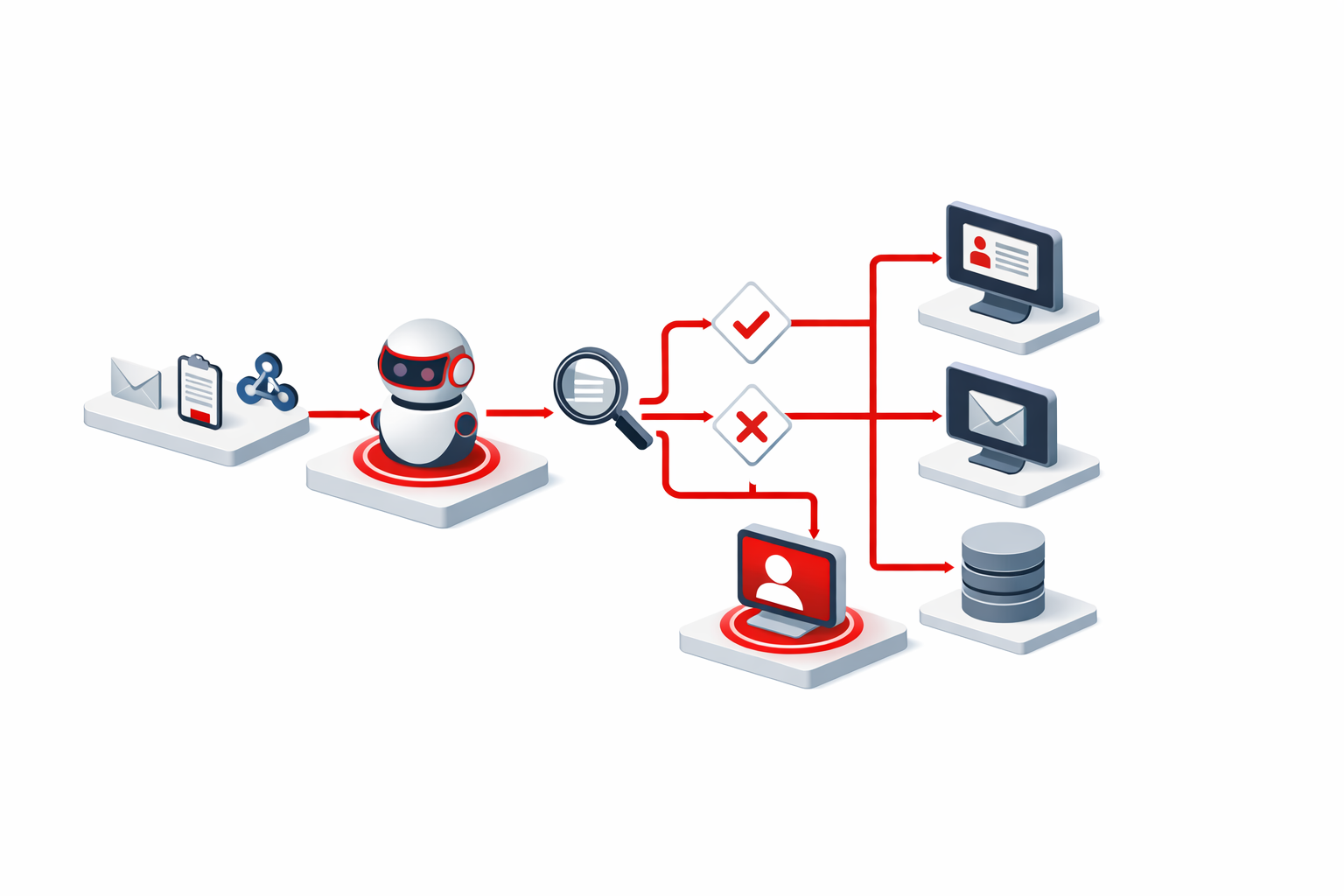
How We Build Autonomous Workflow Agents for Roscoe Village
We start with a workflow mapping exercise. For each business, we document the operational sequences that run repeatedly and follow consistent logic. For a pediatric practice, that includes the new patient onboarding sequence, the appointment scheduling and confirmation cycle, the appointment reminder sequence, and the post-appointment follow-up. For a boutique, it includes the inventory arrival workflow, the reorder trigger workflow, and the customer inquiry response workflow. The mapping reveals which workflows are truly automatic and which require human judgment at specific decision points.
From the map, we design the agent for each workflow. Each agent has a defined scope: what it handles autonomously, what it escalates, and what the escalation protocol looks like. A scheduling agent for a pediatric practice handles routine appointment requests autonomously but escalates requests for appointments that require specific clinical accommodation or same-day urgent slots to front-desk staff with the request context already captured.
We configure agent outputs to match each business's communication style. Every confirmation email, reminder message, and follow-up communication goes through brand voice review before the agent is deployed. The agent should sound like the practice or the boutique, not like a software platform.
Integration with existing systems is a design requirement. A pediatric practice already using a specific EHR and patient portal does not migrate to a new platform. The agent connects to the existing systems and adds the automation layer on top. A boutique using Shopify for e-commerce and Square for in-store sales gets an agent that works within those systems rather than requiring a platform migration.
Industries We Serve in Roscoe Village
Pediatric practices and family medical offices near Jahn Elementary School and Hamlin Park deploy autonomous agents for appointment scheduling and confirmation, appointment reminder sequences, new patient onboarding communication, post-appointment follow-up, and routine patient inquiries about hours and services.
Preschools and early childhood programs in Roscoe Village use autonomous agents for enrollment inquiry response, prospective family follow-up, current family communication on routine administrative matters, and the seasonal communication cycles that surround enrollment and programming milestones.
Independent restaurants and wine bars along Roscoe Street use autonomous agents for reservation confirmation and management, private event inquiry qualification, waitlist management, and the follow-up communication that converts first-time visitors into regulars.
Boutique retail shops along Roscoe Street and Belmont Avenue use autonomous agents for customer inquiry response, order status updates, restock notification delivery, and the inventory arrival workflows that trigger online listing and promotional communication.
Wellness and fitness studios in Roscoe Village use autonomous agents for class scheduling and waitlist management, membership inquiry response, cancellation and rescheduling handling, and the member communication cycles that support retention.
Pet services businesses serving Roscoe Village's residential community use autonomous agents for booking confirmation and scheduling, appointment reminder sequences, post-service follow-up, and client communication about seasonal availability and service updates.
What to Expect Working With Us
1. Workflow mapping and agent design. We document your operational workflows and identify which sequences are best suited for autonomous agent handling. You review the workflow map and confirm which sequences to automate and which to leave in human hands. This phase takes one to two weeks and results in a clear agent design document.
2. Agent development and configuration. We build each agent, configure its decision logic and communication outputs, and integrate it with your existing systems. We produce draft communications for every message the agent will send and review them against your voice standards before deployment.
3. Pilot operation and refinement. We run each agent in parallel with your existing manual workflow for two to four weeks, comparing agent outputs against what your team would have done manually. Discrepancies identify where the agent's logic needs refinement. We deploy to full operation after the pilot confirms the agent is performing correctly.
4. Deployment and performance review. After full deployment, we review agent performance metrics weekly for the first month: how many requests were handled autonomously, what escalation rate looks like, and whether escalated situations reveal any patterns in the agent's logic that need adjustment. Most agents reach stable operation within sixty days.