How We Build AI Sales Intelligence for Roscoe Village
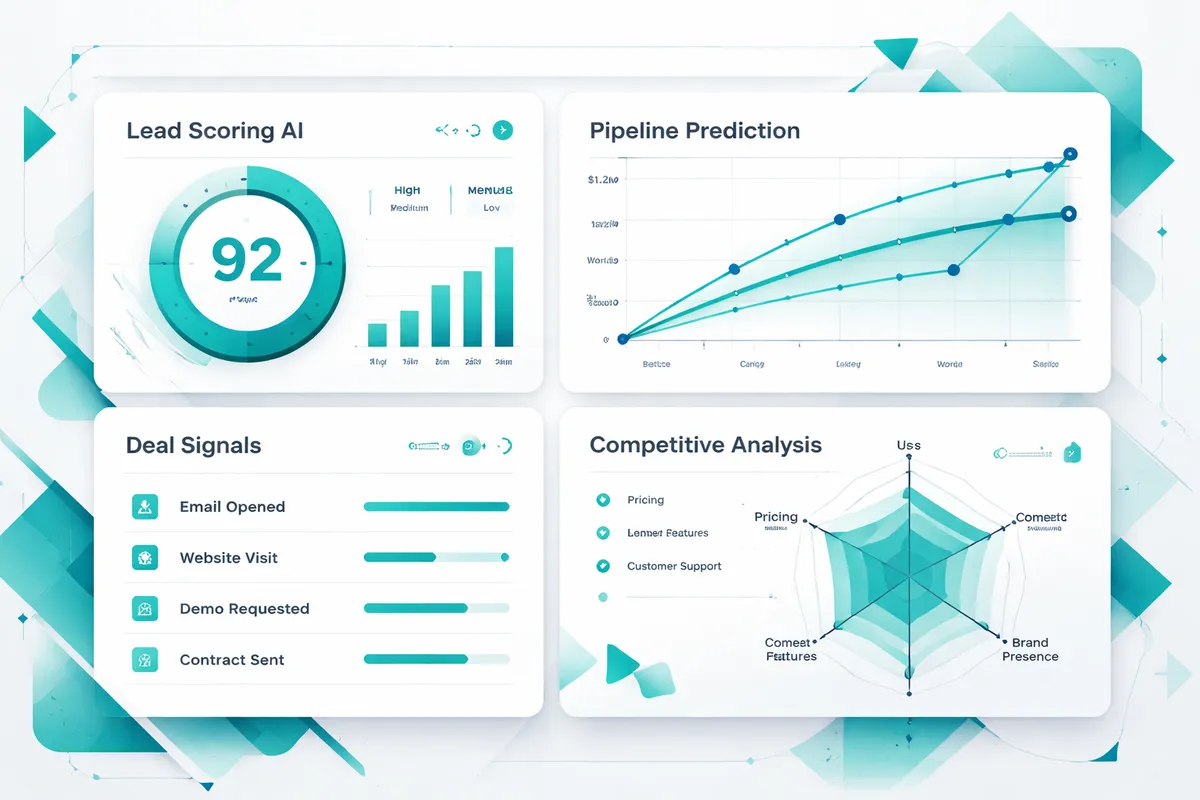
Our work starts with a deep assessment of your existing CRM data and sales process. Most Roscoe Village B2B operators are using Salesforce, HubSpot, or Pipedrive, often with customizations added over years that produce inconsistent data quality. We audit the data, identify quality issues that would affect model training, and either fix the issues as part of implementation or scope data remediation as a separate phase. Clean data is the foundation of reliable AI, and we are honest about what your data supports before promising specific outcomes.
The scoring models we build reflect your actual win patterns. We train on closed-won and closed-lost opportunities with their full context: firmographic characteristics, engagement history, referral source, deal stage progression, stakeholder involvement, and any custom data fields that capture business-specific signals. The model identifies which combinations of factors historically predict conversion, which can surface counterintuitive insights. A Roscoe Village accounting practice might discover that prospects referred by specific client segments convert much more reliably than other referral sources, justifying changes to referral cultivation strategy. A marketing consultancy might find that prospects who consume specific blog content in a particular sequence convert dramatically better than the general prospect population.
For relationship-driven sales common in Roscoe Village, we build account health scoring that monitors existing customer accounts for expansion readiness and churn risk signals. Expansion scoring identifies the specific behavior patterns and signals that precede upsell opportunities, allowing your team to engage existing customers proactively at the moments when receptiveness is highest. Churn risk scoring flags accounts showing the early warning signs that typically precede relationship termination, giving your team the chance to intervene while recovery remains possible. For most Roscoe Village B2B operators, account expansion and retention produce more incremental revenue than new logo acquisition, and AI account intelligence meaningfully improves both metrics.
Deal forecasting converts subjective rep forecasts into probability-weighted projections based on historical conversion patterns. For small Roscoe Village sales teams where the VP of Sales or business owner cannot spend significant time interrogating each rep's pipeline, AI forecasting produces defensible numbers that support hiring, investment, and operational planning decisions. The typical outcome is forecast accuracy improvement of 10 to 20 percent compared to rep-submitted forecasts, which translates directly into better resource allocation.
Intent monitoring and new business formation signals help Roscoe Village B2B operators engage opportunities earlier than competitors. Integration with 6sense, Bombora, or Clearbit surfaces target accounts showing research activity. Integration with business formation data catches new businesses in the neighborhood's commercial corridors before they become visible through traditional channels. Proactive engagement on these signals consistently produces higher conversion than reactive responses to inbound interest alone.
CRM enrichment automation fills firmographic and contact data gaps that small Roscoe Village sales teams cannot fill manually at scale. Enriched data improves scoring accuracy and gives your team complete context for every conversation without requiring manual research time.
Industries We Serve in Roscoe Village
Small professional services firms along Damen Avenue, Belmont Avenue, and Roscoe Street including accounting practices, independent legal offices, wealth management advisors, and specialty consulting operations use AI sales intelligence to manage relationship-driven pipelines, forecast revenue across long sales cycles, and identify expansion opportunities with existing clients.
Marketing agencies and creative consultancies based in Roscoe Village serving clients across Chicago's North Side use AI to prioritize inbound interest, identify high-probability prospects from the referral pipeline, and manage project-based revenue forecasting with precision their small management teams can act on.
B2B wholesale and supply businesses serving Roscoe Village's independent retailers and restaurant base use AI to identify expansion accounts, catch new business formation signals in the neighborhood, and prioritize the rotating pipeline of emerging opportunities across the broader North Side retail community.
Technology and SaaS companies headquartered in Roscoe Village or targeting its business community use AI sales intelligence to manage enterprise-level sales cycles, forecast revenue, and identify expansion opportunities within existing customer accounts.
Real estate and property services operating in Roscoe Village's residential and commercial market use sales intelligence to identify buyer, seller, and tenant prospects approaching transaction decisions based on the specific life-stage and organizational signals that precede real estate activity.
Financial services and insurance practices serving Roscoe Village's rooted family base use AI to identify client accounts approaching life-transition inflection points that open opportunities for expanded service relationships, and to surface expansion opportunities in the existing client book before competitors do.
What to Expect Working With Us
1. Sales process and data audit. We spend one to two weeks with your team understanding your sales motion, auditing your CRM data quality, and assessing what AI sales intelligence can deliver in your specific context. The output is an honest assessment of capability plus a prioritized roadmap.
2. Model design and integration architecture. We design the scoring model architecture, forecasting approach, and CRM integration plan. You review and approve the design before any implementation work begins.
3. Phased build with early production value. We build lead scoring first, validate it rigorously, and deploy to production within eight to ten weeks. Deal forecasting, account health monitoring, intent tracking, and enrichment follow in subsequent phases as your team sees value from the scoring foundation.
4. Ongoing optimization and quarterly model refresh. Deployed systems include monitoring dashboards showing scoring accuracy, forecast performance, and pipeline impact. Quarterly model refresh incorporates new closed-won and closed-lost data to keep accuracy current as your business evolves.