How We Build AI Content Personalization for Roscoe Village
Every personalization system we build starts with your existing data. Most Roscoe Village businesses have more useful customer information than they realize: purchase histories in the point-of-sale system, booking records in the scheduling platform, email engagement data in the marketing tool, and behavioral data from the website. We connect these sources, clean and normalize the data, and build the customer profiles that drive personalization.
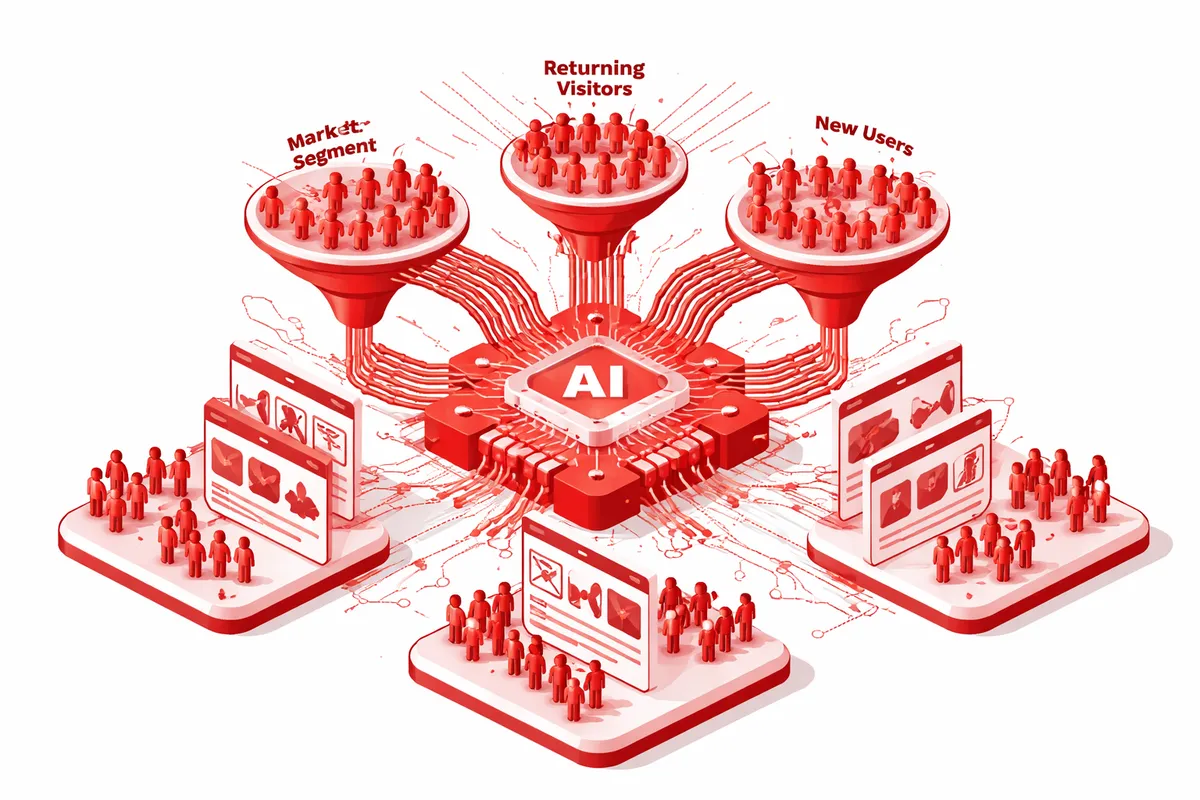
Segmentation is the first layer. The AI analyzes customer behavior and groups customers into meaningful segments: recent buyers versus lapsed buyers, high-frequency visitors versus occasional ones, customers who respond to promotion-focused messages versus those who engage more with editorial content about the business. These segments are not static. The AI updates them continuously as new data comes in, so a customer who drifts from active to lapsed triggers a different sequence automatically without requiring manual list management.
Content generation connects to the segment structure. Rather than writing a single version of each email campaign, you write a brief description of the message goal and the AI generates segment-appropriate variations. A boutique promotion email has a version for current-season shoppers, a version for customers who have not bought in three months, and a version for customers who primarily buy gifts. Each version addresses the most relevant angle for that customer's relationship with the business.
Website personalization adjusts what visitors see based on their history. Return visitors see different homepage content than first-time visitors. A customer who browsed the dinner menu last week sees a different call to action than someone discovering the restaurant for the first time. A prospect who inquired about a service last month sees content addressing the hesitations that typically prevent conversion at that stage. These adjustments happen automatically based on behavioral signals the AI reads in real time.
Re-engagement campaigns use personalization to bring lapsed customers back at the right moment. The AI identifies customers approaching their typical churn point and triggers a personalized outreach sequence calibrated to that customer's history. A customer who always comes in during the holiday season gets a different re-engagement offer than a summer regular near Hamlin Park.
Industries We Serve in Roscoe Village
Independent boutiques and specialty retail along Roscoe Street and Damen Avenue use personalization to turn occasional shoppers into loyal regulars. The AI tracks purchase history, price range preferences, and seasonal patterns to generate product recommendation emails that feel curated rather than broadcast. A customer who bought a wedding gift last spring gets different follow-up content than one who shops for themselves weekly. Gift-buying segments receive event-timed reminders that drive repeat visits during holidays and birthdays.
Family restaurants and wine bars in the neighborhood use personalization to keep regulars returning and to re-engage customers who have not visited in a while. Reservation histories inform messaging: a family that books the same corner table every month gets acknowledged differently than a new customer who dined once after discovering the restaurant through a search. Seasonal menu updates, private event availability near Hamlin Park, and wine flight announcements land with appropriate timing for each segment.
Pediatric practices and family health providers near Jahn Elementary School use personalization to stay connected with the families they serve without making every communication feel like a billing reminder. Families receive timely reminders calibrated to their specific children's ages and health histories. Seasonal communications about flu shots, back-to-school physicals, and preventive care are personalized by child age and recent visit history rather than sent as undifferentiated blasts to the full patient panel.
Preschools and early childhood programs in the neighborhood use personalization to build relationships with prospective families during the enrollment journey and to maintain engagement with current families throughout the school year. Prospective family sequences are staged based on where each family is in the information-gathering process. Current family communications are personalized by classroom, age group, and upcoming calendar milestones relevant to their specific child's program.
Pet services including groomers, doggy daycares, and veterinary practices along the walkable corridor between Belmont Avenue and Addison Street use personalization to stay relevant to pet owners between visits. Grooming reminder timing is calibrated to each pet's typical grooming interval. Product recommendations align with each owner's purchase history. Seasonal content about dog-friendly events in the neighborhood and at Hamlin Park reaches customers who have engaged with similar content in the past.
Professional services and small B2B firms operating near Western Avenue and the Paulina Brown Line stop use personalization to nurture client relationships between engagements and to re-engage past clients when new service needs are likely. A small accounting firm sends different content to a client approaching tax season who has not yet scheduled their appointment than to one who booked two months ago. A law firm sends different check-in content to a client whose lease renews in 90 days than to one in the middle of an active matter.
What to Expect Working With Us
1. Discovery and data audit. We start by mapping what customer data you have, where it lives, and what connections exist between your systems. We identify the highest-value personalization opportunities based on your business model and the data that is already available. Most Roscoe Village businesses have more usable data than they realize.
2. Segment architecture and content mapping. We define the customer segments that will drive personalization and map the content strategy for each. You approve the segment logic before anything is built. This phase ensures the personalization system reflects how you actually think about your customers rather than imposing a generic framework.
3. Build, integrate, and test. We build the personalization infrastructure, connect your data sources, configure the AI content generation tools, and test every segment with real customer profiles before launch. We do not go live with untested segments.
4. Launch, monitor, and refine. After launch, we track the performance of each segment and content variation against the baseline metrics we established before implementation. Monthly reports show you the specific revenue and engagement impact of personalization, and we refine the segments and content strategy based on what the data shows.