How We Build Workflow Automation for Rogers Park
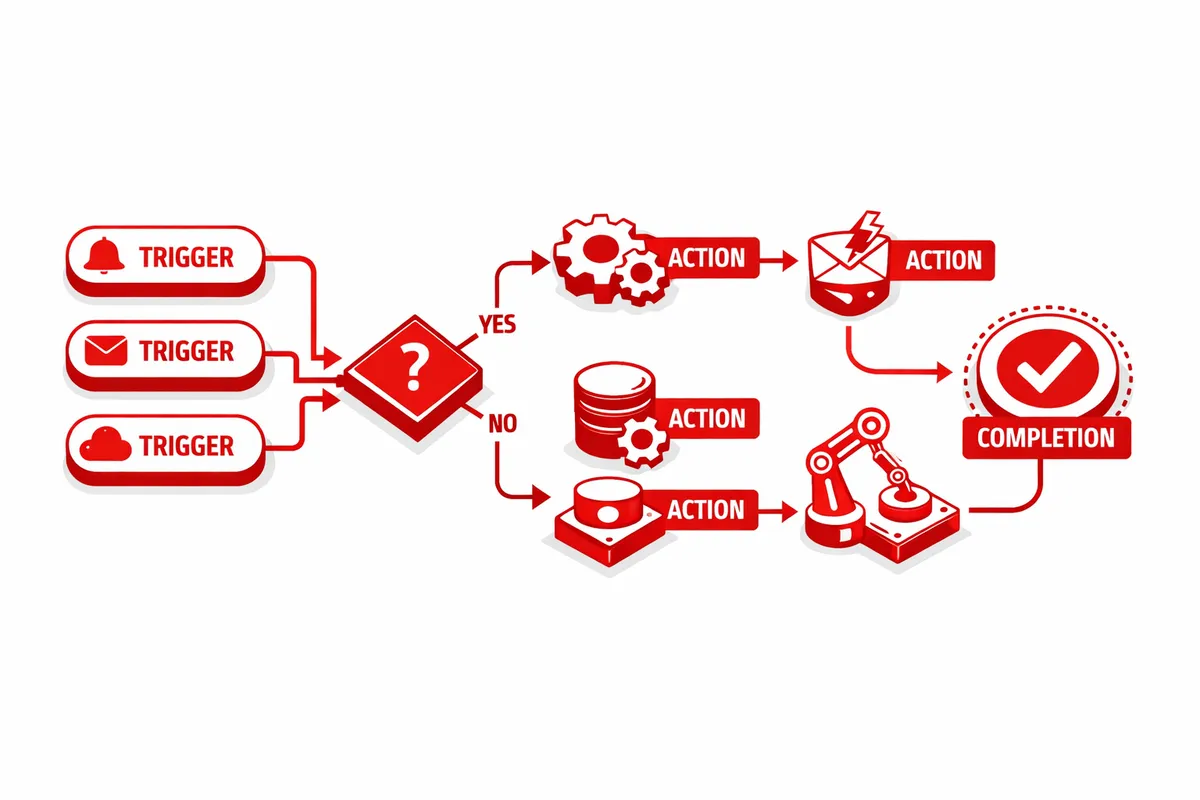
The automation audit is the starting point. We map every manual process in your organization: every time someone copies data from one place to another, every email that gets sent manually because there's no trigger for it, every report that requires human assembly from multiple data sources, every approval or notification that goes through a person because there's no automated path for it. For a Rogers Park nonprofit, this audit typically reveals five to ten significant automation opportunities. For a Rogers Park restaurant or retail business, it reveals three to five.
We prioritize automation opportunities by two dimensions: time saved per week and error rate improvement. The highest-priority automations are the ones that both consume significant time and introduce frequent errors. Intake data entry from paper forms into a database is a high-priority target because it consumes hours weekly and introduces errors constantly. The weekly meeting reminder email is lower priority because it takes ten minutes weekly and errors are rarely consequential.
The automation build connects the software systems your organization already uses. We work with the tools you have: QuickBooks, Salesforce, Airtable, Google Sheets, Gmail, Mailchimp, your POS system, your donor management platform. We don't require you to change your systems to enable automation; we build the connections between the systems you're already using. When that's not possible with the existing tools, we recommend the specific system changes that would unlock the highest-value automation opportunities.
Testing and documentation are as important as the build. An automation that runs incorrectly for three months is worse than a manual process that runs correctly. We test every automation against real data from your organization and document exactly what it does, when it runs, and what a failure looks like. Your team should be able to understand and trust the automation, not treat it as a black box.
Industries We Serve in Rogers Park
Community organizations and nonprofits including A Just Harvest, RPCAN, and Howard Brown Health automate intake processing, participant communication, donor follow-up sequences, volunteer coordination, grant reporting data compilation, and the approval workflows that currently require email chains and manual tracking.
The Rogers Park Food Co-op and cooperative businesses automate member communication, equity distribution calculations, purchasing workflow, democratic governance processes, and the reconciliation workflows that keep cooperative financial records accurate.
Ethnic restaurants along Howard Street and Clark Street automate daily sales reporting to accounting, reservation confirmation and reminder sequences, inventory reorder triggering, and the supplier communication workflows that currently require manual attention.
Health and social services organizations near Sheridan Road automate appointment reminder sequences, no-show follow-up, referral tracking, and the documentation workflows that connect patient encounters to billing and program records.
Independent retail and bookstores along Morse Avenue automate order confirmation and fulfillment workflows, inventory level notifications, customer loyalty communication, and the event planning and promotion sequences that drive programming attendance.
What to Expect Working With Us
1. Workflow audit and prioritization. We document every manual process in your organization and prioritize automation opportunities by impact. The audit deliverable is a map of your current workflows with automation potential assessed for each, so you understand the full opportunity landscape before deciding where to invest first.
2. Automation design and tool selection. We design the automation architecture for your prioritized workflows and select the connection tools appropriate for your software environment. For Rogers Park nonprofits using a mix of donated software licenses and free tiers, tool selection accounts for budget constraints as a real design parameter.
3. Build and testing. We build the automations, test them against real data from your organization, and validate that they perform correctly under edge cases. A workflow automation for a Rogers Park co-op that handles membership dues gets tested with the actual range of payment amounts, payment methods, and edge cases the co-op actually encounters, not a simplified test scenario.
4. Training and documentation. We train your team on how to monitor the automations, what healthy operation looks like, and what to do when something fails. Rogers Park organizations that have invested in workflow automation need their team to be confident the automations are running correctly, not anxious about whether they are.